


Elinor Armer
Released Album
Chamber
-
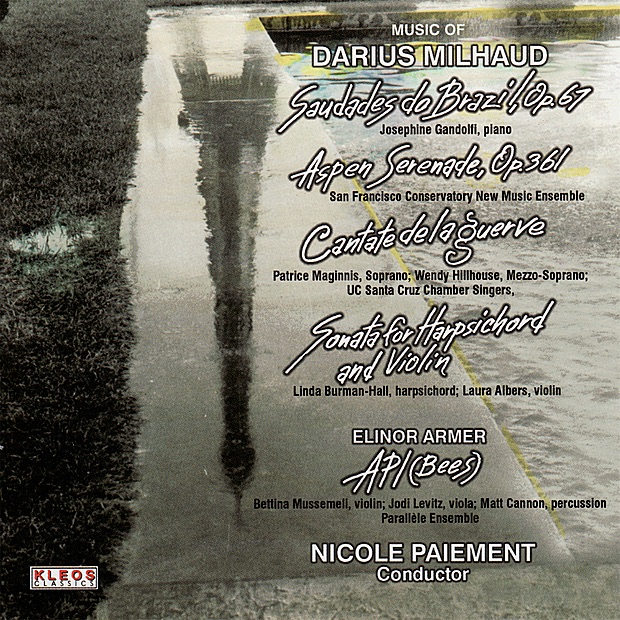 July 20, 2004
 -
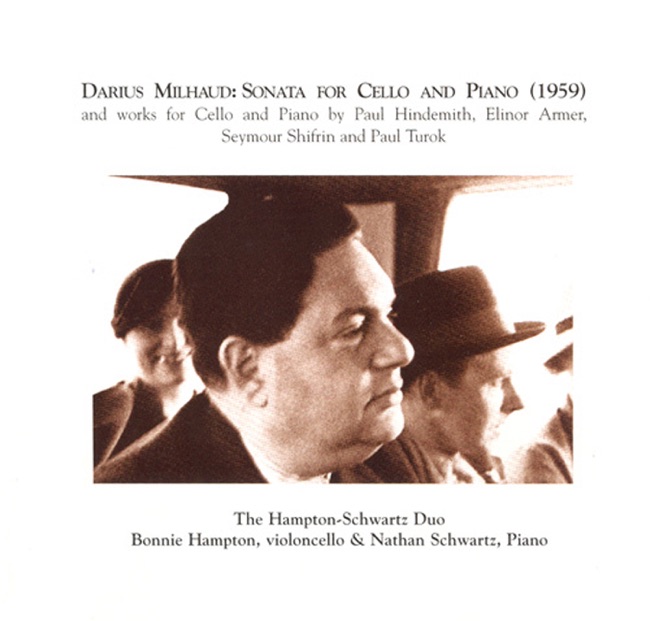 October 1, 1999
Artist Info
Role:Composer PerformerGenre:ChamberElinor Armer is a renowned American composer and pianist, known for her contributions to the world of classical music. Born on January 29, 1939, in Seattle, Washington, Armer grew up in a family of musicians. Her mother was a pianist, and her father was a violinist. Armer began playing the piano at the age of four and showed a natural talent for music. Armer's family moved to San Francisco when she was six years old, and she continued her music education there. She studied piano with Adolph Baller and composition with Roger Nixon at the San Francisco Conservatory of Music. Armer went on to earn a Bachelor of Music degree from the University of California, Berkeley, where she studied composition with Andrew Imbrie and piano with Nathan Schwartz. After completing her undergraduate studies, Armer continued her education at the University of California, Los Angeles, where she earned a Master of Fine Arts degree in composition. She studied with Lukas Foss, Henri Lazarof, and Roy Harris. Armer also studied piano with Aube Tzerko and Rosina Lhevinne. Armer's early compositions were influenced by the serialism and atonality of the mid-20th century. However, she soon began to develop her own unique style, which incorporated tonal elements and a focus on melody. Armer's music is characterized by its lyricism, rhythmic vitality, and emotional depth. One of Armer's early works, "Sonata for Violin and Piano," was premiered in 1963 by violinist Stuart Canin and pianist John Bloomfield. The piece is a prime example of Armer's early style, with its use of serial techniques and complex rhythms. However, the piece also features moments of lyricism and tonality, which would become hallmarks of Armer's later works. In the 1970s, Armer began to incorporate electronic music into her compositions. She was one of the first composers to use the Buchla synthesizer, an early electronic instrument. Armer's "Buchla Pieces" (1970-1971) are a series of works for Buchla synthesizer and tape. The pieces are characterized by their otherworldly sounds and experimental use of electronic music. Armer's "Concerto for Piano and Orchestra" (1975) is one of her most well-known works. The piece was commissioned by the San Francisco Symphony and premiered by pianist John Browning and conductor Seiji Ozawa. The concerto is a virtuosic showcase for the piano, with its fast-paced rhythms and intricate melodies. However, the piece also features moments of lyricism and introspection, particularly in the second movement. In the 1980s, Armer began to incorporate elements of world music into her compositions. Her "Three Persian Songs" (1983) are settings of poems by the Persian poet Rumi. The songs feature traditional Persian instruments, such as the santur and the ney, and incorporate Persian melodic and rhythmic elements. Armer's "Duo for Violin and Piano" (1985) is another notable work from this period. The piece is a virtuosic showcase for both instruments, with its fast-paced rhythms and intricate melodies. However, the piece also features moments of lyricism and introspection, particularly in the second movement. In the 1990s, Armer began to focus more on vocal music. Her "Songs of Innocence and Experience" (1992) are settings of poems by William Blake. The songs feature Armer's signature lyricism and emotional depth, and showcase her ability to set text to music in a compelling way.More....
Copyright Ⓒ 2013 Davinci Finger. All rights reseved
Service Terms & Policy