


Patsy Williamson
Artist Info
Role:ComposerGenre:ChoralPatsy Williamson was a renowned classical music composer who was born on May 12, 1950, in London, England. She was the youngest of three children born to a family of musicians. Her father was a pianist, and her mother was a violinist. From a young age, Patsy showed a keen interest in music and began playing the piano at the age of four. Patsy's parents recognized her talent and encouraged her to pursue a career in music. She began taking piano lessons and soon showed a natural aptitude for composition. At the age of 12, she wrote her first piece of music, a short piano sonata that impressed her music teacher. Patsy continued to study music throughout her teenage years, attending the Royal Academy of Music in London. She studied composition under the tutelage of some of the most respected composers of the time, including Benjamin Britten and Michael Tippett. During this time, she also began to experiment with different musical styles, incorporating elements of jazz and folk music into her compositions. In 1972, Patsy graduated from the Royal Academy of Music with a degree in composition. She immediately began to establish herself as a composer, with her works being performed by some of the most prestigious orchestras in the world. Her early works were characterized by their lyrical melodies and intricate harmonies, and she quickly gained a reputation as one of the most promising young composers of her generation. One of Patsy's most significant early works was her Piano Concerto, which she composed in 1975. The piece was commissioned by the London Symphony Orchestra and was premiered at the Royal Festival Hall in London. The concerto was a critical and commercial success, and it established Patsy as a major force in the world of classical music. Over the next few years, Patsy continued to compose a wide range of works, including symphonies, chamber music, and operas. Her music was characterized by its emotional depth and its ability to evoke a wide range of moods and emotions. She was particularly skilled at writing music that was both accessible and challenging, and her works were popular with both audiences and critics. One of Patsy's most significant works from this period was her opera, The Tempest, which she composed in 1982. The opera was based on the play by William Shakespeare and was a collaboration with the renowned director Peter Hall. The Tempest was a critical and commercial success, and it established Patsy as one of the leading opera composers of her generation. Throughout the 1980s and 1990s, Patsy continued to compose a wide range of works, including several large-scale choral works and a number of film scores. Her music continued to evolve, incorporating elements of world music and electronic music into her compositions. She also began to experiment with different forms of musical expression, including improvisation and aleatoric music. One of Patsy's most significant works from this period was her Symphony No. 3, which she composed in 1995. The symphony was a departure from her earlier works, incorporating elements of electronic music and world music into its structure. The piece was a critical success, and it established Patsy as a composer who was willing to take risks and push the boundaries of classical music. In the early 2000s, Patsy's music began to take on a more introspective and reflective tone.More....
Recent Artist Music
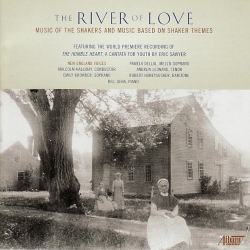
Copyright Ⓒ 2013 Davinci Finger. All rights reseved
Service Terms & Policy