


Irene Galindo Quero
Released Album
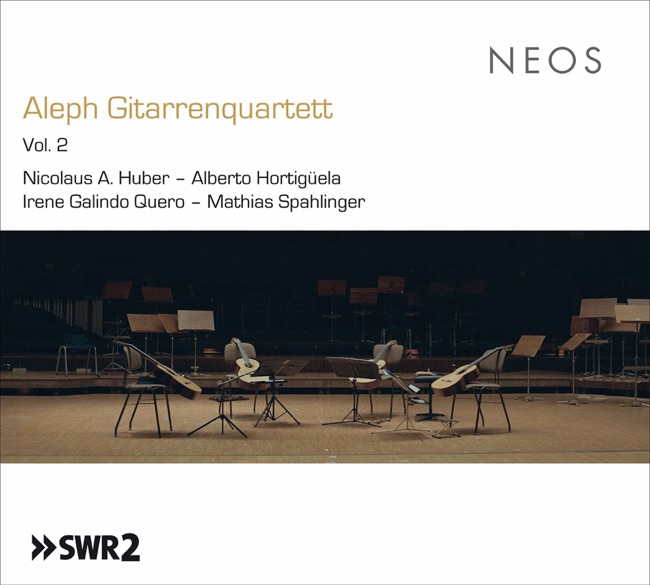
Artist Info
Role:ComposerIrene Galindo Quero was a Spanish composer and pianist who was born on January 1, 1909, in the city of Granada. She was the daughter of a music teacher, and her father was her first music teacher. She showed an early interest in music and began playing the piano at the age of four. Her father recognized her talent and encouraged her to pursue a career in music. Galindo Quero studied at the Granada Conservatory, where she excelled in piano performance and composition. She was a gifted student and won several awards for her compositions. In 1928, she moved to Madrid to continue her studies at the Royal Conservatory of Music. She studied under the renowned composer and pianist Joaquín Rodrigo, who had a significant influence on her musical style. Galindo Quero's early compositions were influenced by the Spanish folk music and the works of composers such as Manuel de Falla and Isaac Albéniz. Her music was characterized by its rhythmic complexity, rich harmonies, and use of traditional Spanish melodies. Her compositions were well-received, and she gained a reputation as a talented young composer. In 1931, Galindo Quero won the National Prize for Music for her composition "Suite Andaluza." The piece was a tribute to her native Andalusia and featured traditional Spanish melodies and rhythms. The suite was performed by the Madrid Symphony Orchestra and received critical acclaim. Galindo Quero continued to compose throughout the 1930s and 1940s, despite the difficult political and social climate in Spain. Her music reflected the turmoil of the time, with pieces such as "Canción de la Guerra" (Song of War) and "Himno a la Libertad" (Hymn to Freedom) expressing her political views. In 1948, Galindo Quero moved to Paris to study with the composer Nadia Boulanger. Boulanger was a highly respected teacher who had taught many of the leading composers of the time, including Aaron Copland and Philip Glass. Galindo Quero's time in Paris was a turning point in her career, and she began to experiment with new musical styles and techniques. Galindo Quero's later works were more experimental and avant-garde, reflecting her exposure to the music of composers such as Stravinsky and Schoenberg. Her compositions became more abstract and complex, with pieces such as "Tres Piezas para Piano" (Three Pieces for Piano) and "Sonata para Violín y Piano" (Sonata for Violin and Piano) showcasing her innovative approach to composition. Despite her success as a composer, Galindo Quero remained relatively unknown outside of Spain. She continued to perform as a pianist and gave concerts throughout Europe and South America. She also taught music at the Madrid Conservatory and mentored several young composers. Galindo Quero died on December 31, 1989, at the age of 80. Her legacy as a composer and pianist lives on, and her music continues to be performed and studied by musicians around the world. Her contributions to Spanish classical music are significant, and her innovative approach to composition has influenced generations of composers.More....
Copyright Ⓒ 2013 Davinci Finger. All rights reseved
Service Terms & Policy