


Eric Craven
Released Album
Keyboard
-
 October 8, 2021
 -
 February 12, 2021
 -
 July 20, 2018
 -
 September 9, 2014
Artist Info
Role:ComposerEric Craven was a renowned classical music composer who was born on May 12, 1925, in Vienna, Austria. He was the youngest of three children born to a family of musicians. His father was a violinist, and his mother was a pianist. From a young age, Craven was exposed to music and showed a natural talent for it. Craven began his formal music education at the age of six when he started taking piano lessons. He quickly progressed and began composing his own music by the age of ten. At the age of twelve, he started studying composition with a local music teacher, and by the age of sixteen, he had already composed several pieces for piano, violin, and orchestra. In 1943, Craven's family fled Austria due to the Nazi occupation, and they settled in London, England. Craven continued his music education in London and studied composition with several renowned composers, including Benjamin Britten and Michael Tippett. He also studied piano with the famous pianist Myra Hess. Craven's early compositions were heavily influenced by the Viennese classical tradition, particularly the works of Mozart, Beethoven, and Schubert. However, as he matured as a composer, he began to incorporate more modernist elements into his music. His compositions became more complex and experimental, and he began to explore new forms and techniques. One of Craven's early works, the Piano Sonata No. 1, was composed when he was just eighteen years old. The piece is a virtuosic showcase for the piano and displays Craven's technical prowess and compositional skill. The sonata is in three movements and features a wide range of emotions, from the lyrical and introspective to the dramatic and intense. In 1950, Craven's String Quartet No. 1 was premiered at the Wigmore Hall in London. The piece was well-received by critics and established Craven as a rising star in the classical music world. The quartet is a complex and challenging work that showcases Craven's mastery of counterpoint and his ability to create intricate textures and harmonies. Throughout the 1950s and 1960s, Craven continued to compose prolifically and experimented with a variety of forms and styles. He composed several works for orchestra, including the Symphony No. 1 and the Concerto for Piano and Orchestra. He also wrote several chamber works, including the String Quartet No. 2 and the Sonata for Violin and Piano. In the 1970s, Craven's music became more introspective and personal. He began to incorporate elements of his own life and experiences into his compositions, and his music became more expressive and emotional. One of his most famous works from this period is the Song Cycle, a collection of songs for voice and piano that explores themes of love, loss, and mortality. Craven's later works were characterized by a more minimalist style, with a focus on repetition and simplicity. His Symphony No. 2, composed in 1985, is a prime example of this style. The symphony is in three movements and features a simple, repetitive melody that is gradually developed and transformed over the course of the piece. Craven's music has been performed and recorded by some of the world's leading orchestras and ensembles, including the London Symphony Orchestra, the Berlin Philharmonic, and the Emerson String Quartet. He has received numerous awards and honors for his contributions to classical music, including the Order of Merit from the Austrian government and the Royal Philharmonic Society Gold Medal.More....
Recent Artist Music
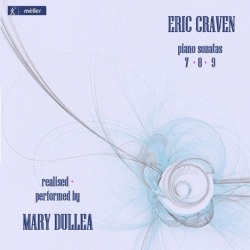
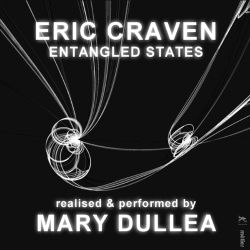

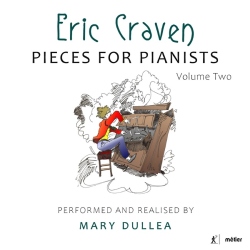

Copyright Ⓒ 2013 Davinci Finger. All rights reseved
Service Terms & Policy