


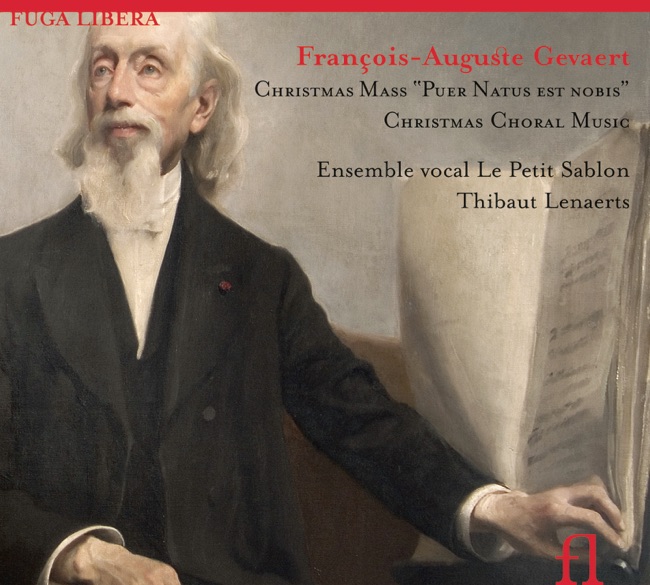
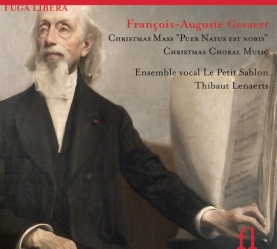
François-Auguste Gevaert
Released Album
Choral
-
 November 4, 2013
 -
-
 September 22, 2006
Artist Info
Role:ComposerCountry: BelgiumBirth:July 31, 1828 in HuiseDeath:December 24, 1908Period:RomanticGenre:OperaVocalFrançois-Auguste Gevaert was a Belgian composer, musicologist, and conductor who lived from 1828 to 1908. He was born in Huysse, a small village in the province of West Flanders, Belgium. His father was a schoolteacher and amateur musician who taught him the basics of music theory and piano playing. Gevaert showed an early talent for music and began composing at a young age. Gevaert received his formal musical education at the Royal Conservatory of Brussels, where he studied composition with François-Joseph Fétis and violin with Charles-Auguste de Bériot. He graduated with honors in 1849 and was appointed professor of harmony and counterpoint at the conservatory the following year. He held this position for over 40 years, during which time he trained many of Belgium's leading composers and musicians. Gevaert's early compositions were influenced by the Romantic style of his teachers, but he soon developed his own distinctive voice. He was particularly interested in the music of the Flemish Renaissance and Baroque periods, and he incorporated elements of these styles into his own works. He also had a keen interest in the music of other cultures, and he traveled extensively throughout Europe and the Middle East to study different musical traditions. One of Gevaert's most important contributions to music was his work as a musicologist. He was a pioneer in the field of music history, and he wrote extensively on the music of the Renaissance and Baroque periods. His most famous book, "Histoire et théorie de la musique de l'Antiquité," was published in 1875 and remains a classic in the field. Gevaert was also a highly respected conductor, and he led many of the leading orchestras and choirs of his time. He was particularly noted for his performances of the music of Bach and Handel, and he was instrumental in reviving interest in their works in the 19th century. Gevaert's compositions include operas, oratorios, cantatas, symphonies, chamber music, and songs. His most famous work is the opera "Le diable au moulin" (The Devil in the Mill), which premiered in Brussels in 1860. The opera is based on a popular French folktale and tells the story of a miller who makes a deal with the devil. The opera was a great success and was performed throughout Europe. Another notable work by Gevaert is the oratorio "La légende d'Ysope" (The Legend of Aesop), which premiered in Brussels in 1877. The oratorio is based on the fables of Aesop and features a narrator, soloists, choir, and orchestra. The work is notable for its use of folk melodies and its innovative use of orchestration. Gevaert's chamber music includes several string quartets and a piano trio. His "Quatuor à cordes en sol majeur" (String Quartet in G Major) is particularly notable for its use of Flemish folk melodies and its innovative use of harmony. Gevaert's songs are also noteworthy for their use of folk melodies and their expressive harmonies. His "Chansons flamandes" (Flemish Songs) are particularly popular and have been performed by many singers throughout the world. In addition to his work as a composer, musicologist, and conductor, Gevaert was also a respected teacher and mentor. He trained many of Belgium's leading musicians, including César Franck, Guillaume Lekeu, and Eugène Ysaÿe. He was also a mentor to the young Vincent d'Indy, who went on to become one of France's leading composers. Gevaert's legacy as a composer, musicologist, and conductor is still felt today.More....
Recent Artist Music
2
3:47

Copyright Ⓒ 2013 Davinci Finger. All rights reseved
Service Terms & Policy