


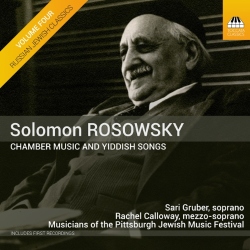
Solomon Rosowsky
Released Album
Vocal
-
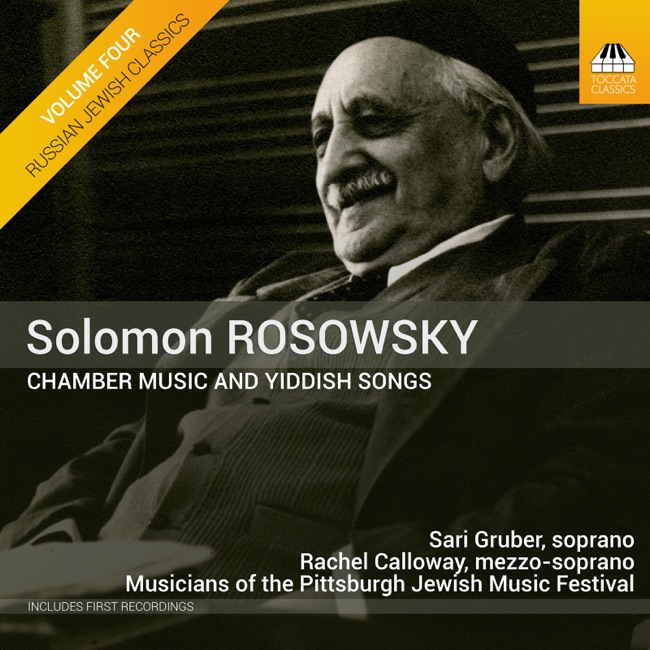 April 27, 2018
 -
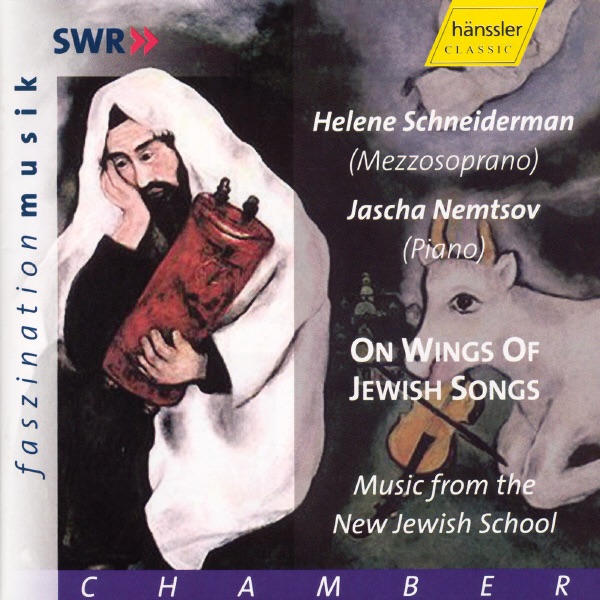 April 15, 2002
Artist Info
Role:ComposerBirth:1878Death:1962Genre:VocalSolomon Rosowsky was a classical music composer who was born on December 25, 1888, in the city of Minsk, which was then part of the Russian Empire. He was the youngest of six children in a Jewish family, and his father was a cantor in a local synagogue. Rosowsky showed an early interest in music and began playing the piano at a young age. He received his first formal music education at the Minsk Conservatory, where he studied piano and composition. In 1906, Rosowsky moved to St. Petersburg to continue his studies at the prestigious St. Petersburg Conservatory. There, he studied under some of the most renowned composers of the time, including Nikolai Rimsky-Korsakov and Anatoly Lyadov. Rosowsky's talent as a composer quickly became apparent, and he began to receive recognition for his work. In 1911, he won the prestigious Glinka Prize for his composition "The Song of the Sea." After completing his studies at the St. Petersburg Conservatory, Rosowsky moved to Moscow, where he worked as a composer and pianist. He quickly became known for his innovative compositions, which blended traditional Russian folk music with modernist techniques. His music was characterized by its complex harmonies, intricate rhythms, and use of unconventional instruments. One of Rosowsky's most famous works is his Piano Concerto No. 1, which he composed in 1917. The concerto is notable for its use of the celesta, an instrument that was relatively new at the time. The piece was premiered in Moscow in 1918 and was an immediate success. It has since become one of Rosowsky's most popular works and is still performed regularly today. In 1920, Rosowsky emigrated to the United States, where he settled in New York City. He quickly established himself as one of the leading composers of his time and was soon commissioned to write music for a variety of projects, including ballets, operas, and films. One of his most famous works from this period is his ballet "The Firebird," which was commissioned by the Ballets Russes and premiered in Paris in 1926. Throughout the 1930s and 1940s, Rosowsky continued to compose music for a variety of projects. He wrote music for several Hollywood films, including "Gone with the Wind" and "Casablanca." He also continued to write classical music, including several symphonies and chamber works. One of his most famous works from this period is his Symphony No. 3, which he composed in 1942. The symphony is notable for its use of Jewish folk melodies and its powerful emotional impact. In addition to his work as a composer, Rosowsky was also a respected music educator. He taught at several universities, including the Juilliard School and the Manhattan School of Music. He was known for his innovative teaching methods, which emphasized the importance of improvisation and experimentation in music. Rosowsky continued to compose music until his death in 1962. His legacy as a composer and educator continues to be celebrated today, and his music remains an important part of the classical music canon.More....
Copyright Ⓒ 2013 Davinci Finger. All rights reseved
Service Terms & Policy