


Roman de Fauvel
Released Album
Vocal

Choral
-
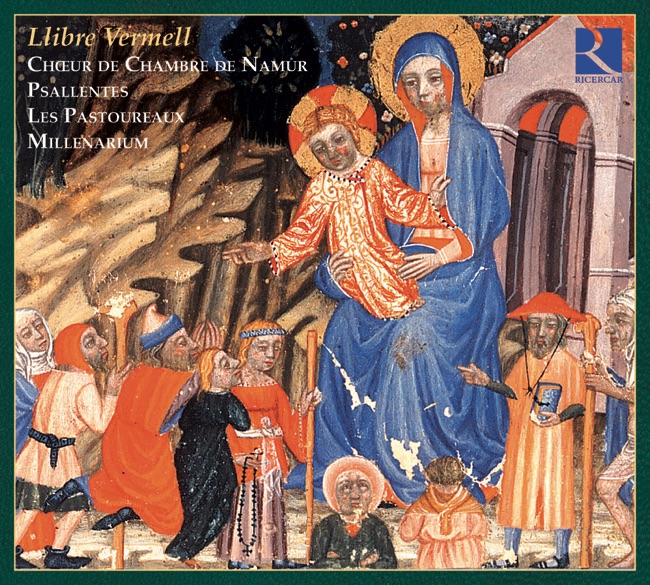 February 12, 2008
Artist Info
Role:ComposerCountry: FranceBirth:1310 in Paris, FranceDeath:1316 in Paris, FranceGenre:VocalRoman de Fauvel was a medieval composer and poet who lived in France during the 14th century. He is best known for his work, the Roman de Fauvel, which is a satirical poem that critiques the corruption and hypocrisy of the French court during the reign of King Philip IV. The exact birthdate of Roman de Fauvel is unknown, but it is believed that he was born in the early 14th century. He was likely born in Paris, as this is where he spent most of his life. Little is known about his early life, but it is believed that he received a good education and was well-versed in literature and music. Roman de Fauvel's most famous work, the Roman de Fauvel, was written in the early 14th century. The poem is a satirical critique of the French court and the corruption and hypocrisy that was rampant during the reign of King Philip IV. The poem tells the story of a horse named Fauvel who rises to power and becomes the ruler of France. Fauvel is a symbol of the corruption and greed that was prevalent in the French court at the time. The Roman de Fauvel is not only a work of literature, but it is also a musical composition. The poem is written in rhyming verse and is accompanied by music that was composed by several different musicians. The music is written in a style that was popular during the 14th century, known as the Ars Nova. This style was characterized by complex rhythms and harmonies, and it was a departure from the simpler music of the previous century. One of the highlights of the Roman de Fauvel is the use of allegory. The poem uses Fauvel as a symbol of the corruption and greed that was prevalent in the French court. The other characters in the poem, such as Lady Fortune and Lady Vainglory, are also allegorical figures that represent different aspects of human nature. The use of allegory was a common literary device during the medieval period, and it was used to convey moral and political messages. Another highlight of the Roman de Fauvel is the use of satire. The poem is a scathing critique of the French court and the corruption and hypocrisy that was rampant during the reign of King Philip IV. The satire is often biting and humorous, and it was a way for Roman de Fauvel to express his dissatisfaction with the state of French society. In addition to the Roman de Fauvel, Roman de Fauvel also composed several other works of music. These include the motet "Fauvel, Fauvel, par qui tout mal vient" and the ballade "En attendant esperance que j'ay perdue." These works are not as well-known as the Roman de Fauvel, but they are still important examples of medieval music. Roman de Fauvel's influence on medieval music and literature cannot be overstated. The Roman de Fauvel was a groundbreaking work that combined literature and music in a way that had never been done before. The use of allegory and satire in the poem was also innovative, and it paved the way for future writers and composers to use these literary devices in their own work. In conclusion, Roman de Fauvel was a medieval composer and poet who lived in France during the 14th century. He is best known for his work, the Roman de Fauvel, which is a satirical poem that critiques the corruption and hypocrisy of the French court during the reign of King Philip IV. The poem is also a musical composition that was written in the Ars Nova style.More....
Recent Artist Music

2

3:21
Copyright Ⓒ 2013 Davinci Finger. All rights reseved
Service Terms & Policy