


Marcel Paponaud
Artist Info
Role:ComposerBirth:1893Death:1988Marcel Paponaud was a French composer of classical music who lived from 1893 to 1971. He was born in the city of Bordeaux, France, and showed an early interest in music. His parents were both amateur musicians, and they encouraged him to pursue his passion for music. Paponaud began his formal musical education at the age of six, when he started taking piano lessons. He quickly showed a talent for the instrument, and by the age of ten, he was already composing his own music. He continued his studies at the Conservatoire de Bordeaux, where he studied composition, harmony, and counterpoint. In 1914, Paponaud was drafted into the French army to fight in World War I. He served as a medic and was stationed in the trenches for much of the war. Despite the difficult conditions, he continued to compose music whenever he had the opportunity. After the war, he returned to Bordeaux and resumed his studies at the conservatory. In 1920, Paponaud moved to Paris to study with the renowned composer Maurice Ravel. Ravel was impressed with Paponaud's talent and took him on as a private student. Under Ravel's guidance, Paponaud developed his own unique style, which blended elements of French impressionism with more traditional forms of classical music. Paponaud's early works were heavily influenced by Ravel and other French composers of the time. His first major composition, a piano concerto, was premiered in 1923 and was well-received by critics. He continued to compose music for piano, as well as chamber music and orchestral works. In the 1930s, Paponaud began to experiment with more avant-garde forms of music. He was particularly interested in the use of electronic instruments and was one of the first composers to incorporate them into his compositions. His 1937 work, "Concerto for Piano and Electronic Instruments," was a groundbreaking piece that pushed the boundaries of what was considered acceptable in classical music. During World War II, Paponaud was forced to flee Paris and went into hiding in the countryside. Despite the difficult circumstances, he continued to compose music and even wrote a number of pieces that were inspired by the war. After the war, he returned to Paris and resumed his career as a composer. In the post-war years, Paponaud continued to experiment with new forms of music. He was particularly interested in the use of serialism, a technique that involved the use of a series of notes in a specific order. His 1952 work, "Symphony No. 2," was one of the first pieces of classical music to use serialism. Paponaud's later works were more introspective and reflective. He was particularly interested in the use of silence and space in his compositions, and his music became more minimalist in style. His final work, "String Quartet No. 5," was completed in 1970, just a year before his death. Throughout his career, Paponaud was recognized as one of the leading composers of his time. He won numerous awards and honors, including the Grand Prix de Rome and the Legion of Honor. His music continues to be performed and recorded today, and he is remembered as one of the most innovative and influential composers of the 20th century.More....
Recent Artist Music
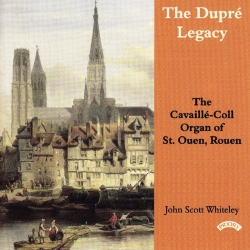
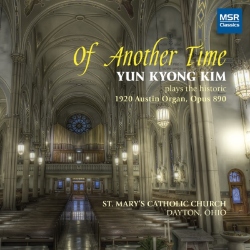
Copyright Ⓒ 2013 Davinci Finger. All rights reseved
Service Terms & Policy