


Roman Maciejewski
Released Album
Keyboard
-
 July 15, 2022
 -
 April 26, 2011
 -
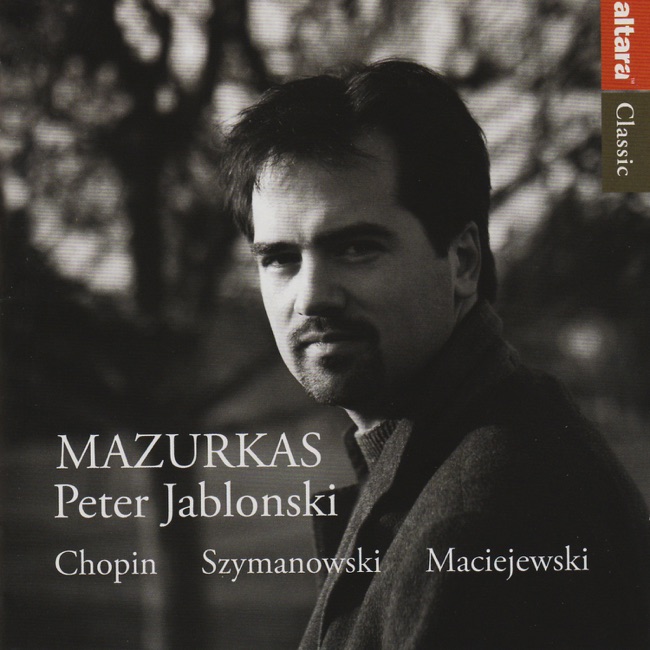 November 11, 2008
Chamber
-
 May 12, 2015
Artist Info
Role:ComposerCountry: PolandBirth:February 28, 1910 in Berlin, GermanyDeath:1998Period:ModernGenre:ChoralRoman Maciejewski was a Polish composer and pianist who was born on February 28, 1910, in Krakow, Poland. He was the son of a well-known Polish composer and conductor, Kazimierz Maciejewski, who was also a professor at the Krakow Conservatory. Roman grew up in a musical family and began playing the piano at a young age. He showed great talent and was soon recognized as a prodigy. Roman studied at the Krakow Conservatory, where he was taught by some of the most prominent musicians of the time, including Karol Szymanowski, who was one of the most important Polish composers of the 20th century. Roman's talent was quickly recognized, and he was awarded a scholarship to study at the Paris Conservatory, where he studied under the tutelage of Nadia Boulanger, a renowned French composer and teacher. During his time in Paris, Roman was exposed to a wide range of musical styles and was greatly influenced by the works of French composers such as Debussy and Ravel. He also became interested in the music of other cultures, particularly the music of Africa and Asia. This interest in world music would later become a significant influence on his own compositions. After completing his studies in Paris, Roman returned to Poland and began his career as a composer and pianist. He quickly gained a reputation as one of the most promising young composers of his generation, and his works were performed by some of the most prestigious orchestras in Poland and Europe. One of Roman's most significant works is his Piano Concerto No. 1, which he composed in 1937. The concerto is a virtuosic work that showcases Roman's technical skill as a pianist and his ability to write for the orchestra. The concerto was premiered in Warsaw in 1938 and was an immediate success. It has since become one of the most frequently performed piano concertos in the Polish repertoire. During World War II, Roman was forced to flee Poland and spent several years in exile in Iran and India. It was during this time that he became interested in the music of these cultures and began incorporating elements of Indian and Persian music into his own compositions. This fusion of Eastern and Western musical styles would become a hallmark of his later works. After the war, Roman returned to Poland and continued to compose and perform. He became a professor at the Krakow Conservatory, where he taught composition and piano. He also served as the director of the conservatory from 1952 to 1956. One of Roman's most significant works from this period is his Symphony No. 1, which he composed in 1951. The symphony is a powerful work that reflects the turmoil of the post-war period in Poland. It is a deeply emotional work that combines elements of Polish folk music with Roman's own unique style. In addition to his classical compositions, Roman also wrote music for film and theater. He composed the music for several films, including "The Last Stage" and "The Ashes," both of which were critically acclaimed. Roman continued to compose and perform until his death in 1998. His legacy as a composer and pianist continues to be celebrated in Poland and around the world. His works are still performed by orchestras and ensembles, and his influence can be heard in the works of many contemporary composers. In conclusion, Roman Maciejewski was a talented and influential composer who made significant contributions to the world of classical music.More....




Copyright Ⓒ 2013 Davinci Finger. All rights reseved
Service Terms & Policy