


Joseph-Marie Amiot
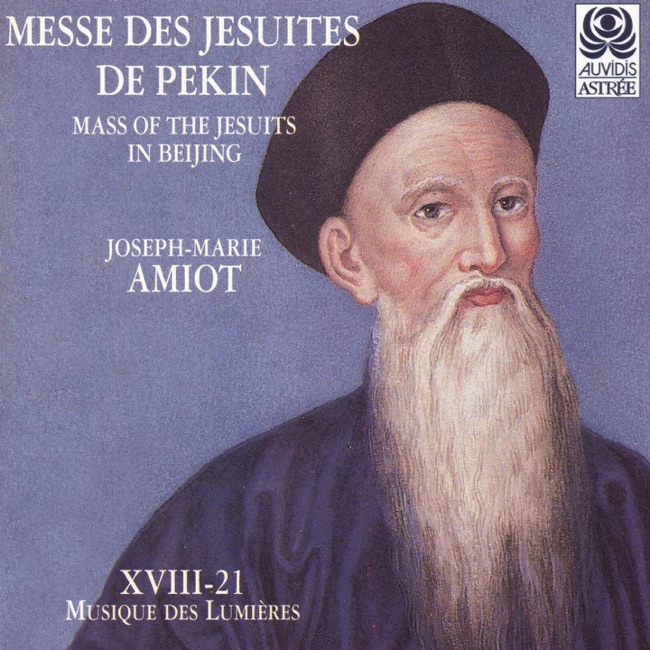
Artist Info
Role:ComposerBirth:1718Death:1793Joseph-Marie Amiot was a French Jesuit missionary, sinologist, and composer who lived from 1718 to 1793. He was born in Toulon, France, and was educated at the Jesuit college in Marseille. He joined the Society of Jesus in 1737 and was sent to China in 1750 as a missionary. He spent the next thirty years in China, where he became an expert in Chinese language, culture, and music. Amiot's interest in Chinese music began soon after his arrival in China. He was fascinated by the sounds of traditional Chinese instruments such as the guqin, pipa, and erhu, and he began to study them in depth. He also learned to play the Chinese flute, which he incorporated into his own compositions. Amiot's most famous work is his "Essai sur la musique chinoise" (Essay on Chinese Music), which he wrote in 1779. This work is a comprehensive study of Chinese music, including its history, theory, and practice. It is still considered a valuable resource for scholars of Chinese music today. In addition to his scholarly work, Amiot also composed music in a Chinese style. His compositions were influenced by both Chinese and European music, and he often blended the two styles together. His music was well-received in China, and he was even invited to perform for the Qianlong Emperor. One of Amiot's most famous compositions is his "Sonate chinoise" (Chinese Sonata), which he wrote for the harpsichord. This piece is notable for its use of Chinese melodies and rhythms, as well as its incorporation of the Chinese pentatonic scale. It is considered one of the earliest examples of Western music incorporating Chinese elements. Amiot also wrote several pieces for the Chinese flute, including his "Sonate pour la flûte chinoise" (Sonata for Chinese Flute). This piece is notable for its use of traditional Chinese melodies and its incorporation of Chinese ornamentation techniques. In addition to his musical work, Amiot was also a prolific writer. He wrote extensively on Chinese culture, history, and language, and his works were highly regarded by both Chinese and European scholars. He also translated several Chinese texts into French, including the "Yijing" (Book of Changes) and the "Shujing" (Book of Documents). Amiot's legacy as a composer and scholar of Chinese music has endured to this day. His work has been studied and performed by musicians and scholars around the world, and his "Essai sur la musique chinoise" remains a valuable resource for anyone interested in Chinese music.More....
Recent Artist Music
1
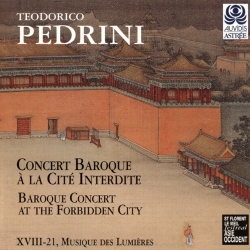
Chinese premier entertainment
Tsien foung yun. Harmonie des Vents qui soufflent par devant / Tchè kouei ling. Façonner les branch
4:52
Copyright Ⓒ 2013 Davinci Finger. All rights reseved
Service Terms & Policy