


Mart Saar
Artist Info
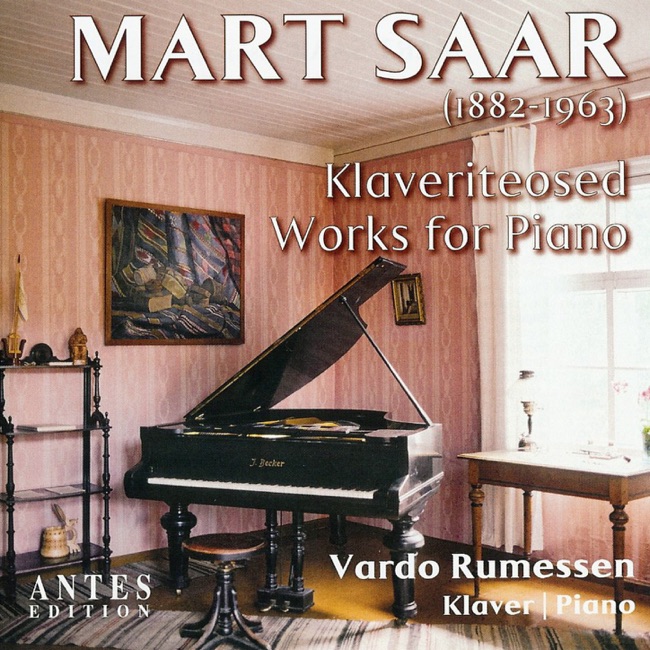
Role:ComposerCountry: EstoniaBirth:1882Death:1963Period:ModernGenre:ChoralMart Saar was a prominent Estonian composer and musician who made significant contributions to the classical music scene in Estonia. He was born on September 28, 1882, in Saaremaa, Estonia, to a family of farmers. Saar's father was a self-taught musician who played the accordion and the violin, and he passed on his love for music to his son. Saar's musical journey began at a young age when he started playing the violin and the piano. He showed exceptional talent and was soon recognized as a prodigy. At the age of 14, Saar moved to Tallinn to study music at the Tallinn Music School. He continued his studies at the St. Petersburg Conservatory, where he studied composition under Nikolai Rimsky-Korsakov. After completing his studies, Saar returned to Estonia and began his career as a composer and musician. He worked as a music teacher and conductor, and his compositions were performed by various orchestras and choirs in Estonia. Saar's music was heavily influenced by Estonian folk music, and he incorporated elements of it into his compositions. One of Saar's most significant works is his opera "The Immured Maiden," which premiered in 1913. The opera tells the story of a young woman who is locked up in a tower by her father to prevent her from marrying the man she loves. The opera was a critical success and established Saar as one of Estonia's leading composers. Saar's other notable works include his choral compositions, which are considered some of the finest examples of Estonian choral music. His choral works include "Koit," "Mu isamaa on minu arm," and "Ta lendab mesipuu poole." These compositions are characterized by their use of Estonian folk melodies and their powerful emotional impact. Saar was also a prolific composer of instrumental music, including symphonies, chamber music, and piano works. His instrumental compositions are notable for their use of folk melodies and their lyrical beauty. Some of his most famous instrumental works include his Symphony No. 1, his String Quartet No. 1, and his Piano Sonata No. 1. Saar's contributions to Estonian music were recognized during his lifetime, and he received numerous awards and honors for his work. In 1938, he was awarded the Order of the White Star, one of Estonia's highest honors. He was also awarded the Estonian State Prize for Music in 1946. Saar continued to compose and perform music throughout his life, and he remained an important figure in Estonian music until his death in 1963. His legacy lives on through his compositions, which continue to be performed and celebrated in Estonia and around the world. In conclusion, Mart Saar was a talented and influential composer who made significant contributions to Estonian music. His compositions, which were heavily influenced by Estonian folk music, are characterized by their emotional power and lyrical beauty. Saar's legacy continues to be celebrated in Estonia and beyond, and his music remains an important part of the classical music canon.More....
Copyright Ⓒ 2013 Davinci Finger. All rights reseved
Service Terms & Policy