


Ferdinand Hiller
Released Album
Keyboard
-
 April 28, 2015
 -
 May 28, 2013
 -
 October 30, 2012
 -
 May 29, 2012
 -
 November 15, 2008
 -
Concerto
-
 January 1, 2013
 -
 April 7, 2008
 -
 November 4, 1992
 -
 November 4, 1992
 -
 January 1, 1975
Vocal
-
 October 11, 2011
 -
 September 28, 2010
 -
 January 1, 1975
Chamber
-
-
 December 29, 2017
 -
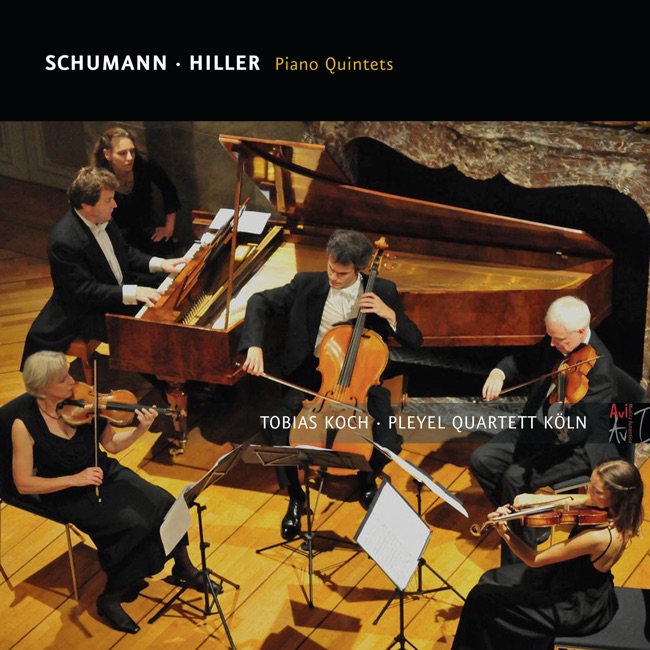 November 6, 2015
Artist Info
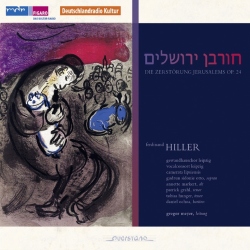
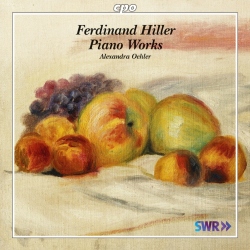
Role:ComposerCountry: GermanyBirth:October 24, 1811Death:May 11, 1885 in Cologne, GermanyPeriod:RomanticGenre:ChamberConcertoKeyboardOperaVocalFerdinand Hiller was a German composer, pianist, conductor, and music educator who lived from 1811 to 1885. He was born in Frankfurt am Main, Germany, on October 24, 1811, to a Jewish family. His father was a merchant, and his mother was a talented amateur musician who gave him his first piano lessons. Hiller showed an early talent for music, and at the age of nine, he gave his first public performance as a pianist. Hiller's parents recognized his musical talent and sent him to study with Johann Nepomuk Hummel, a renowned pianist and composer, in Weimar. Hiller studied with Hummel for two years and then continued his studies with Ludwig Berger in Darmstadt. In 1828, Hiller moved to Paris to study with Friedrich Kalkbrenner, a famous pianist and composer. In Paris, Hiller also met and became friends with many other musicians, including Franz Liszt, Hector Berlioz, and Frédéric Chopin. In 1830, Hiller returned to Frankfurt and began his career as a concert pianist. He quickly gained a reputation as a virtuoso pianist and performed throughout Europe. In 1835, Hiller was appointed as the court pianist to the Duke of Saxe-Meiningen, and he moved to Meiningen, where he also began to compose music. Hiller's early compositions were influenced by the music of his teachers, Hummel and Kalkbrenner, as well as by the music of Beethoven and Schubert. His first major work was his Piano Concerto No. 1, which he composed in 1835. The concerto was well-received and helped establish Hiller's reputation as a composer. In 1836, Hiller married Antonie Scheel, a singer and pianist. The couple had six children, and Antonie often performed Hiller's music in public concerts. Hiller continued to compose music throughout his life, and his works include symphonies, chamber music, operas, and choral music. One of Hiller's most famous works is his Symphony No. 2, which he composed in 1845. The symphony is in the key of D minor and is notable for its use of a recurring theme that appears in all four movements. The symphony was well-received and helped establish Hiller as a major composer. In addition to his work as a composer, Hiller was also a conductor and music educator. In 1844, he was appointed as the conductor of the Leipzig Gewandhaus Orchestra, one of the most prestigious orchestras in Europe. Hiller held this position for six years and helped establish the orchestra's reputation as one of the finest in the world. Hiller was also a music educator and founded the Cologne Conservatory in 1850. The conservatory was one of the first music schools in Germany and was modeled after the Paris Conservatory. Hiller served as the director of the conservatory for many years and helped train many of the leading musicians of the next generation. Hiller's later works were influenced by the music of Wagner and Liszt, and he became known for his use of chromaticism and unconventional harmonies. His opera, Der Traum, which he composed in 1865, is an example of his later style. The opera is notable for its use of a continuous musical flow, with no breaks between the arias and recitatives. Hiller continued to compose and perform music until his death in Cologne on May 11, 1885. He was a prolific composer and wrote over 300 works in a variety of genres. His music is characterized by its lyricism, virtuosity, and emotional depth, and he is considered one of the leading composers of the Romantic era.More....
Recent Artist Music
1
20:46
2
5:53

5
2:2
11
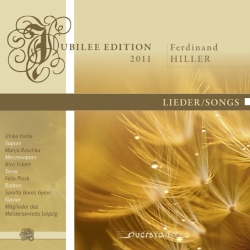
At midnight ("Deliberately the night rose on the land"), Op. 100/5
Um Mitternacht "Bedächtig stieg die Nacht an's Land", Op. 100/5
2:56
13
2:43
Copyright Ⓒ 2013 Davinci Finger. All rights reseved
Service Terms & Policy