


Antonio Veracini
Released Album
Chamber
Artist Info
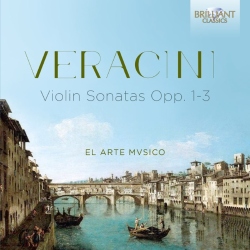
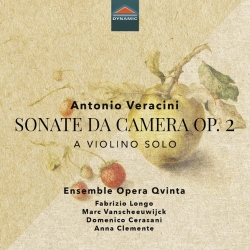
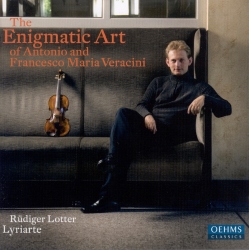
Role:ComposerBirth:1659Death:1745Antonio Veracini was a prominent Italian composer of the Baroque era. He was born on December 31, 1659, in Florence, Italy, to a family of musicians. His father, Francesco Veracini, was a violinist and composer, and his brother, Giovanni Veracini, was also a violinist and composer. Antonio Veracini began his musical education under the tutelage of his father and brother. He showed great promise as a musician from a young age and quickly became proficient in playing the violin. He also received training in composition and music theory. In 1682, Veracini moved to Venice, where he became a member of the orchestra at the Basilica di San Marco. He remained in Venice for several years, during which time he composed a number of works for the church, including sacred music and operas. In 1690, Veracini moved to Dresden, where he was appointed as the court composer and violinist for the Elector of Saxony. He remained in Dresden for the rest of his life, and his time there was marked by a prolific output of music. Veracini's compositions were highly regarded during his lifetime, and he was considered one of the leading composers of his time. His music was characterized by its virtuosity and expressiveness, and he was particularly known for his skill in writing for the violin. One of Veracini's most famous works is his Sonata in D minor for violin and continuo, which is often referred to as the "Devil's Trill Sonata." The piece is said to have been inspired by a dream in which Veracini made a deal with the devil, who challenged him to play a difficult piece of music. The sonata is known for its technical difficulty and its hauntingly beautiful melody. Veracini also composed a number of operas, including Adriano in Siria, which was first performed in 1732. The opera was well-received and was performed throughout Europe. In addition to his work as a composer, Veracini was also a respected violinist. He was known for his virtuosic playing and his ability to improvise. He was also a teacher, and his students included Johann Joachim Quantz, who went on to become a prominent composer and flutist. Veracini's later years were marked by a decline in his health and his fortunes. He suffered from mental illness and was often in debt. He died on October 31, 1745, in Dresden, at the age of 85. Despite his struggles in later life, Veracini's contributions to classical music were significant. His music was highly influential during his lifetime and continues to be studied and performed today. His legacy as a composer and violinist has earned him a place among the greats of classical music.More....
Copyright Ⓒ 2013 Davinci Finger. All rights reseved
Service Terms & Policy