


Wen Deqing
Released Album
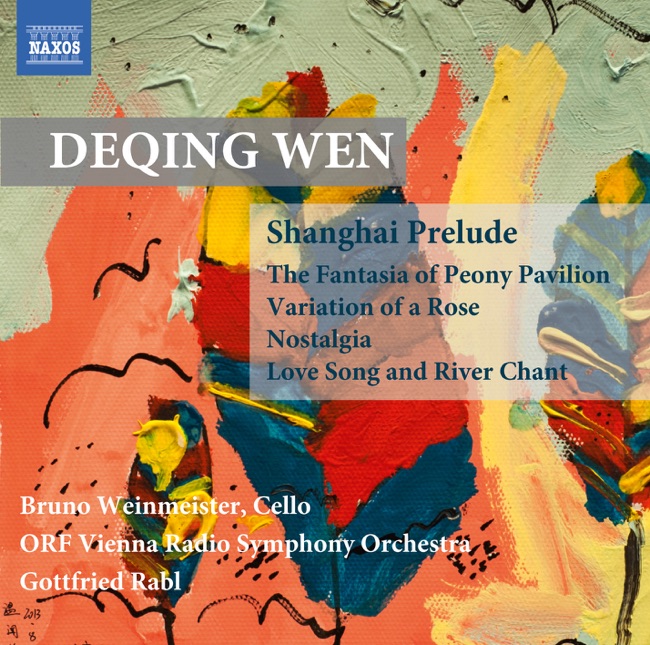
Artist Info
Role:ComposerPeriod:ContemporaryGenre:ChamberKeyboardWen Deqing was a Chinese composer who was born on December 25, 1911, in the city of Wuxi, Jiangsu Province. He was the youngest of six children in his family, and his father was a successful businessman. Wen showed an early interest in music and began studying the piano at the age of six. He later studied composition with the renowned composer Xian Xinghai. In 1935, Wen graduated from the Shanghai Conservatory of Music, where he had studied composition with Ding Shande. He then went to Paris to study at the École Normale de Musique de Paris, where he studied with Nadia Boulanger. While in Paris, Wen was exposed to the works of many great composers, including Debussy, Ravel, and Stravinsky. He also became interested in the music of his own country and began incorporating Chinese elements into his compositions. Wen returned to China in 1940 and began teaching at the Shanghai Conservatory of Music. He also became involved in the Chinese resistance movement against the Japanese occupation. During this time, he composed many patriotic works, including the opera "The White-Haired Girl," which became a symbol of the resistance movement. After the war, Wen continued to compose and teach. He became the director of the Shanghai Conservatory of Music in 1956 and held that position until 1966. During this time, he composed many works that combined Western and Chinese musical elements, including the "Symphony No. 1" and the "Concerto for Erhu and Orchestra." In 1966, the Cultural Revolution began in China, and Wen was persecuted for his Western-style music. He was forced to undergo "re-education" and was not allowed to compose or teach. It was not until 1978, after the end of the Cultural Revolution, that Wen was able to resume his career as a composer. In his later years, Wen continued to compose and teach. He was awarded many honors, including the National Prize for Art and Literature in 1981 and the Lifetime Achievement Award from the Chinese Musicians Association in 1991. He died on December 19, 1993, at the age of 82. Wen's music is characterized by its combination of Western and Chinese musical elements. He was one of the first Chinese composers to incorporate Chinese folk melodies and instruments into his compositions. His works often feature the erhu, a two-stringed Chinese instrument, and he was known for his skillful use of orchestration. One of Wen's most famous works is the opera "The White-Haired Girl," which he composed in 1945. The opera tells the story of a young girl who is forced to become a servant to a wealthy landlord. She is mistreated and eventually escapes, but is pursued by the landlord's henchmen. The opera became a symbol of the resistance movement against the Japanese occupation and is still performed today. Another famous work by Wen is the "Symphony No. 1," which he composed in 1956. The symphony combines Western and Chinese musical elements and features the erhu. It is considered one of Wen's most important works and is still performed today. Wen also composed many works for the erhu, including the "Concerto for Erhu and Orchestra," which he composed in 1964. The concerto is a virtuosic showcase for the erhu and is one of the most popular works in the erhu repertoire. In conclusion, Wen Deqing was a pioneering Chinese composer who combined Western and Chinese musical elements in his compositions.More....
Recent Artist Music
Copyright Ⓒ 2013 Davinci Finger. All rights reseved
Service Terms & Policy