


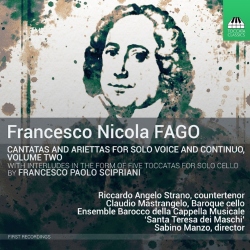
Francesco Nicola Fago
Released Album
Vocal
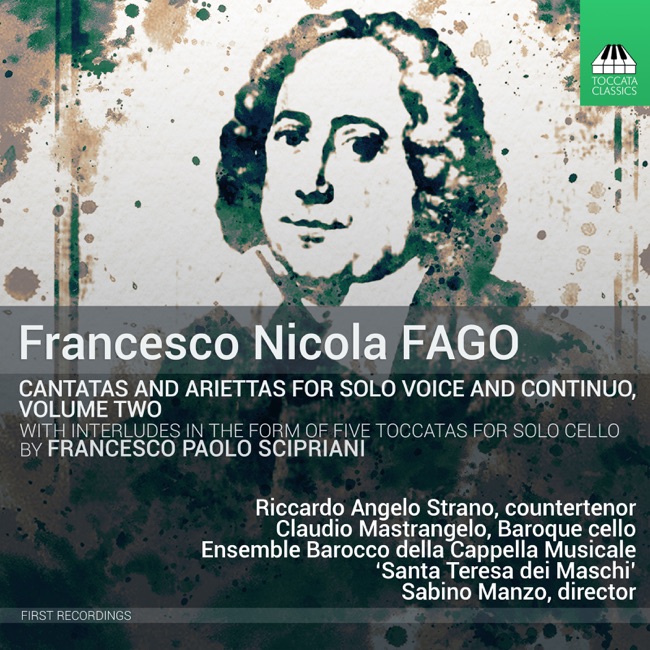
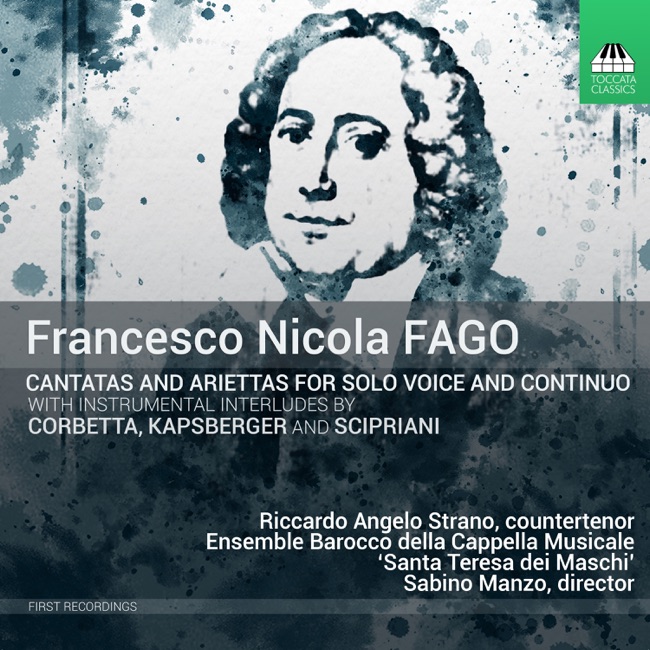
Choral
-
 October 26, 2018
 -
 January 14, 2013
Artist Info
Role:ComposerCountry: ItalyBirth:February 26, 1677 in Taranto, ItalyDeath:February 18, 1745 in Naples, ItalyGenre:KeyboardFrancesco Nicola Fago was an Italian composer of the Baroque era, born on February 26, 1677, in Taranto, Italy. He was the son of a musician, and his father, Lorenzo Fago, was a violinist and composer. Francesco Nicola Fago showed an early interest in music and began his musical education under his father's guidance. Fago's musical talent was recognized at a young age, and he was sent to study at the Conservatorio di Santa Maria di Loreto in Naples. There, he studied under the renowned composer and teacher, Francesco Provenzale. Fago quickly became one of Provenzale's most promising students and was appointed as a teacher at the conservatory at the age of 21. Fago's early compositions were primarily vocal works, including operas, oratorios, and cantatas. His first opera, "La virtù trionfante dell'amore e dell'odio," was performed in Naples in 1703. The opera was well-received, and Fago's reputation as a composer began to grow. In 1704, Fago was appointed as the maestro di cappella at the Basilica di San Giovanni Maggiore in Naples. This position allowed him to compose music for the church, including masses, motets, and other sacred works. Fago's sacred music was highly regarded, and he became known for his use of complex counterpoint and rich harmonies. Fago's most famous work is his oratorio, "Il Faraone Sommerso," which was first performed in Naples in 1707. The oratorio tells the story of the biblical account of the Israelites' escape from Egypt and the drowning of Pharaoh's army in the Red Sea. The work is notable for its dramatic use of chorus and orchestra, as well as its intricate vocal writing. In addition to his work as a composer, Fago was also a respected teacher. He taught at the Conservatorio di Santa Maria di Loreto and the Conservatorio di Sant'Onofrio a Porta Capuana in Naples. His students included several notable composers, including Leonardo Leo and Niccolò Jommelli. Fago's later works included more instrumental music, including sonatas and concertos. His instrumental music was characterized by its virtuosic writing for the solo instrument and its use of complex counterpoint. Fago's music was highly regarded during his lifetime, and he was considered one of the leading composers of his time. Francesco Nicola Fago died on February 17, 1745, in Naples, Italy. His legacy as a composer and teacher continued long after his death, and his music continued to be performed and studied throughout the 18th and 19th centuries. Today, Fago's music is still performed and recorded, and he is recognized as one of the most important composers of the Baroque era.More....
Recent Artist Music

Copyright Ⓒ 2013 Davinci Finger. All rights reseved
Service Terms & Policy