


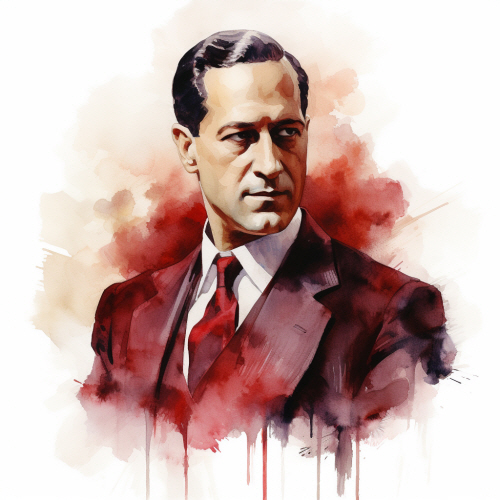
Herbert Greene

Artist Info
Role:ConductorGenre:OrchestralVocalHerbert Greene was a renowned classical music artist who made significant contributions to the world of music. Born on May 12, 1921, in New York City, Greene was the son of a violinist and a pianist. His parents recognized his musical talent at an early age and encouraged him to pursue a career in music. Greene began his musical training at the age of six, studying the piano with his mother. He later switched to the cello and began studying with the renowned cellist, Emanuel Feuermann. Under Feuermann's tutelage, Greene developed a deep love for the cello and a passion for classical music. In 1940, Greene enrolled at the Juilliard School of Music in New York City, where he studied with the legendary cellist, Gregor Piatigorsky. Piatigorsky recognized Greene's talent and took him under his wing, mentoring him and helping him to develop his skills as a cellist. After graduating from Juilliard, Greene began his professional career as a cellist, performing with various orchestras and ensembles. In 1948, he joined the New York Philharmonic as a cellist, where he remained for 25 years. During his time with the New York Philharmonic, Greene performed under the baton of some of the world's most renowned conductors, including Leonard Bernstein, Arturo Toscanini, and Bruno Walter. In addition to his work with the New York Philharmonic, Greene was also a sought-after soloist and chamber musician. He performed with some of the world's most prestigious orchestras, including the Boston Symphony Orchestra, the Chicago Symphony Orchestra, and the London Symphony Orchestra. He also collaborated with some of the world's most renowned musicians, including pianist Arthur Rubinstein and violinist Isaac Stern. Throughout his career, Greene received numerous awards and accolades for his contributions to the world of music. In 1956, he was awarded the prestigious Naumburg Award for his outstanding contributions to the field of music. He was also a recipient of the National Medal of Arts, the highest honor awarded to artists by the United States government. One of the highlights of Greene's career was his performance of the Dvorak Cello Concerto with the New York Philharmonic in 1962. The performance was hailed as a triumph, with critics praising Greene's virtuosity and musicality. The New York Times called it "a performance of rare beauty and power." In addition to his work as a performer, Greene was also a dedicated teacher and mentor. He taught at the Juilliard School of Music for over 30 years, where he inspired and influenced generations of young musicians. Many of his students went on to have successful careers as cellists and musicians in their own right. Greene's legacy as a musician and teacher continues to inspire and influence musicians around the world. His recordings and performances are still celebrated for their beauty, passion, and musicality. He remains a beloved figure in the world of classical music, and his contributions to the field will be remembered for generations to come.More....

Copyright Ⓒ 2013 Davinci Finger. All rights reseved
Service Terms & Policy