


Zygmunt Krauze
Released Album
Keyboard
-
 July 29, 2008
 -
 October 25, 2005
 -
 November 30, 2004

Artist Info
Role:ComposerCountry: PolandBirth:September 19, 1938 in Warsaw, PolandPeriod:ContemporaryGenre:ChamberZygmunt Krauze is a Polish composer, pianist, and music educator who was born on September 19, 1938, in Warsaw, Poland. He is considered one of the most prominent figures in contemporary classical music, known for his innovative and experimental approach to composition. Krauze's musical journey began at a young age when he started playing the piano. He studied at the State Higher School of Music in Warsaw, where he received his diploma in composition in 1963. During his studies, he was influenced by the works of avant-garde composers such as Pierre Boulez, Karlheinz Stockhausen, and John Cage, which had a significant impact on his own compositions. Krauze's early works were characterized by a focus on sound exploration and experimentation with unconventional techniques. His first major composition, "Formes en l'air," was written in 1962 and featured a combination of traditional and electronic instruments. This piece marked the beginning of Krauze's interest in electroacoustic music, which would become a recurring theme in his later works. Throughout the 1960s and 1970s, Krauze continued to experiment with different musical styles and techniques. He collaborated with other composers and musicians, including the Polish Radio Experimental Studio, where he worked as a composer and sound engineer. During this time, he also began to incorporate elements of Polish folk music into his compositions, which added a unique cultural dimension to his work. One of Krauze's most significant works from this period is "Epitaphium Stanislaw Skrowaczewski," which was written in 1970 as a tribute to the Polish conductor and composer. This piece features a combination of traditional and electronic instruments and is characterized by its complex rhythms and unconventional harmonies. In the 1980s, Krauze's compositions became more focused on the piano, which he continued to play professionally. He began to explore the possibilities of the instrument, experimenting with extended techniques and unconventional playing methods. This led to the creation of several piano works, including "Piano Piece No. 4" and "Piano Piece No. 5," which are considered some of his most significant contributions to the genre. Krauze's later works continued to push the boundaries of contemporary classical music. He experimented with different musical forms and structures, incorporating elements of improvisation and chance into his compositions. He also continued to explore the possibilities of electroacoustic music, creating works that combined traditional and electronic instruments. One of Krauze's most recent works is "String Quartet No. 4," which was written in 2016. This piece features a combination of traditional and extended string techniques and is characterized by its complex rhythms and unconventional harmonies. It is a testament to Krauze's continued innovation and experimentation in the field of contemporary classical music. In addition to his work as a composer, Krauze has also been a dedicated music educator. He has taught at several institutions, including the State Higher School of Music in Warsaw and the Hochschule für Musik und Theater in Hamburg. He has also served as a guest lecturer and conductor at universities and music festivals around the world. Krauze's contributions to contemporary classical music have been recognized with numerous awards and honors.More....
Recent Artist Music
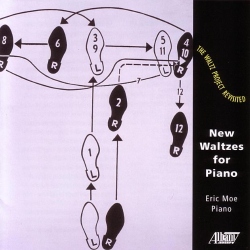
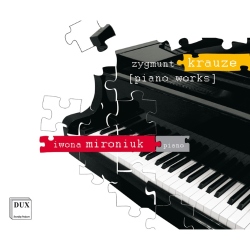
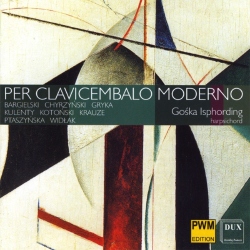
4
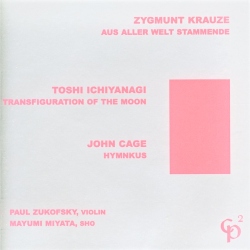
5:10
5
17:45
Copyright Ⓒ 2013 Davinci Finger. All rights reseved
Service Terms & Policy