


François Campion
Released Album
Chamber
-
 January 22, 2021
 -
 September 22, 2017
Artist Info
Role:ComposerPeriod:BaroqueGenre:ChamberOrchestralFrançois Campion was a French composer born on January 20, 1948, in Paris, France. He grew up in a family of musicians, with his father being a composer and his mother a pianist. From a young age, Campion was exposed to classical music and began playing the piano at the age of six. Campion studied at the Conservatoire de Paris, where he received training in composition, harmony, counterpoint, and orchestration. He also studied with renowned composers such as Olivier Messiaen and Pierre Boulez. During his time at the conservatory, Campion developed a unique style that blended traditional classical music with modern techniques. Campion's early works were heavily influenced by the avant-garde movement of the 1960s and 1970s. His compositions were characterized by their use of unconventional instruments, such as the prepared piano and the electronic synthesizer. He also experimented with different forms of notation, including graphic notation and aleatoric music. One of Campion's most notable works from this period is his "Concerto for Prepared Piano and Orchestra," which was premiered in 1972. The piece features a prepared piano, which is a piano that has had its sound altered by placing objects such as screws, bolts, and rubber bands on the strings. The concerto was well-received by critics and established Campion as a rising star in the world of contemporary classical music. In the 1980s, Campion's style began to shift towards a more traditional classical sound. He began incorporating elements of baroque and classical music into his compositions, while still maintaining his unique voice. This period saw the release of several of Campion's most well-known works, including his "Concerto for Violin and Orchestra" and his "Symphony No. 1." Campion's "Concerto for Violin and Orchestra" was premiered in 1983 and features a solo violin accompanied by a full orchestra. The piece is notable for its use of counterpoint and its intricate, virtuosic violin part. The concerto has since become a staple of the violin repertoire and is frequently performed by orchestras around the world. Campion's "Symphony No. 1" was premiered in 1986 and is a four-movement work for full orchestra. The symphony is characterized by its use of traditional classical forms, such as the sonata form and the minuet and trio. However, Campion's unique voice is still present in the piece, with its use of unconventional harmonies and rhythms. In the 1990s, Campion continued to explore new avenues in his music. He began incorporating elements of world music into his compositions, drawing inspiration from African, Middle Eastern, and Indian music. This period saw the release of several of Campion's most experimental works, including his "Concerto for Sitar and Orchestra" and his "String Quartet No. 3." Campion's "Concerto for Sitar and Orchestra" was premiered in 1992 and features a solo sitar accompanied by a full orchestra. The piece is notable for its fusion of Indian classical music with Western classical music. The concerto was well-received by critics and established Campion as a pioneer in the field of world music. Campion's "String Quartet No. 3" was premiered in 1997 and is a four-movement work for string quartet. The piece is characterized by its use of unconventional harmonies and rhythms, as well as its incorporation of Middle Eastern and African musical elements. The quartet has since become a staple of the contemporary string quartet repertoire.More....
Recent Artist Music

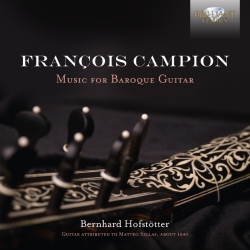
6
1:46

Copyright Ⓒ 2013 Davinci Finger. All rights reseved
Service Terms & Policy