


Povl Hamburger
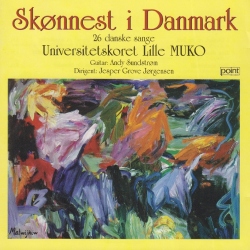
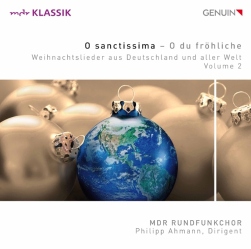
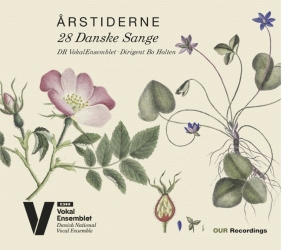
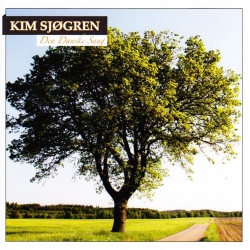
Released Album
Vocal
-
 November 10, 2015
 -
 February 9, 1999
 -
 January 5, 1998
Artist Info
Role:ComposerBirth:1901Death:1972Genre:ChoralVocalPovl Hamburger was a Danish composer and pianist who was born on August 22, 1906, in Copenhagen, Denmark. He was the son of a Jewish family, and his father was a successful businessman. Hamburger showed an early interest in music and began playing the piano at a young age. He received his first formal music education at the Royal Danish Academy of Music in Copenhagen, where he studied piano with Victor Schiøler and composition with Knud Jeppesen. After completing his studies at the Royal Danish Academy of Music, Hamburger continued his education in Berlin, where he studied with the renowned pianist and composer Ferruccio Busoni. Busoni was a major influence on Hamburger's musical style, and he encouraged him to explore new and innovative approaches to composition. Hamburger's early works were heavily influenced by the music of Busoni and other modernist composers such as Arnold Schoenberg and Alban Berg. His compositions from this period were characterized by their complex harmonies, dissonant chords, and unconventional forms. One of his most notable early works is his Piano Sonata No. 1, which was composed in 1929 and premiered in Copenhagen the following year. In the 1930s, Hamburger began to move away from the modernist style of his early works and started to incorporate more traditional elements into his compositions. He was particularly interested in the music of Johann Sebastian Bach, and he began to incorporate elements of Baroque music into his own compositions. This can be heard in works such as his Suite for Piano, which was composed in 1936. During World War II, Hamburger was forced to flee Denmark due to his Jewish heritage. He spent several years living in Sweden before eventually settling in the United States in 1941. In the US, Hamburger continued to compose and perform, and he became a respected member of the American musical community. One of Hamburger's most notable works from this period is his Symphony No. 1, which was composed in 1944. The symphony is a powerful and emotional work that reflects Hamburger's experiences as a refugee and his feelings about the war. The work was premiered by the New York Philharmonic in 1945 and was well-received by both audiences and critics. In addition to his symphonies, Hamburger also composed a number of chamber works, including string quartets, piano trios, and sonatas for various instruments. One of his most notable chamber works is his String Quartet No. 2, which was composed in 1950. The quartet is a complex and challenging work that showcases Hamburger's mastery of counterpoint and his ability to create intricate and compelling musical textures. Hamburger continued to compose and perform throughout the 1950s and 1960s, and he remained an important figure in the American musical community. In addition to his work as a composer, he was also a respected pianist and performed regularly throughout his career. Hamburger's later works were characterized by a more tonal and accessible style, and he began to incorporate elements of folk music and jazz into his compositions. One of his most notable works from this period is his Piano Concerto, which was composed in 1963. The concerto is a lively and energetic work that showcases Hamburger's ability to blend different musical styles and create a unique and compelling sound. Hamburger continued to compose and perform until his death in 1993.More....
Recent Artist Music
2
1:54




Copyright Ⓒ 2013 Davinci Finger. All rights reseved
Service Terms & Policy