


Eugen Werner Velte
Released Album
Keyboard
-
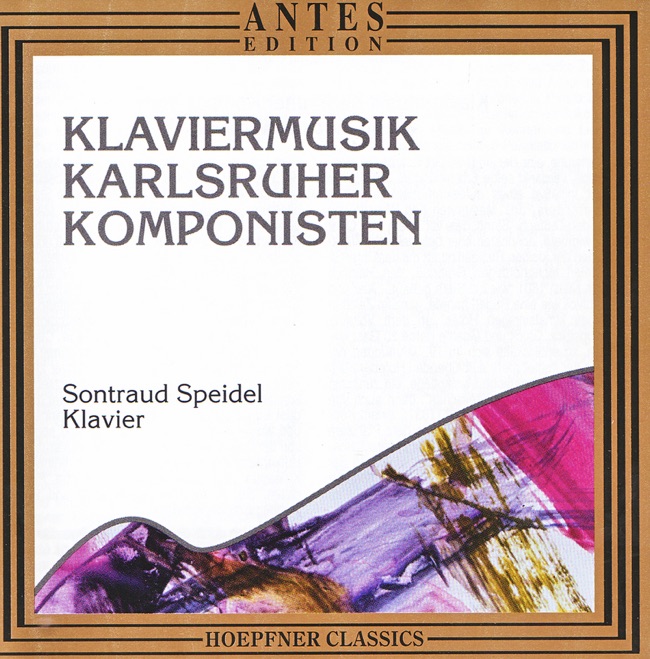 April 6, 2012
Chamber
-
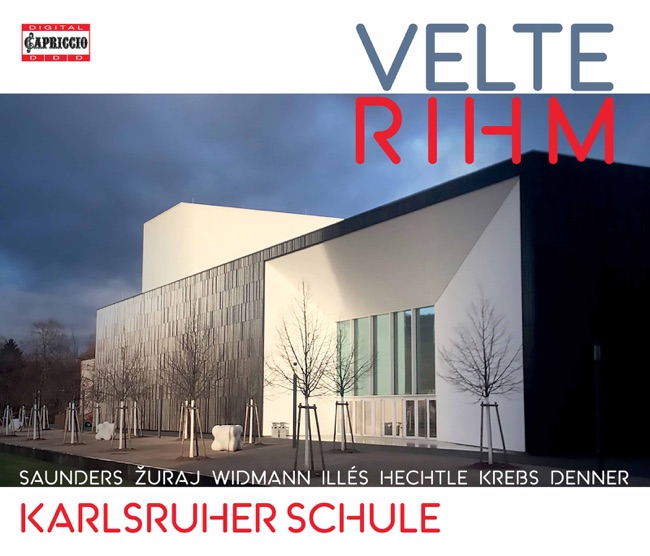 April 2, 2021
Artist Info
Role:ComposerEugen Werner Velte was a German composer and pianist who lived from 1893 to 1969. He was born in the city of Bremen, Germany, on May 22, 1893, to a family of musicians. His father, Wilhelm Velte, was a well-known conductor and composer, and his mother, Marie Velte, was a pianist. Eugen showed an early interest in music and began taking piano lessons at the age of six. As a child, Eugen was exposed to a wide variety of music, including classical, folk, and popular music. He was particularly drawn to the works of Bach, Mozart, and Beethoven, and spent many hours practicing their compositions. By the age of 12, Eugen had already composed several pieces of his own, and his parents recognized his talent and encouraged him to pursue a career in music. In 1911, Eugen enrolled at the Hochschule für Musik in Berlin, where he studied composition with Max Bruch and piano with Ferruccio Busoni. He quickly distinguished himself as a talented pianist and composer, and his works began to receive critical acclaim. In 1914, he won the prestigious Mendelssohn Prize for his Piano Sonata in C minor, which was hailed as a masterpiece of modernist composition. During World War I, Eugen served in the German army as a musician, playing piano and conducting military bands. After the war, he returned to Berlin and resumed his studies at the Hochschule für Musik. He also began to establish himself as a concert pianist, performing throughout Germany and Europe. In the 1920s, Eugen became increasingly interested in the music of the Second Viennese School, particularly the works of Arnold Schoenberg and Alban Berg. He began to incorporate elements of atonality and serialism into his own compositions, creating a unique style that blended traditional tonality with modernist techniques. One of Eugen's most famous works from this period is his Piano Concerto No. 1, which he composed in 1927. The concerto is a virtuosic showcase for the soloist, with complex rhythms and harmonies that push the boundaries of traditional tonality. It was premiered in Berlin in 1928, with Eugen as the soloist, and was hailed as a groundbreaking work of modernist composition. In the 1930s, Eugen's career was interrupted by the rise of the Nazi party in Germany. As a Jew and a modernist composer, he was targeted by the regime and his music was banned from public performance. In 1938, he fled Germany and emigrated to the United States, where he settled in New York City. In America, Eugen continued to compose and perform, but he struggled to establish himself in the competitive music scene. He worked as a piano teacher and accompanist, and his compositions were largely ignored by American audiences. However, he continued to write music in his unique style, blending traditional tonality with modernist techniques. One of Eugen's most famous works from his American period is his String Quartet No. 2, which he composed in 1945. The quartet is a complex and challenging work, with intricate rhythms and harmonies that reflect Eugen's modernist influences. It was premiered in New York City in 1946, and was hailed as a masterpiece of modernist composition. Eugen continued to compose and perform throughout the 1950s and 1960s, but his music remained largely unknown outside of a small circle of modernist composers and musicians. He died in New York City on December 22, 1969, at the age of 76.More....
Copyright Ⓒ 2013 Davinci Finger. All rights reseved
Service Terms & Policy