


Gideon Fagan
Artist Info
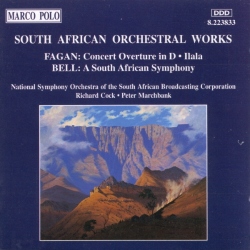
Role:Composer ConductorPeriod:RomanticModernGenre:OperaOrchestralVocalGideon Fagan was a classical music composer who was born on May 12, 1922, in Johannesburg, South Africa. He was the son of a prominent South African composer, Frederick Fagan, who was also a conductor and music teacher. Gideon Fagan grew up in a musical family and was exposed to music from a very young age. He showed a keen interest in music and began playing the piano at the age of six. Fagan's musical education began at the University of the Witwatersrand in Johannesburg, where he studied music theory and composition. He later went on to study at the Royal College of Music in London, where he was awarded a scholarship to study composition. During his time in London, Fagan studied under some of the most prominent composers of the time, including Ralph Vaughan Williams and Benjamin Britten. Fagan's early compositions were heavily influenced by the music of his father, as well as the works of Vaughan Williams and Britten. His early works were characterized by their use of folk melodies and traditional African rhythms. Fagan's music was also heavily influenced by his experiences growing up in South Africa, and he often incorporated elements of African music into his compositions. One of Fagan's most notable works is his Symphony No. 1, which was composed in 1952. The symphony is a four-movement work that is heavily influenced by African rhythms and melodies. The first movement, titled "Allegro con brio," is a lively and energetic piece that features a prominent African drumbeat. The second movement, titled "Andante," is a slower and more contemplative piece that features a haunting melody played by the strings. The third movement, titled "Scherzo," is a fast and playful piece that features a call-and-response between the different sections of the orchestra. The final movement, titled "Allegro vivace," is a lively and upbeat piece that brings the symphony to a rousing conclusion. Another notable work by Fagan is his Piano Concerto, which was composed in 1960. The concerto is a three-movement work that features a solo piano accompanied by a full orchestra. The first movement, titled "Allegro," is a fast and energetic piece that features a virtuosic piano solo. The second movement, titled "Adagio," is a slower and more contemplative piece that features a beautiful melody played by the strings. The final movement, titled "Allegro vivace," is a lively and upbeat piece that features a playful piano solo. Fagan's music was well-received by audiences and critics alike, and he was widely regarded as one of the most important composers of his time. His music was often performed by some of the most prominent orchestras in the world, including the London Symphony Orchestra and the New York Philharmonic. In addition to his work as a composer, Fagan was also a respected music educator. He taught at the University of the Witwatersrand in Johannesburg for many years, and he was also a visiting professor at several universities in the United States. Fagan continued to compose music throughout his life, and he remained active in the music world until his death in 1995. His legacy as a composer and educator continues to be celebrated today, and his music remains an important part of the classical music canon.More....
Copyright Ⓒ 2013 Davinci Finger. All rights reseved
Service Terms & Policy