


Giovanni Valentini
Released Album
Vocal
-
 March 22, 2024
 -
 November 11, 2016
 -
 September 25, 2001
Chamber
Artist Info
Role:ComposerCountry: ItalyBirth:1582Death:April, 1649Period:BaroqueGenre:VocalGiovanni Valentini was a prominent Italian composer of the Baroque era, born in Venice in 1582. He was the son of a musician, and his father recognized his son's musical talent at an early age. Valentini received his early musical education from his father, who was a singer and instrumentalist in the Venetian court. Valentini's musical education continued when he moved to Rome in 1600. There, he studied with the famous composer Giovanni de Macque, who was known for his innovative keyboard music. Valentini quickly became a skilled keyboard player and composer, and he began to attract the attention of the Roman aristocracy. In 1607, Valentini was appointed as the maestro di cappella at the church of San Lorenzo in Damaso. This was a prestigious position, and it allowed Valentini to compose music for the church and to perform for the Pope and other high-ranking officials. Valentini's music was well-received, and he quickly gained a reputation as one of the most talented composers in Rome. Valentini's music was characterized by its complexity and its use of chromaticism. He was known for his skillful use of dissonance and his ability to create intricate counterpoint. Valentini's music was also notable for its use of unusual instrumental combinations, such as the combination of violins and trombones. One of Valentini's most famous works is his Sonata a 4, which was published in 1621. This piece is a prime example of Valentini's use of chromaticism and dissonance. The Sonata a 4 is a four-part instrumental work that features a complex interplay between the different instruments. The piece is notable for its use of unexpected harmonies and its intricate counterpoint. Valentini's music was also influenced by the Venetian school of composers, which was known for its use of polychoral techniques. Valentini's own polychoral works, such as his Missa Salisburgensis, were highly regarded and were performed in churches throughout Italy. Valentini's career continued to flourish throughout the 1620s and 1630s. He was appointed as the maestro di cappella at the church of Santa Maria Maggiore in Rome, and he continued to compose music for the church and for private patrons. Valentini's music was also performed in other parts of Italy, as well as in Austria and Germany. Valentini's later works show a shift towards a more conservative style. He began to incorporate more traditional harmonies and forms into his music, and he moved away from the complex chromaticism that had characterized his earlier works. Despite this shift, Valentini's music continued to be highly regarded, and he remained a respected composer until his death in 1649. In conclusion, Giovanni Valentini was a highly influential composer of the Baroque era. His music was characterized by its complexity, its use of chromaticism, and its innovative instrumental combinations. Valentini's works were highly regarded during his lifetime, and they continue to be performed and studied today. Valentini's legacy as a composer is a testament to his skill and his contribution to the development of Baroque music.More....
Recent Artist Music
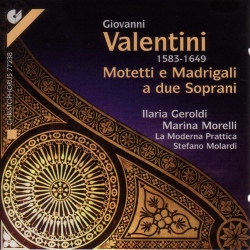
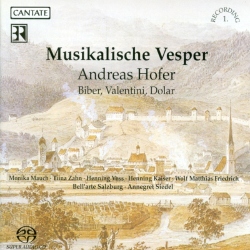
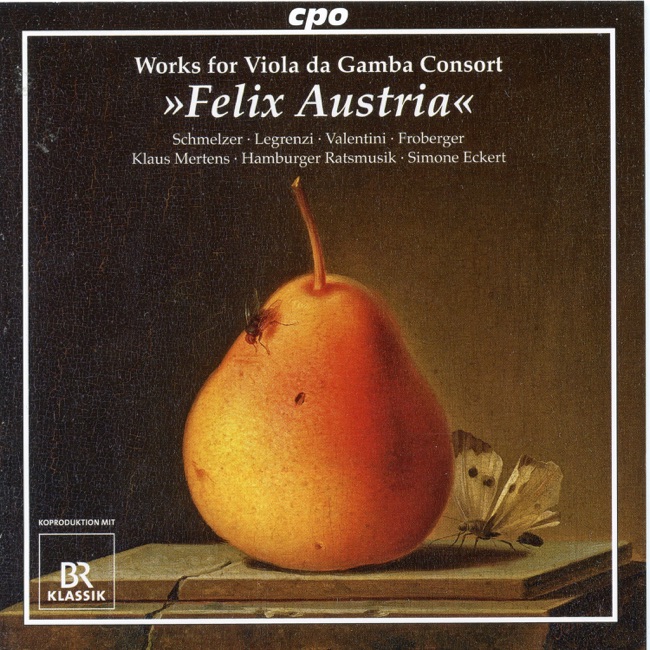
4
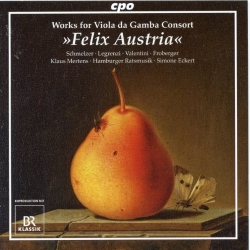
Sonata for 4 violas & bass in G minor "Sonata enharmonica"
Sonata Enharmonica for 4 viols and bass in G minor
3:52
7
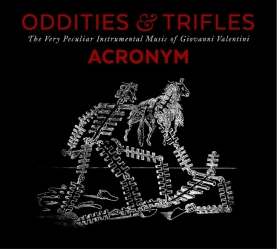
4:59
8
9:6
9
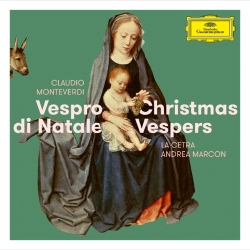
Hodie Christ natus est
Hodie Christus natus est (Antifona al Magnificat (ms. at Kremsmünster)
6:22
11
3:43
Copyright Ⓒ 2013 Davinci Finger. All rights reseved
Service Terms & Policy