


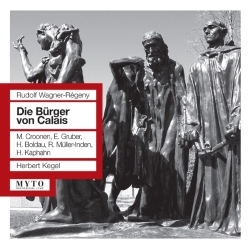
Rudolf Wagner-Régeny
Released Album
Vocal
-
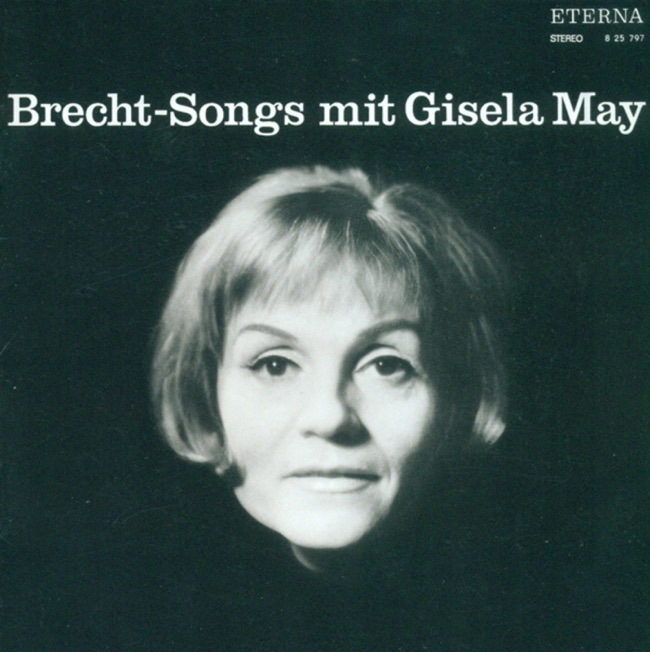 March 28, 2007
Opera
-
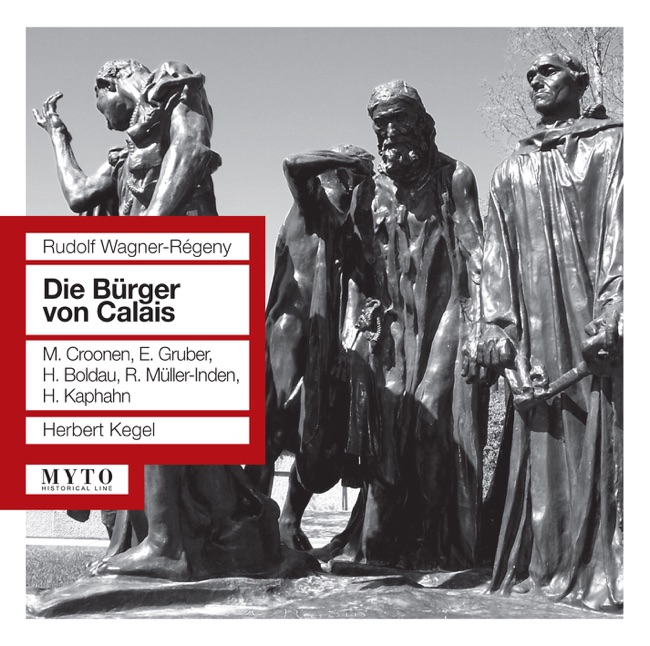 September 19, 2011
Artist Info
Role:ComposerBirth:1903 in Szászrégen (now Reghin, Romania)Death:1969 in Berlin, GermanyGenre:ChoralOrchestralVocalRudolf Wagner-Régeny was a German composer who was born on July 28, 1903, in Berlin. He was the son of a Hungarian father and a German mother. Wagner-Régeny grew up in a musical family, and his parents encouraged him to pursue a career in music. He began his musical education at the age of six, studying piano and composition with his mother. He later studied at the Berlin Academy of Music, where he was a student of Franz Schreker. Wagner-Régeny's early works were influenced by the music of his teacher, Schreker, as well as by the music of Richard Strauss and Gustav Mahler. He was also influenced by the music of the Second Viennese School, particularly the music of Arnold Schoenberg. Wagner-Régeny's early works were characterized by their lush harmonies and complex textures. In the 1930s, Wagner-Régeny became interested in the music of the Soviet Union, particularly the music of Dmitri Shostakovich. He was also influenced by the music of Igor Stravinsky and Sergei Prokofiev. Wagner-Régeny's music began to reflect these influences, and his works became more dissonant and rhythmically complex. During World War II, Wagner-Régeny served in the German army. After the war, he was imprisoned by the Soviet Union for several years. During this time, he continued to compose music, and his works were performed by other prisoners. After his release, Wagner-Régeny returned to Germany and resumed his career as a composer. Wagner-Régeny's most famous work is his opera, "The Trial of Lucullus." The opera was first performed in 1949 and is based on a play by Bertolt Brecht. The opera tells the story of Lucullus, a Roman general who is put on trial by the gods for his excesses. The opera is notable for its use of Brechtian techniques, such as the use of alienation and the breaking of the fourth wall. Wagner-Régeny's other works include several symphonies, concertos, and chamber music. His music is characterized by its use of dissonance and complex rhythms. Wagner-Régeny was also interested in the music of other cultures, particularly the music of Africa and Asia. He incorporated elements of these musical traditions into his own works. Wagner-Régeny was also a teacher and a musicologist. He taught at the Berlin Academy of Music and the Hochschule für Musik in Berlin. He also wrote several books on music, including a biography of Franz Schreker. Wagner-Régeny died on September 20, 1969, in Berlin. His music continues to be performed and recorded today. Wagner-Régeny's contributions to the world of classical music are significant, and his works continue to inspire and influence composers today.More....
Recent Artist Music
2
4:

Copyright Ⓒ 2013 Davinci Finger. All rights reseved
Service Terms & Policy