


Julius Bechgaard
Released Album
Vocal
-
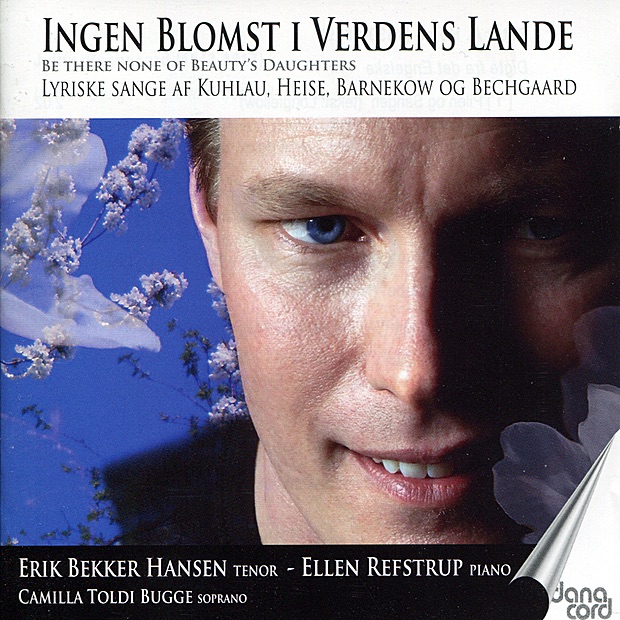
-
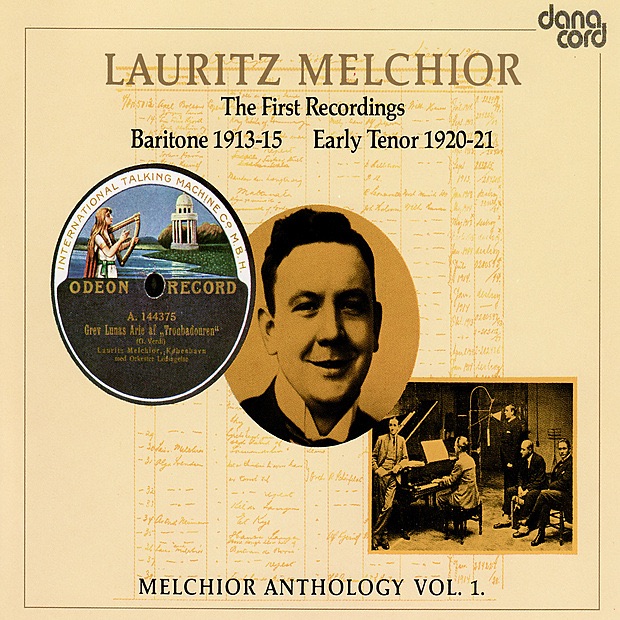 October 1, 1999
Artist Info
Role:ComposerBirth:1843Death:1917Genre:ChoralVocalJulius Bechgaard was a Danish composer who lived from 1909 to 1987. He was born in the small town of Horsens, Denmark, and showed an early interest in music. His parents were both amateur musicians, and they encouraged him to pursue his passion for music. Bechgaard began his formal music education at the Royal Danish Academy of Music in Copenhagen, where he studied composition with Knud Jeppesen and piano with Victor Schiøler. He graduated in 1933 and went on to study in Paris with Nadia Boulanger, one of the most influential composition teachers of the 20th century. Bechgaard's early works were influenced by the neoclassical style of Stravinsky and the French composers of the time. His first major work, the Symphony No. 1, was premiered in 1936 and received critical acclaim. The symphony is characterized by its use of polytonality and irregular rhythms, and it shows Bechgaard's early interest in exploring new musical forms. During World War II, Bechgaard worked as a pianist and conductor for the Danish Broadcasting Corporation. He also continued to compose, and his music during this period reflects the turmoil of the time. His Symphony No. 2, premiered in 1943, is a dark and brooding work that reflects the uncertainty and fear of the war years. After the war, Bechgaard's music became more tonal and lyrical. He was influenced by the music of Sibelius and Nielsen, and his works from this period show a strong sense of melody and harmony. His Symphony No. 3, premiered in 1950, is a pastoral work that reflects the beauty of the Danish countryside. Bechgaard's music was well-received in Denmark, and he was awarded the Carl Nielsen Prize in 1955. He continued to compose throughout the 1950s and 1960s, and his works from this period show a continued interest in exploring new musical forms. His Symphony No. 4, premiered in 1960, is a complex work that uses serial techniques and unconventional forms. In addition to his symphonies, Bechgaard composed a number of chamber works, including string quartets, sonatas, and a piano trio. His chamber music shows a strong sense of lyricism and a mastery of counterpoint. Bechgaard's music was not widely known outside of Denmark during his lifetime, but it has since gained recognition as an important contribution to 20th-century classical music. His works are characterized by their use of unconventional forms and tonalities, and they show a strong sense of melody and harmony. Bechgaard died in 1987, but his music continues to be performed and recorded. His legacy as a composer is one of innovation and exploration, and his works remain an important part of the classical music canon.More....
Recent Artist Music

Copyright Ⓒ 2013 Davinci Finger. All rights reseved
Service Terms & Policy