


Camillo Togni
Released Album
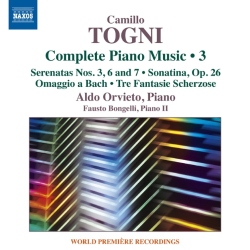
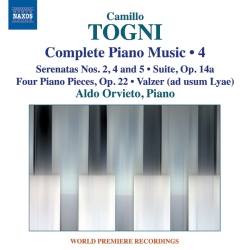
Keyboard
-
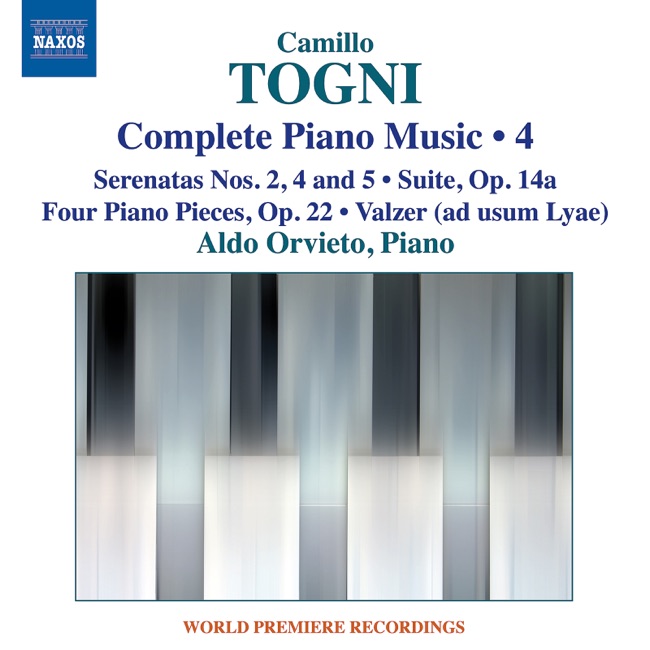 February 9, 2018
 -
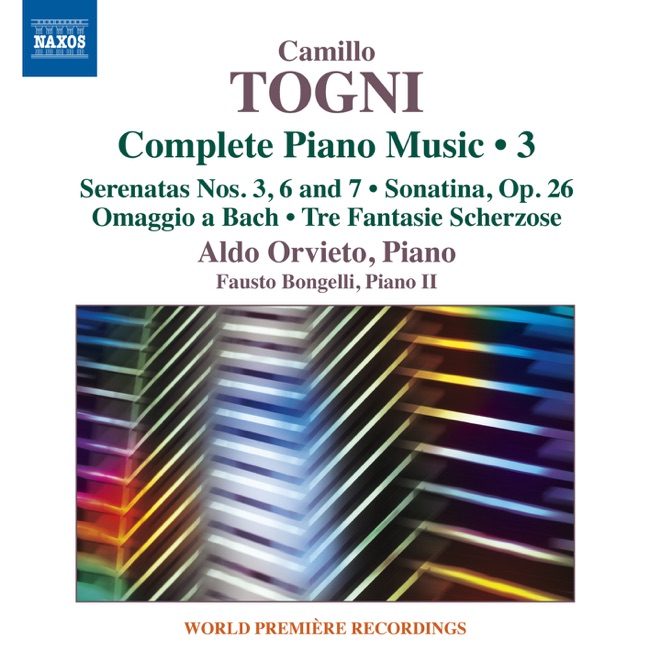 May 13, 2016
 -
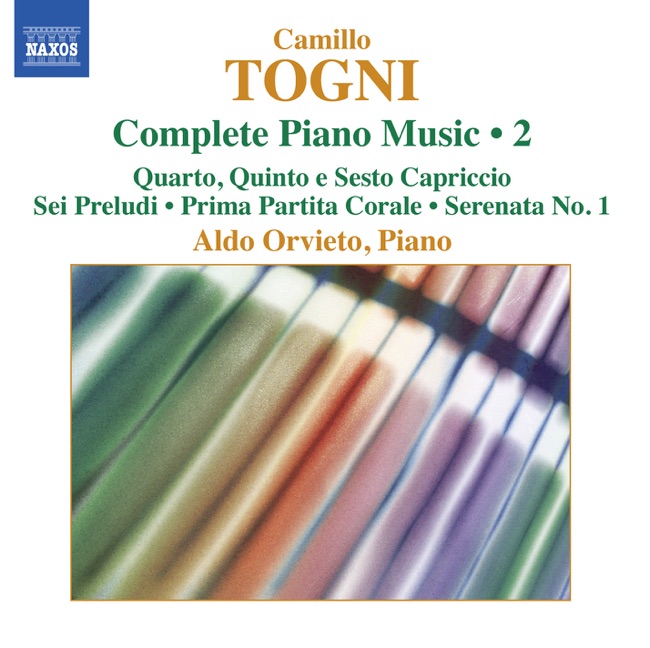 March 31, 2014
 -
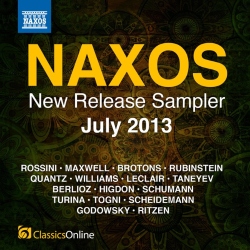
 July 1, 2013
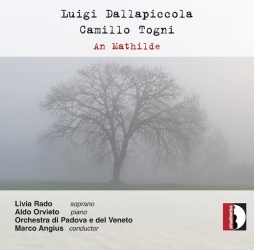
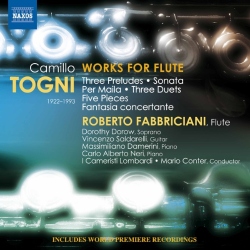
Orchestral
-
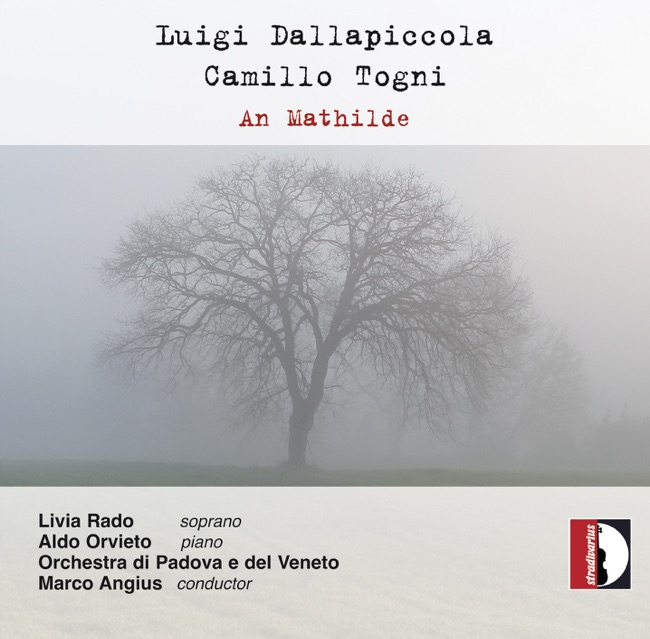 September 30, 2016
 -
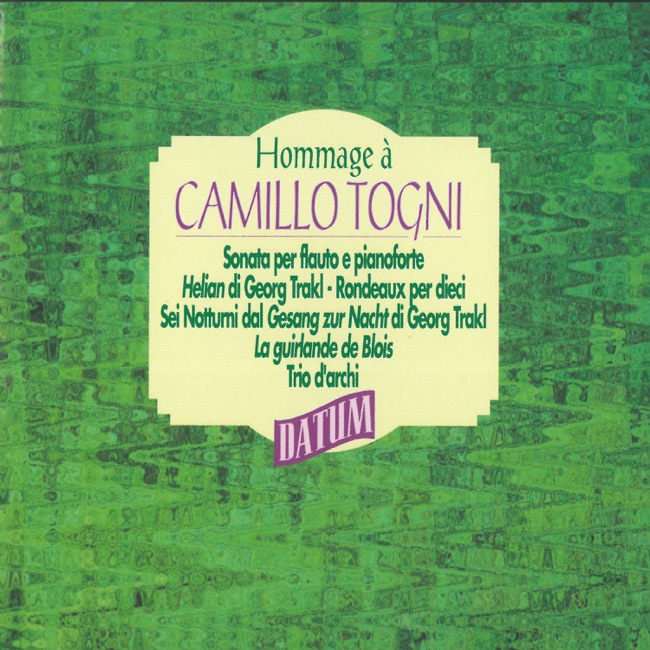 January 17, 2001
Artist Info
Role:Composer PerformerBirth:October 18, 1922Death:November 28, 1993Genre:ChamberOrchestralVocalCamillo Togni was an Italian composer who was born on August 22, 1922, in Gussago, a small town in the province of Brescia. He was the son of a music teacher and grew up in a family that was deeply involved in music. His father, Luigi Togni, was a violinist and conductor, and his mother, Maria Luisa, was a pianist. Camillo Togni showed an early interest in music and began studying the piano and violin at a young age. Togni's musical education began at the Conservatory of Brescia, where he studied composition with Luigi Ferrari-Trecate. He later continued his studies at the Milan Conservatory, where he studied with Ildebrando Pizzetti. Togni was a gifted student and quickly gained recognition for his talent. In 1942, he won the prestigious "Prix de Rome" for composition, which allowed him to study at the French Academy in Rome. During his time in Rome, Togni was exposed to a wide range of musical styles and began to develop his own unique voice as a composer. He was particularly influenced by the music of Arnold Schoenberg and the Second Viennese School, as well as the Italian Futurist movement. Togni's early works were characterized by their atonal and dissonant harmonies, as well as their complex rhythmic structures. After returning to Italy from Rome, Togni began to establish himself as a composer. He taught composition at the Conservatory of Brescia and later at the Milan Conservatory, where he was a professor for over 30 years. Togni's music began to gain recognition both in Italy and abroad, and he received numerous commissions from orchestras and ensembles. One of Togni's most significant works is his "Concerto for Orchestra," which was composed in 1954. The piece is a complex and challenging work that showcases Togni's mastery of orchestration and his ability to create intricate textures and harmonies. The "Concerto for Orchestra" has been performed by many of the world's leading orchestras, including the Berlin Philharmonic and the New York Philharmonic. Another notable work by Togni is his "String Quartet No. 2," which was composed in 1960. The piece is a highly expressive and emotional work that explores themes of love and loss. The "String Quartet No. 2" has been praised for its lyrical melodies and its use of unconventional harmonies and textures. Togni's music continued to evolve throughout his career, and he began to incorporate more tonal elements into his compositions. He also became interested in electronic music and began to experiment with synthesizers and other electronic instruments. One of his most innovative works in this genre is his "Electronic Music No. 1," which was composed in 1967. Togni's music has been performed by many of the world's leading orchestras and ensembles, including the London Symphony Orchestra, the Chicago Symphony Orchestra, and the Ensemble Intercontemporain. He has also received numerous awards and honors for his contributions to music, including the "Premio Italia" and the "Premio Abbiati." Togni continued to compose music until his death in 1993. His legacy as a composer is characterized by his innovative approach to harmony and his ability to create complex and challenging works that push the boundaries of traditional classical music. Togni's music continues to be performed and studied by musicians and scholars around the world, and his contributions to the world of classical music are widely recognized and celebrated.More....
Recent Artist Music

Copyright Ⓒ 2013 Davinci Finger. All rights reseved
Service Terms & Policy