


Carlo Antonio Marino
Released Album
Chamber
-
 April 7, 2017
 -
-
 October 1, 2012
Artist Info
Role:ComposerBirth:1670Death:1735Carlo Antonio Marino was a prominent Italian composer of the Baroque era, known for his contributions to the development of instrumental music. He was born in Naples, Italy in 1666, into a family of musicians. His father, Giovanni Battista Marino, was a composer and violinist, and his mother, Maria Grazia, was a singer. Carlo Antonio Marino showed an early interest in music and began studying the violin and composition at a young age. Marino's musical education was extensive, and he studied with some of the most prominent musicians of his time. He studied composition with Francesco Provenzale, a well-known composer and teacher in Naples. He also studied the violin with Giovanni Battista Vitali, a virtuoso violinist from Bologna. Marino's studies with Vitali were particularly influential, as he learned the techniques and styles of the Italian violin school, which would later inform his own compositions. Marino's early compositions were primarily vocal works, including operas, cantatas, and oratorios. His first opera, "La finta pazza," was performed in Naples in 1688, when he was just 22 years old. The opera was well-received, and Marino quickly gained a reputation as a talented composer. He went on to compose several more operas, including "La finta cameriera" and "La finta giardiniera," which were also successful. In addition to his vocal works, Marino began to focus on instrumental music in the early 1700s. He composed several sonatas for violin and continuo, which were published in 1702. These sonatas were notable for their virtuosic violin writing and their use of the Italian style of ornamentation. Marino's sonatas were widely performed and admired, and they helped to establish him as an important figure in the development of instrumental music. Marino's most famous work is his set of 12 sonatas for violin and basso continuo, which were published in 1709. These sonatas are considered to be some of the finest examples of Baroque violin music, and they are still performed and recorded today. The sonatas are notable for their technical demands on the violinist, as well as their expressive melodies and harmonies. They also demonstrate Marino's mastery of the Italian style of ornamentation, which he learned from his studies with Vitali. Marino's later works continued to explore the possibilities of instrumental music. He composed several concertos for violin and orchestra, which were performed in Naples and other cities in Italy. He also wrote several chamber music works, including trio sonatas and quartets. Marino's chamber music is notable for its intricate counterpoint and its use of the Italian style of ornamentation. Marino's contributions to the development of instrumental music were significant, and his influence can be seen in the works of later composers such as Antonio Vivaldi and Johann Sebastian Bach. His sonatas for violin and basso continuo are still considered to be some of the finest examples of Baroque violin music, and they continue to be performed and recorded today. Carlo Antonio Marino died in Naples in 1735, at the age of 69. He left behind a legacy of innovative and expressive music, which continues to be admired and studied by musicians and music lovers around the world.More....
Recent Artist Music
1
1:43
3
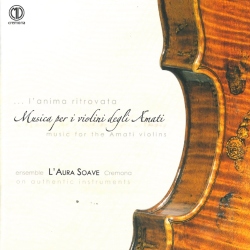
1:49
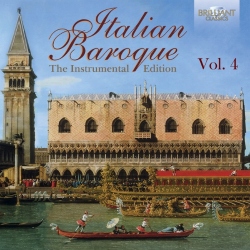
Copyright Ⓒ 2013 Davinci Finger. All rights reseved
Service Terms & Policy