


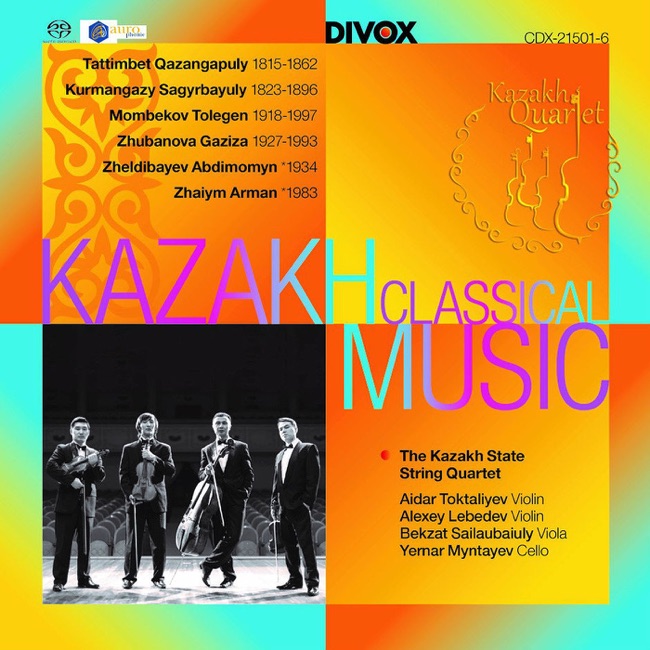
Zheldibayev Abdimomyn

Artist Info
Role:ComposerZheldibayev Abdimomyn was a renowned classical music composer from Kazakhstan. He was born on January 1, 1947, in the village of Kyzylkoginsk, in the Kyzylorda region of Kazakhstan. Abdimomyn was born into a family of musicians, and his father was a well-known dombra player in the region. Abdimomyn grew up surrounded by music and was exposed to traditional Kazakh music from a young age. Abdimomyn began his musical education at the age of six when he started learning to play the dombra, a traditional Kazakh stringed instrument. He showed a natural talent for music and quickly progressed in his studies. At the age of 12, Abdimomyn was accepted into the Kyzylorda Music School, where he studied music theory, composition, and piano. After completing his studies at the Kyzylorda Music School, Abdimomyn went on to study at the Almaty Conservatory, one of the most prestigious music schools in Kazakhstan. There, he studied composition under the guidance of renowned Kazakh composer Tles Kazhgaliyev. Abdimomyn was a dedicated student and quickly gained a reputation as a talented composer. Abdimomyn's early works were heavily influenced by traditional Kazakh music, and he often incorporated elements of Kazakh folk music into his compositions. His first major work, the opera "Kyz Zhibek," was based on a traditional Kazakh love story and premiered in 1975 to critical acclaim. The opera was a huge success and helped establish Abdimomyn as one of the leading composers in Kazakhstan. Throughout his career, Abdimomyn continued to draw inspiration from Kazakh folk music, but he also incorporated elements of Western classical music into his compositions. His works were known for their rich harmonies, intricate rhythms, and emotional depth. Abdimomyn's music was often described as a fusion of East and West, and he was praised for his ability to bridge the gap between traditional Kazakh music and Western classical music. Abdimomyn's most famous work is his Symphony No. 1, which premiered in 1983. The symphony is a powerful and emotional work that draws on both Kazakh and Western musical traditions. The piece is divided into four movements, each of which explores a different theme. The first movement is a lively and energetic dance, while the second movement is a slow and mournful lament. The third movement is a lively and playful scherzo, and the final movement is a triumphant and uplifting finale. In addition to his symphonies and operas, Abdimomyn also composed numerous chamber works, including string quartets, piano sonatas, and works for solo instruments. His chamber works were known for their intricate textures and complex harmonies, and they often featured virtuosic solo passages. Abdimomyn's music was widely performed throughout Kazakhstan and the former Soviet Union, and he was recognized as one of the leading composers of his generation. He received numerous awards and honors for his contributions to Kazakh music, including the title of People's Artist of Kazakhstan, the highest honor that can be bestowed on a Kazakh artist. Abdimomyn continued to compose music until his death in 2015. His legacy lives on through his music, which continues to be performed and celebrated by musicians and audiences around the world. Abdimomyn's contributions to Kazakh music have helped to preserve and promote the rich cultural heritage of Kazakhstan, and his music remains an important part of the country's cultural identity.More....
Recent Artist Music

Copyright Ⓒ 2013 Davinci Finger. All rights reseved
Service Terms & Policy