


Erich Wolff
Released Album
Vocal
-
 August 12, 2016
 -
 July 10, 2015
 -
 January 28, 2014
 -
 November 18, 2013
 -
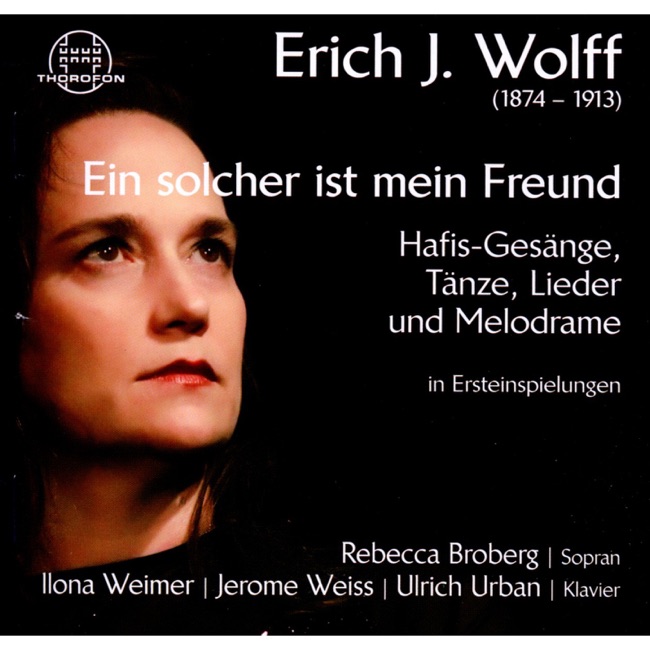 January 13, 2012
 -
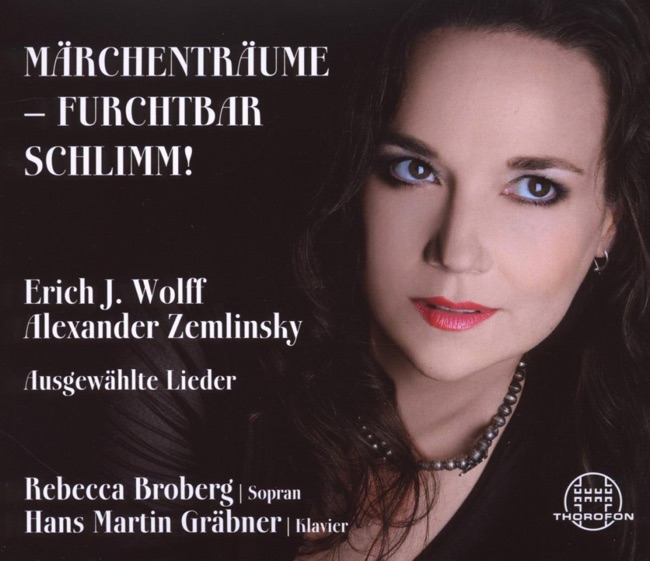 December 4, 2009
Artist Info
Role:ComposerBirth:December 3, 1874 in Vienna, AustriaDeath:1913 in New York City, NYPeriod:ModernErich Wolff was a German composer and pianist who lived from 1874 to 1913. He was born in Berlin, Germany, to a family of musicians. His father was a violinist and his mother was a pianist, and they both encouraged their son's musical talents from a young age. Wolff began his formal musical education at the age of six, studying piano with his mother and composition with his father. He showed great promise as a pianist and composer, and by the age of 12, he had already composed several works for piano and chamber ensembles. In 1892, Wolff enrolled at the Berlin Hochschule für Musik, where he studied composition with Heinrich von Herzogenberg and piano with Ernst Rudorff. He quickly distinguished himself as a talented composer, and his works began to receive recognition and praise from his teachers and peers. One of Wolff's most notable early works was his Piano Sonata in F minor, which he composed in 1894. The sonata was well-received by critics and established Wolff as a composer to watch in the German classical music scene. Over the next several years, Wolff continued to compose prolifically, producing works for piano, chamber ensembles, and orchestra. His music was characterized by its lyricism, harmonic complexity, and emotional depth. In 1901, Wolff was appointed as a professor of composition at the Berlin Hochschule für Musik, where he taught until his death in 1913. He was a highly respected teacher, and his students included several notable composers, including Paul Hindemith and Kurt Weill. Despite his success as a composer and teacher, Wolff's life was not without its challenges. He suffered from poor health throughout his life, and his financial situation was often precarious. He also struggled with depression and anxiety, which may have contributed to his untimely death at the age of 39. Despite these challenges, Wolff left behind a rich legacy of music that continues to be celebrated and performed today. Some of his most notable works include his Piano Concerto in A minor, his String Quartet in D minor, and his Symphony in C minor. Wolff's Piano Concerto in A minor, which he composed in 1905, is considered one of his most important works. The concerto is characterized by its virtuosic piano writing, lush orchestration, and dramatic contrasts between the soloist and the orchestra. It has been performed and recorded by many of the world's leading pianists and orchestras. Wolff's String Quartet in D minor, which he composed in 1908, is another important work in his oeuvre. The quartet is notable for its intricate counterpoint, rich harmonies, and emotional intensity. It has been praised for its originality and depth of expression, and is considered one of the finest examples of German chamber music from the early 20th century. Finally, Wolff's Symphony in C minor, which he composed in 1912, is a powerful and deeply emotional work that reflects the composer's struggles with depression and anxiety. The symphony is characterized by its brooding melodies, dark harmonies, and intense emotional contrasts. It has been praised for its originality and depth of expression, and is considered one of the most important symphonic works of the early 20th century. In conclusion, Erich Wolff was a highly talented and influential composer who left behind a rich legacy of music that continues to be celebrated and performed today.More....
Recent Artist Music
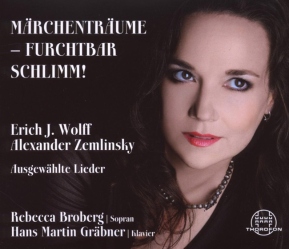
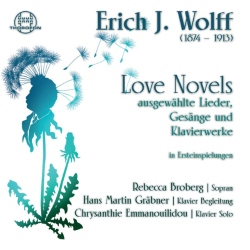
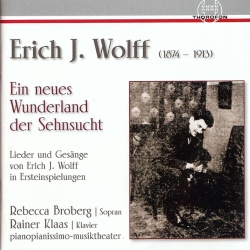
7
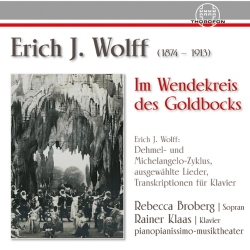
Interlude from the ballet Zlatorog, O. op.
Zlatorog, Zwischenspiel, in der Fassung für Klavier solo, o. op.
5:34
Copyright Ⓒ 2013 Davinci Finger. All rights reseved
Service Terms & Policy