


Muhammad ibn Ghälib al. Rusäfi
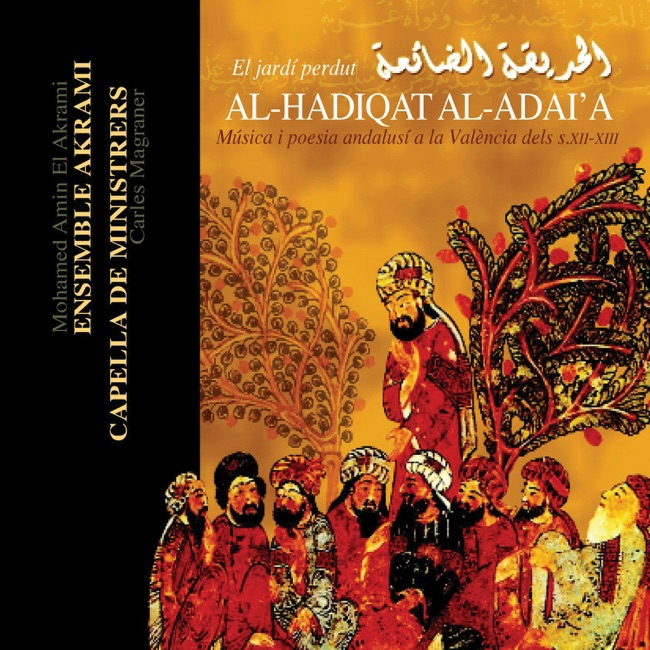
Artist Info
Role:ComposerBirth:1141Death:1177Muhammad ibn Ghälib al-Rusäfi was a renowned classical music composer who lived during the 17th century in the Ottoman Empire. He was born in the city of Aleppo, which was then part of the Ottoman Empire, in the year 1615. His father, Ghälib al-Rusäfi, was a well-known musician and composer, and it was under his tutelage that Muhammad began his musical education. Muhammad showed a natural talent for music from a young age, and his father recognized this early on. He began teaching his son the basics of music theory and composition when Muhammad was just six years old. By the time he was a teenager, Muhammad had already composed several pieces of music, which were well-received by his father and other musicians in Aleppo. In his early twenties, Muhammad moved to Istanbul, the capital of the Ottoman Empire, to further his musical education. He studied under some of the most renowned musicians of the time, including Ali Ufki Bey, who was a composer and musicologist of Greek origin. Under Ali Ufki Bey's guidance, Muhammad honed his skills in composition and music theory, and he began to develop his own unique style. Muhammad's compositions were heavily influenced by the traditional music of the Ottoman Empire, as well as the music of the Arab world. He was particularly interested in the maqam system, which is a system of melodic modes used in Middle Eastern music. Muhammad incorporated these modes into his compositions, creating a unique blend of Ottoman and Arab music. One of Muhammad's most famous works is his collection of songs called "Risale-i Muhammediye." This collection consists of 50 songs, each of which is dedicated to a different prophet or saint in Islamic tradition. The songs are written in Turkish and Arabic, and they are accompanied by traditional Ottoman instruments such as the oud, ney, and kemençe. Another notable work by Muhammad is his "Taqsim-i Rast," which is a solo improvisation on the maqam Rast. This piece showcases Muhammad's virtuosity on the oud, and it is considered one of the finest examples of Ottoman classical music. Muhammad's compositions were highly regarded during his lifetime, and he was often invited to perform at the courts of Ottoman sultans and other dignitaries. He also taught music to many students, including his own son, Ibrahim al-Rusäfi, who went on to become a renowned composer in his own right. Muhammad ibn Ghälib al-Rusäfi passed away in Istanbul in the year 1671. His legacy lives on through his compositions, which continue to be performed and studied by musicians around the world. His contributions to Ottoman classical music have earned him a place among the great composers of his time, and his influence can still be heard in the music of the Middle East and beyond.More....
Recent Artist Music
Copyright Ⓒ 2013 Davinci Finger. All rights reseved
Service Terms & Policy