


Manfred Stahnke
Released Album
Chamber
-
 May 1, 2020
 -
 June 15, 2010
 -
 March 30, 2010
 -
 March 25, 2008
Artist Info
Role:Composer PerformerBirth:1951Period:ContemporaryModernGenre:ChamberKeyboardManfred Stahnke is a German composer who was born on October 28, 1951, in Lübeck, Germany. He grew up in a family of musicians, with his father being a church musician and his mother a pianist. Stahnke started playing the piano at a young age and later learned to play the organ and the violin. He studied musicology, philosophy, and German literature at the University of Hamburg and later went on to study composition with György Ligeti in Hamburg and Karlheinz Stockhausen in Cologne. Stahnke's early works were influenced by the avant-garde music of Ligeti and Stockhausen, but he soon developed his own unique style. His music is characterized by its complexity, with intricate rhythms and harmonies, and its use of electronic and computer-generated sounds. Stahnke has also been influenced by literature, art, and philosophy, and his works often have literary or philosophical themes. One of Stahnke's early works is his "String Quartet No. 1" (1976), which was written while he was still a student. The piece is a complex and challenging work, with intricate rhythms and harmonies that require a high level of technical skill from the performers. Stahnke's use of dissonance and unconventional harmonies creates a sense of tension and unease, which is characteristic of his early works. In the 1980s, Stahnke began to incorporate electronic and computer-generated sounds into his compositions. One of his most famous works from this period is "Klangbilder" (1985), a piece for orchestra and computer-generated sounds. The piece is based on a series of images by the German artist Anselm Kiefer, and Stahnke's music reflects the dark and brooding atmosphere of Kiefer's paintings. The use of electronic sounds adds an otherworldly quality to the music, creating a sense of mystery and unease. Stahnke's later works have continued to explore new and innovative ways of combining acoustic and electronic sounds. One of his most recent works is "Lichtung" (2018), a piece for orchestra and live electronics. The piece is based on the idea of a clearing in a forest, and Stahnke's music reflects the natural beauty and tranquility of this setting. The use of live electronics adds a sense of unpredictability and spontaneity to the music, creating a sense of exploration and discovery. Throughout his career, Stahnke has been recognized for his innovative and challenging music. He has received numerous awards and honors, including the German Music Publishers' Association Prize for Composition in 1985 and the Hamburg Art Prize in 2001. His music has been performed by some of the world's leading orchestras and ensembles, including the Berlin Philharmonic, the London Symphony Orchestra, and the Ensemble Modern. In addition to his work as a composer, Stahnke is also a respected musicologist and educator. He has written extensively on contemporary music and has taught at several universities in Germany and the United States. His contributions to the field of contemporary music have been significant, and his music continues to inspire and challenge audiences around the world.More....
Recent Artist Music
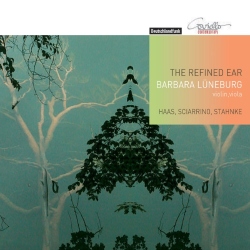
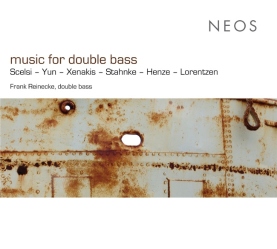
3
Expansion Expansion
ImpansionExpansion, for bass recorder and tenor recorder with computer & real-time recording
9:28

Copyright Ⓒ 2013 Davinci Finger. All rights reseved
Service Terms & Policy