


Giacomo Gotifredo Ferrari
Released Album
Keyboard
-
 April 27, 2018
 -
 August 18, 2017
Chamber
-
-
 May 4, 2018
Artist Info
Role:ComposerBirth:1759Death:1842Period:RomanticGiacomo Gotifredo Ferrari was an Italian composer and musician who lived during the Baroque period. He was born on February 4, 1603, in Mantua, Italy, to a family of musicians. His father, Giovanni Battista Ferrari, was a composer and musician, and his mother, Isabella Bendidio, was a singer. Ferrari grew up in a musical environment and began his musical education at a young age. Ferrari's early musical education was under the tutelage of his father, who taught him the basics of music theory and composition. He also received training in singing and playing the keyboard. Ferrari showed great talent and passion for music, and his father recognized his potential. He encouraged his son to pursue a career in music and provided him with the necessary resources to do so. In his early twenties, Ferrari moved to Venice, where he continued his musical education under the guidance of the renowned composer and musician, Claudio Monteverdi. Monteverdi was impressed by Ferrari's talent and took him under his wing. Ferrari learned a great deal from Monteverdi and was heavily influenced by his style of composition. Ferrari's first major work was a collection of madrigals titled "Il primo libro de madrigali a cinque voci" (The First Book of Madrigals for Five Voices), which was published in 1627. The collection was well-received and established Ferrari as a composer of note. The madrigals were characterized by their expressive melodies, intricate harmonies, and use of chromaticism. In 1630, Ferrari was appointed as the maestro di cappella (music director) at the Basilica of San Lorenzo in Florence. This was a prestigious position, and Ferrari was responsible for composing music for the church's liturgical services. During his time in Florence, Ferrari composed a number of sacred works, including masses, motets, and psalms. His music was highly regarded and was performed in churches throughout Italy. Ferrari's most famous work is his opera, "La Provenza in Traslazione" (Provence in Translation), which was first performed in 1638. The opera tells the story of the translation of the relics of St. Mary Magdalene from Provence to Aix-en-Provence. The opera was a great success and was performed in several Italian cities. It was praised for its beautiful melodies, expressive harmonies, and dramatic storytelling. In addition to his work as a composer, Ferrari was also a respected music theorist. He wrote several treatises on music theory, including "Il primo libro dell'arte musicale" (The First Book of Musical Art), which was published in 1627. The treatise was a comprehensive guide to music theory and covered topics such as notation, rhythm, harmony, and counterpoint. Ferrari's music was highly regarded during his lifetime, and he was considered one of the leading composers of his time. His music was characterized by its expressive melodies, intricate harmonies, and use of chromaticism. He was also known for his skillful use of counterpoint and his ability to create complex textures. Ferrari died on May 3, 1680, in Modena, Italy, at the age of 77. His legacy as a composer and musician lives on, and his music continues to be performed and studied today. Ferrari's contributions to the development of Baroque music are significant, and his influence can be heard in the works of many composers who came after him.More....
Recent Artist Music
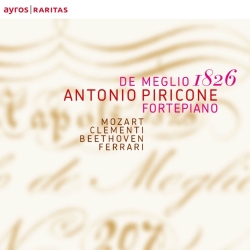
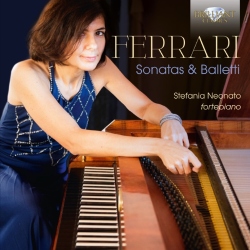
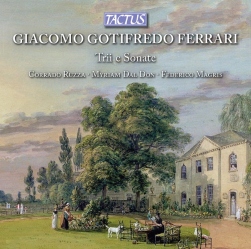
4
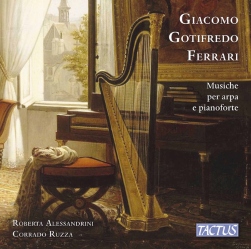
Duet No. 3 for harp & piano with 2 horns ad libitum, Op. 27
Introduzione. Adagio - Allegro assai
6:20
Copyright Ⓒ 2013 Davinci Finger. All rights reseved
Service Terms & Policy