


Gunnar Bucht
Released Album
Chamber
-
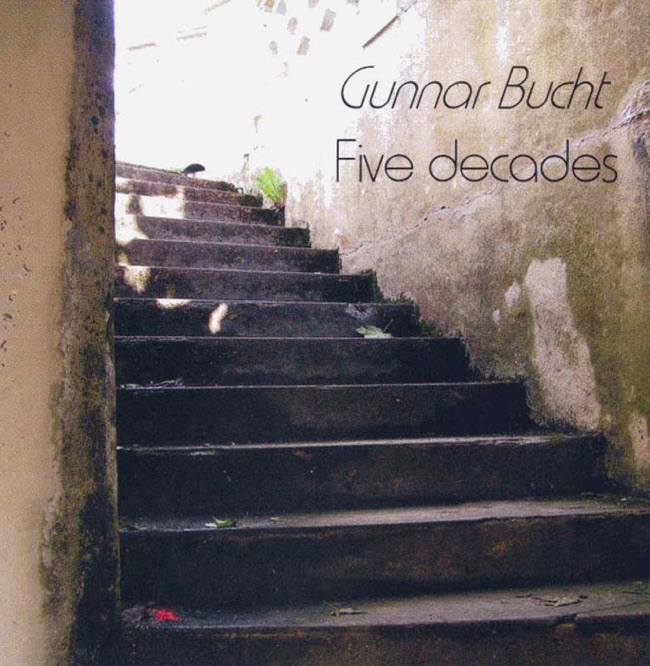 July 9, 2008
 -
 June 28, 2005
Artist Info
Role:ComposerBirth:August 5, 1927Genre:ChamberGunnar Bucht was a Swedish composer born on August 28, 1908, in Stockholm. He was the son of a music teacher and grew up in a musical family. His father, Gustaf Bucht, was a well-known composer and conductor in Sweden, and his mother, Anna Bucht, was a pianist. Gunnar Bucht showed an early interest in music and began playing the piano at the age of six. Bucht studied music at the Royal College of Music in Stockholm, where he was a student of Ernst Ellberg and Hilding Rosenberg. He also studied composition with the famous Swedish composer, Wilhelm Stenhammar. Bucht graduated from the Royal College of Music in 1931 and continued his studies in Paris with Nadia Boulanger. Bucht's early works were influenced by the neoclassical style of Stravinsky and the French composers of the time. His first major work, the Symphony No. 1, was composed in 1935 and premiered in Stockholm the following year. The symphony was well-received and established Bucht as a promising young composer. In the late 1930s, Bucht began to experiment with more modernist techniques, such as serialism and atonality. His String Quartet No. 1, composed in 1938, was one of his first works to use these techniques. The quartet was premiered in Stockholm in 1940 and was met with mixed reviews. During World War II, Bucht worked as a music critic for the Swedish newspaper, Dagens Nyheter. He also composed several works during this time, including his Symphony No. 2, which was premiered in Stockholm in 1943. The symphony was more tonal than his earlier works and was well-received by audiences and critics alike. In the post-war years, Bucht continued to compose and his style became more eclectic. He incorporated elements of Swedish folk music into his works, as well as jazz and other popular music styles. His Symphony No. 3, composed in 1951, was a prime example of this eclectic style. The symphony was premiered in Stockholm in 1952 and was well-received. Bucht's most famous work is his opera, "The Blacksmith of Nyköping," which was composed in 1955. The opera tells the story of a blacksmith who is falsely accused of a crime and sentenced to death. The opera was premiered in Stockholm in 1956 and was a great success. It has since been performed in many countries around the world. Bucht continued to compose throughout the 1960s and 1970s, but his output slowed down in his later years. He died on December 24, 2000, in Stockholm, at the age of 92. In conclusion, Gunnar Bucht was a Swedish composer who was known for his eclectic style and incorporation of Swedish folk music into his works. He studied music at the Royal College of Music in Stockholm and later in Paris with Nadia Boulanger. His early works were influenced by neoclassicism, but he later experimented with modernist techniques such as serialism and atonality. His most famous work is his opera, "The Blacksmith of Nyköping," which was composed in 1955. Bucht died in 2000 at the age of 92.More....
Recent Artist Music


3
Reconsidering Beckmesser (after Wagner's opera 'Die Meistersinger von Nürnberg')
Reconsidering Beckmesser
8:14
Copyright Ⓒ 2013 Davinci Finger. All rights reseved
Service Terms & Policy