


José Viana da Mota
Released Album
Keyboard
-
 May 22, 2020
 -
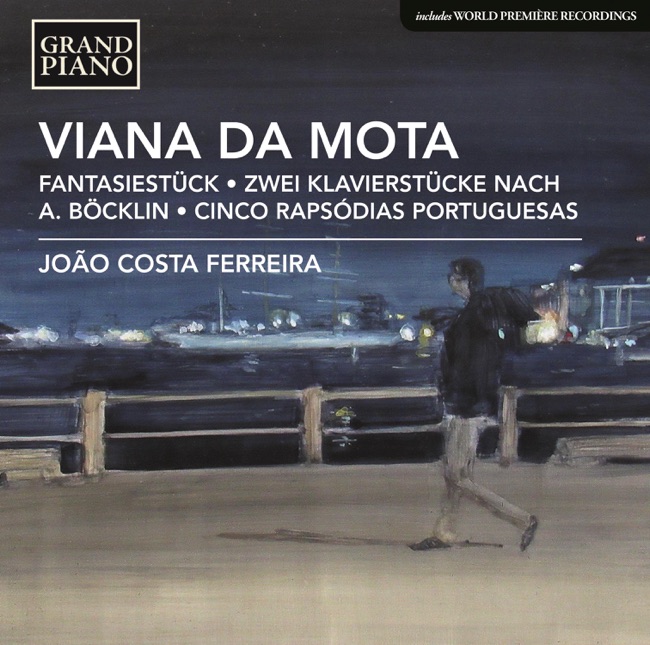
-
 May 13, 2016
Artist Info
Role:ComposerBirth:1868Death:1948José Viana da Mota was a prominent Portuguese composer, pianist, and conductor who lived from 1868 to 1948. He was born in Lisbon, Portugal, on November 22, 1868, to a family of musicians. His father, João da Mota, was a composer and conductor, and his mother, Maria Augusta Viana, was a pianist. José Viana da Mota showed an early interest in music and began studying piano with his mother at the age of four. At the age of six, José Viana da Mota gave his first public performance, playing a Mozart sonata. He continued his studies with his mother until the age of ten, when he entered the National Conservatory of Lisbon. There, he studied piano with Rafael Joseffy, a renowned Hungarian pianist, and composition with Luís de Freitas Branco, a leading Portuguese composer. In 1887, José Viana da Mota won a scholarship to study at the Leipzig Conservatory in Germany, where he studied piano with Carl Reinecke and composition with Salomon Jadassohn. He also attended the masterclasses of Franz Liszt in Weimar. During his time in Germany, José Viana da Mota became acquainted with the music of Richard Wagner and Richard Strauss, which had a significant influence on his own compositions. After completing his studies in Germany, José Viana da Mota returned to Portugal and began a successful career as a pianist, composer, and conductor. He performed extensively throughout Portugal and Europe, and his compositions were well-received by audiences and critics alike. One of José Viana da Mota's most significant works is his Piano Concerto No. 1, which he composed in 1893. The concerto is a virtuosic showcase for the soloist, with a lyrical and expressive second movement and a lively and energetic finale. The concerto was premiered in Lisbon in 1894, with José Viana da Mota as the soloist and his father, João da Mota, conducting. In addition to his piano concerto, José Viana da Mota composed numerous other works for piano, including sonatas, preludes, and études. He also wrote orchestral works, chamber music, and vocal music, including operas, cantatas, and songs. One of José Viana da Mota's most famous works is his opera "A Menina dos Rouxinóis" (The Nightingale Girl), which he composed in 1901. The opera is based on a Portuguese folk tale and tells the story of a young girl who is transformed into a nightingale. The opera was premiered in Lisbon in 1902 and was a great success, cementing José Viana da Mota's reputation as one of Portugal's leading composers. In addition to his work as a composer, José Viana da Mota was also a respected conductor. He conducted the Lisbon Symphony Orchestra and the National Opera of Lisbon, and he was a frequent guest conductor with orchestras throughout Europe. José Viana da Mota was also a dedicated teacher and musicologist. He taught piano and composition at the National Conservatory of Lisbon, and he wrote extensively on music history and theory. He was a founding member of the Portuguese Music Society and was instrumental in promoting the music of Portuguese composers. José Viana da Mota died in Lisbon on June 1, 1948, at the age of 79. He left behind a rich legacy of music and scholarship, and he is remembered as one of Portugal's greatest composers. His music continues to be performed and recorded today, and his contributions to Portuguese music are celebrated by musicians and music lovers around the world.More....
Recent Artist Music

2

7:32


Copyright Ⓒ 2013 Davinci Finger. All rights reseved
Service Terms & Policy