


Robert Sirota
Released Album
Chamber
-
 August 26, 2022
 -
 2018
2018 -
 December 9, 2014
 -
 December 22, 2004
Keyboard
-
 June 10, 2014
Artist Info
Role:Composer Conductor PerformerBirth:1949Period:ContemporaryGenre:ChamberRobert Sirota is a renowned American composer of classical music, known for his innovative and expressive works that blend traditional and contemporary styles. Born on September 23, 1949, in New York City, Sirota grew up in a family of musicians and was exposed to music from an early age. His father, Albert Sirota, was a composer and musicologist, while his mother, Sonia, was a pianist and music teacher. Sirota began his musical education at the Juilliard School, where he studied composition with Vincent Persichetti and Roger Sessions. He later earned a Bachelor of Music degree from Harvard University and a Doctor of Musical Arts degree from Columbia University. During his studies, Sirota was influenced by a wide range of musical styles, including classical, jazz, and rock, and he began to develop his own unique voice as a composer. Sirota's early works were characterized by their use of tonality and traditional forms, but he soon began to experiment with more avant-garde techniques, such as serialism and aleatoric music. His breakthrough work was the String Quartet No. 1, which was premiered in 1974 by the Juilliard String Quartet. The piece was praised for its innovative use of harmony and rhythm, and it established Sirota as a rising star in the world of contemporary classical music. Throughout the 1970s and 1980s, Sirota continued to compose a wide range of works, including orchestral pieces, chamber music, and vocal works. His music was performed by leading ensembles and soloists, including the New York Philharmonic, the Boston Symphony Orchestra, and the Kronos Quartet. In 1985, he was awarded a Guggenheim Fellowship, which allowed him to travel to Europe and study with leading composers such as György Ligeti and Luciano Berio. In the 1990s, Sirota's music became more introspective and personal, reflecting his own experiences and emotions. He began to incorporate elements of Jewish and African-American music into his works, as well as more experimental techniques such as electronic music and multimedia. One of his most acclaimed works from this period was the opera "The Clever Mistress," which premiered in 1995 and was based on a play by Carlo Goldoni. The opera was praised for its witty libretto and inventive score, which blended elements of Baroque music with contemporary styles. In the 2000s, Sirota's music continued to evolve, as he explored new forms and techniques. He began to incorporate more improvisation and spontaneity into his works, as well as more overtly political themes. One of his most notable works from this period was the oratorio "The Passion of Yeshua," which premiered in 2018 and was based on the Gospel accounts of Jesus' crucifixion. The piece was praised for its powerful choral writing and its exploration of themes such as forgiveness and redemption. Throughout his career, Sirota has been recognized for his contributions to the world of classical music. He has received numerous awards and honors, including the American Academy of Arts and Letters Music Award, the ASCAP Foundation Victor Herbert Award, and the Copland House Residency Award. He has also served as the president of the Manhattan School of Music and the director of the Peabody Institute of the Johns Hopkins University. Today, Sirota continues to compose new works and to push the boundaries of classical music.More....
Recent Artist Music
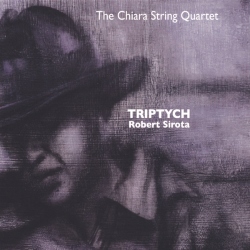
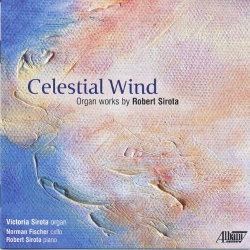
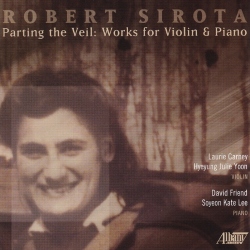
4
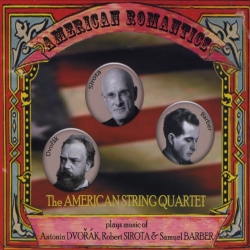
American Pilgrimage, string quartet No. 2
II. Mid-day: Mother Emanuel Church, Charleston, South Carolina
5:20
Copyright Ⓒ 2013 Davinci Finger. All rights reseved
Service Terms & Policy