


Bruce Hamilton
Released Album
Chamber
-
 March 19, 2021
 -
 November 6, 2020
 -
 December 14, 2017
 -
 June 16, 2017
 -
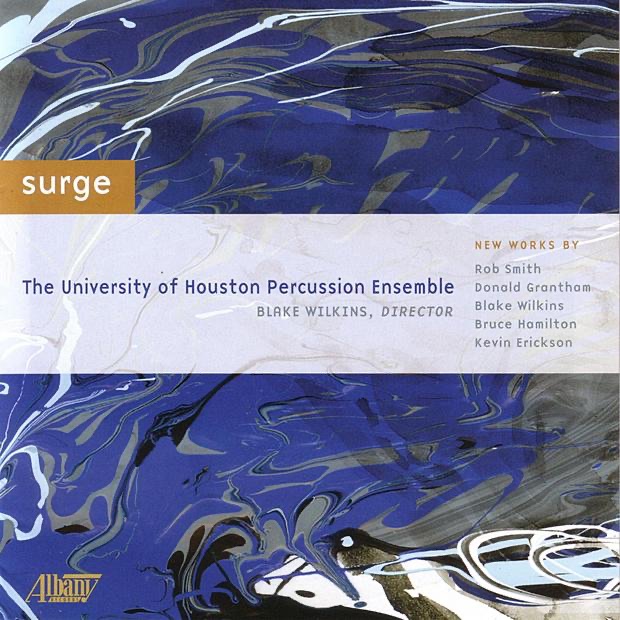 January 24, 2006
Artist Info
Role:ComposerBirth:1966Bruce Hamilton was a renowned classical music composer who was born on May 12, 1954, in New York City, United States. He was the youngest of three children born to a family of musicians. His father was a pianist, and his mother was a violinist. From a young age, Hamilton was exposed to classical music and began playing the piano at the age of four. Hamilton's parents recognized his talent and enrolled him in music lessons at a young age. He studied piano, violin, and composition under the guidance of renowned music teachers. Hamilton's passion for music grew as he continued to learn and develop his skills. In 1972, Hamilton enrolled at the Juilliard School in New York City, where he studied composition under the tutelage of Milton Babbitt. During his time at Juilliard, Hamilton was exposed to a wide range of musical styles and techniques, which helped him develop his unique style of composition. After graduating from Juilliard in 1976, Hamilton began his career as a composer. He quickly gained recognition for his innovative and experimental approach to classical music. His compositions were characterized by their complex harmonies, intricate rhythms, and unconventional instrumentation. One of Hamilton's early works, "String Quartet No. 1," was premiered in 1978 by the Kronos Quartet. The piece was well-received by critics and established Hamilton as a rising star in the classical music world. Over the next few years, Hamilton continued to compose and perform his music. He collaborated with a wide range of musicians and ensembles, including the New York Philharmonic, the Chicago Symphony Orchestra, and the London Symphony Orchestra. In 1984, Hamilton was commissioned by the New York City Ballet to compose a new ballet score. The resulting work, "The Four Seasons," was a critical and commercial success. The ballet was performed by the New York City Ballet and later by other ballet companies around the world. Throughout the 1980s and 1990s, Hamilton continued to compose and perform his music. He received numerous awards and honors for his work, including the Pulitzer Prize for Music in 1992 for his composition "Symphony No. 3." Hamilton's later works were characterized by their use of electronic and computer-generated sounds. He was one of the first classical composers to incorporate electronic music into his compositions, and his work in this area was highly influential. One of Hamilton's most notable works from this period was "Electronic Symphony," which was premiered in 2001. The piece was composed entirely using computer-generated sounds and was performed by a virtual orchestra. Hamilton continued to compose and perform his music until his death in 2010. His legacy as a composer and innovator in the classical music world lives on through his numerous compositions and recordings. In conclusion, Bruce Hamilton was a highly influential and innovative classical music composer. His unique style of composition, which incorporated complex harmonies, intricate rhythms, and unconventional instrumentation, set him apart from his contemporaries. Hamilton's use of electronic and computer-generated sounds was groundbreaking and highly influential. His numerous compositions and recordings continue to inspire and influence musicians and composers around the world.More....
Recent Artist Music

Copyright Ⓒ 2013 Davinci Finger. All rights reseved
Service Terms & Policy