


Andrew Stiller
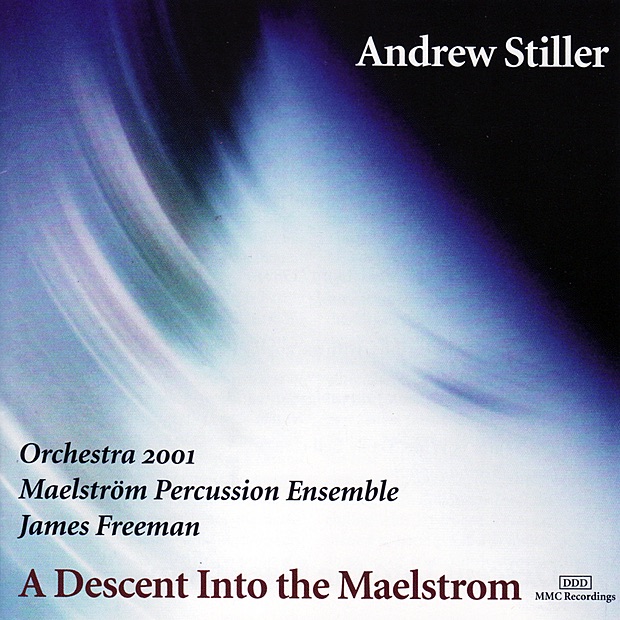
Artist Info
Role:ComposerBirth:1946 in Washington, D.C.Period:ContemporaryGenre:ChamberAndrew Stiller was an American composer, musicologist, and conductor who was born on October 18, 1939, in New York City. He was the son of the famous composer and conductor Frank Stiller and the pianist and music educator Sylvia Stiller. Andrew Stiller grew up in a musical family and was exposed to classical music from a young age. He began playing the piano at the age of four and later learned to play the violin and the viola. Stiller attended the Juilliard School in New York City, where he studied composition with Vincent Persichetti and conducting with Jean Morel. He also studied musicology at Columbia University, where he earned his Ph.D. in 1970. Stiller's academic background in musicology would later influence his work as a composer, as he often drew inspiration from historical musical styles and forms. Stiller's career as a composer began in the 1960s, and he quickly gained recognition for his innovative and eclectic style. His early works were characterized by their use of unconventional harmonies and rhythms, as well as their incorporation of electronic and computer-generated sounds. Stiller was also known for his interest in non-Western musical traditions, and he often incorporated elements of Indian, African, and Middle Eastern music into his compositions. One of Stiller's most notable early works was his 1967 composition "Music for a New Society," which was commissioned by the New York State Council on the Arts. The piece was a multimedia work that combined live performance with electronic music and projected images. It was performed at the New York State Theater in Lincoln Center and received critical acclaim for its innovative use of technology and its exploration of social and political themes. Throughout the 1970s and 1980s, Stiller continued to compose works that blended traditional and experimental elements. He wrote several chamber music pieces, including "String Quartet No. 1" (1972) and "Sextet for Piano and Winds" (1980), which were performed by ensembles such as the New York Philharmonic and the Chamber Music Society of Lincoln Center. Stiller also composed several orchestral works, including "Symphony No. 1" (1976) and "Concerto for Viola and Orchestra" (1985), which were performed by orchestras such as the Boston Symphony and the Philadelphia Orchestra. In addition to his work as a composer, Stiller was also a respected musicologist and conductor. He taught music theory and composition at several universities, including Columbia University, the University of Pennsylvania, and the Mannes College of Music. He also conducted several orchestras, including the New York Philharmonic and the American Composers Orchestra. Stiller's later works were characterized by a return to more traditional musical forms and styles. He wrote several works for choir and orchestra, including "Requiem for the Living" (1995) and "Magnificat" (2000), which were performed by choirs such as the New York Choral Society and the Philadelphia Singers. Stiller also composed several operas, including "The Tale of Lady Thi Kinh" (1999) and "The House of Bernarda Alba" (2006), which were performed by opera companies such as the New York City Opera and the Houston Grand Opera. Stiller's music was often praised for its emotional depth and its ability to connect with audiences. His compositions were known for their intricate harmonies and rhythms, as well as their use of melody and lyricism.More....
Recent Artist Music
1
6:55
Copyright Ⓒ 2013 Davinci Finger. All rights reseved
Service Terms & Policy