


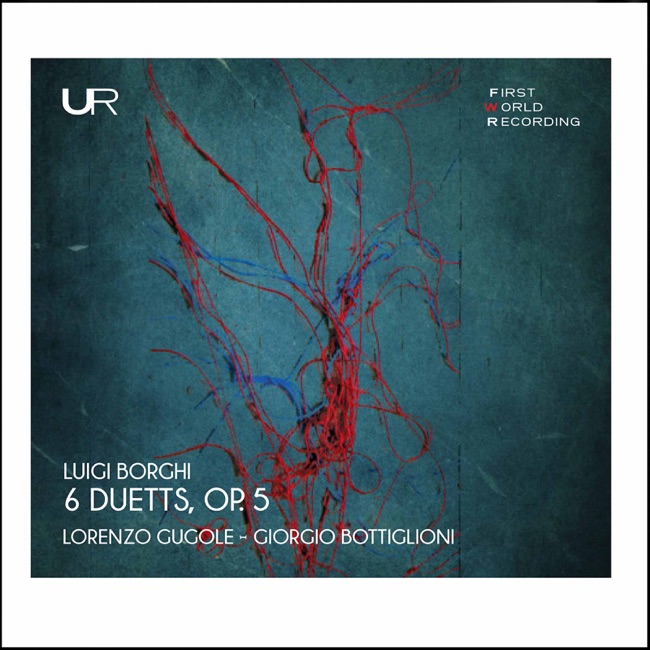
Luigi Borghi
Released Album
Chamber
-
 April 3, 2020
 -
Artist Info
Role:ComposerBirth:1745Death:ca. 1806Period:ClassicalLuigi Borghi was an Italian composer of classical music who lived from 1922 to 2008. He was born in the city of Bologna, Italy, on December 22, 1922. Borghi was the son of a music teacher, and he grew up in a family that was deeply involved in music. His father was a violinist, and his mother was a pianist. Borghi began studying music at a young age, and he showed a natural talent for composition. Borghi's early musical education was focused on the piano, and he studied with some of the best teachers in Bologna. He also studied composition with the composer and conductor Giuseppe Martucci. Borghi's early compositions were influenced by the music of Martucci, as well as by the works of other Italian composers such as Ottorino Respighi and Gian Francesco Malipiero. In 1943, Borghi was drafted into the Italian army and sent to fight in World War II. He was captured by the Germans and spent the rest of the war in a prisoner of war camp. During his time in captivity, Borghi continued to compose music, and he even managed to perform some of his works for his fellow prisoners. After the war, Borghi returned to Bologna and resumed his musical studies. He continued to compose music, and his works began to gain recognition in Italy. In 1952, he won the prestigious Viotti Prize for his Symphony No. 1. This was a major achievement for Borghi, and it helped to establish him as one of the leading composers of his generation. Throughout the 1950s and 1960s, Borghi continued to compose music and to receive critical acclaim for his works. He was particularly known for his orchestral music, which was characterized by its lush harmonies and sweeping melodies. Some of his most famous works from this period include his Symphony No. 2, his Concerto for Piano and Orchestra, and his Suite for Orchestra. In addition to his work as a composer, Borghi was also a respected music educator. He taught at the Conservatory of Bologna for many years, and he was known for his dedication to his students. Many of his students went on to become successful musicians and composers in their own right. Borghi's music was deeply rooted in the Italian classical tradition, but it also showed the influence of other musical styles. He was particularly interested in the music of the Baroque period, and he often incorporated elements of Baroque music into his own compositions. He was also influenced by the music of the Impressionist composers, such as Claude Debussy and Maurice Ravel. Borghi's music was characterized by its emotional intensity and its sense of drama. He was a master of orchestration, and his works often featured complex textures and rich harmonies. His music was also known for its lyricism and its sense of melody, which made it accessible to a wide audience. In the later years of his life, Borghi continued to compose music and to receive recognition for his works. He was awarded the prestigious Order of Merit of the Italian Republic in 1997, in recognition of his contributions to Italian culture. He also received numerous other awards and honors throughout his career. Luigi Borghi died on January 28, 2008, at the age of 85. He left behind a rich legacy of music, which continues to be performed and appreciated by audiences around the world. His works are a testament to his talent as a composer and his dedication to the art of classical music.More....
Recent Artist Music
Copyright Ⓒ 2013 Davinci Finger. All rights reseved
Service Terms & Policy