


Adolph Gutmann
Released Album
Keyboard
-
 June 14, 2019
 -
 August 12, 2014
 -
 November 15, 2008
 -
 January 1, 2003
Artist Info
Role:ComposerBirth:1819 in Heidelberg, GermanyDeath:1882Genre:KeyboardAdolph Gutmann was a German composer and pianist who lived from 1819 to 1882. He was born in Frankfurt am Main, Germany, to a family of musicians. His father, Johann Friedrich Gutmann, was a cellist and his mother, Maria Elisabetha, was a singer. Adolph showed an early interest in music and began taking piano lessons at the age of six. Gutmann's musical education continued at the Frankfurt Conservatory, where he studied piano with Johann Nepomuk Hummel and composition with Ferdinand Hiller. He also studied with the renowned pianist and composer Franz Liszt in Weimar. Gutmann's talent as a pianist was recognized early on, and he began performing in public at the age of 14. In 1842, Gutmann moved to Paris, where he became a prominent figure in the city's musical scene. He performed regularly at the Salle Pleyel and other venues, and his compositions were well-received by audiences and critics alike. He also became friends with many of the leading musicians of the day, including Hector Berlioz, Franz Liszt, and Frédéric Chopin. Gutmann's compositions were influenced by the Romantic style of the time, and he wrote music for piano, chamber ensembles, and orchestra. His piano music is particularly notable for its virtuosity and lyricism. Some of his most famous works include the Piano Concerto in A minor, Op. 16, the Piano Sonata in E-flat major, Op. 22, and the Fantaisie-Impromptu in C-sharp minor, Op. 66. Gutmann's Piano Concerto in A minor, Op. 16, was composed in 1845 and premiered in Paris the following year. The concerto is notable for its dramatic opening, which features a solo piano cadenza. The second movement is a lyrical and expressive adagio, while the third movement is a lively and virtuosic rondo. The concerto was well-received by audiences and critics, and it remains one of Gutmann's most popular works. The Piano Sonata in E-flat major, Op. 22, was composed in 1848 and dedicated to Franz Liszt. The sonata is in four movements and is notable for its technical demands and expressive lyricism. The first movement is a dramatic and virtuosic allegro, while the second movement is a lyrical and expressive adagio. The third movement is a lively scherzo, and the final movement is a virtuosic and energetic allegro. The Fantaisie-Impromptu in C-sharp minor, Op. 66, is one of Gutmann's most famous works. It was composed in 1834 and published posthumously in 1902. The piece is in a free-form structure and is notable for its virtuosic demands and expressive lyricism. The piece has been used in numerous films and television shows, and it remains a popular work in the piano repertoire. In addition to his work as a composer, Gutmann was also a respected piano teacher. He taught at the Paris Conservatory and had many notable students, including the pianist and composer Camille Saint-Saëns. Gutmann's teaching style emphasized technical mastery and expressive interpretation, and his students praised him for his patience and dedication. Gutmann's career as a composer and pianist was cut short by his untimely death in 1882. He was only 63 years old at the time of his death, but his legacy as a composer and teacher lives on. His music continues to be performed and recorded, and his influence on the Romantic style of music is still felt today.More....
Recent Artist Music
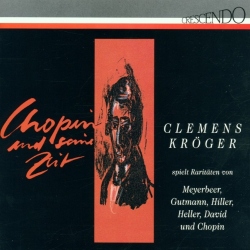
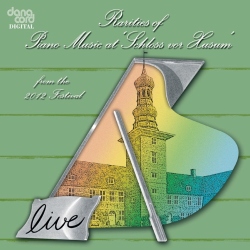
3
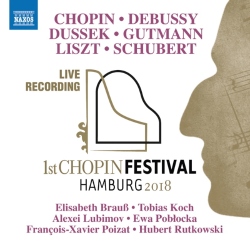
Nocturne in A flat major, Op. 8/1
Nocturne in A flat major, Op. 8, No. 1 (version for piano four-hands)
2:57
Copyright Ⓒ 2013 Davinci Finger. All rights reseved
Service Terms & Policy