


Imre Széchényi
Released Album
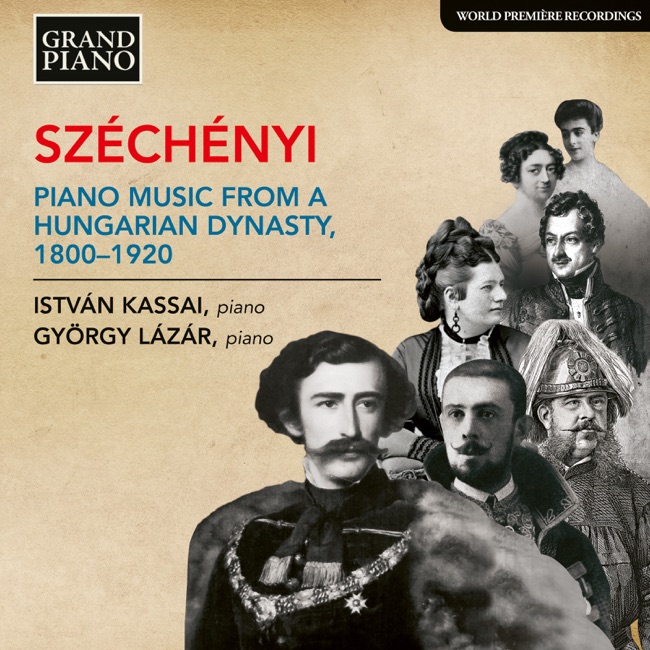
Keyboard
-
 June 25, 2021
 -
 November 9, 2018
Orchestral
-
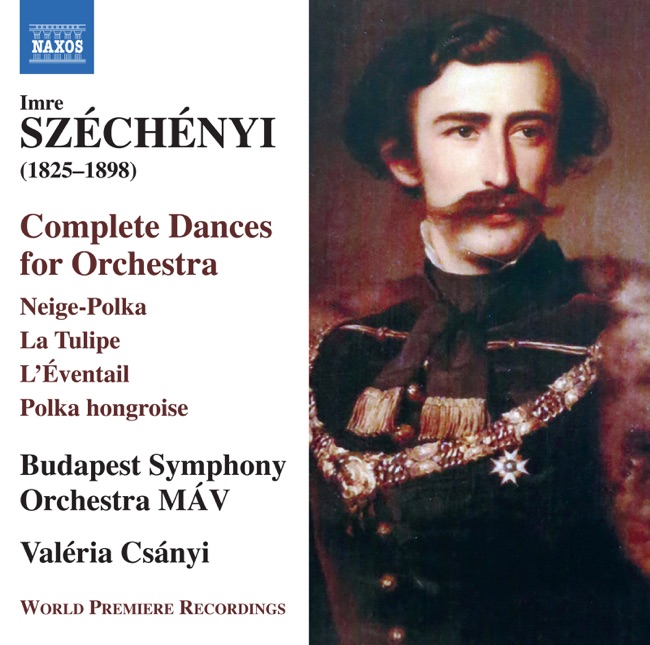 December 1, 2017
Artist Info
Role:ComposerBirth:1825Death:1898Imre Széchényi was a Hungarian composer who lived from 1905 to 1969. He was born into a noble family in Budapest, Hungary, and was the son of Count László Széchényi and Countess Margit Károlyi. His family was known for their love of music, and Imre was exposed to classical music from a young age. His mother was a pianist, and his father was a composer and conductor. Imre began his musical education at the age of six, studying piano with his mother. He showed great talent and was soon enrolled in the Franz Liszt Academy of Music in Budapest. There, he studied composition with Zoltán Kodály and piano with Béla Bartók. He also studied conducting with Leo Weiner. Széchényi's early compositions were influenced by the folk music of Hungary, which he had been exposed to through his studies with Kodály and Bartók. His first major work was a piano concerto, which he composed when he was just 18 years old. The concerto was well-received and helped establish Széchényi as a promising young composer. In the 1920s, Széchényi traveled to Paris to study with Nadia Boulanger, a renowned composition teacher. While in Paris, he was exposed to the music of Debussy, Ravel, and Stravinsky, which had a profound influence on his own compositions. He also met and became friends with other young composers, including Aaron Copland and Virgil Thomson. Széchényi's music from this period reflects his interest in modernism and his desire to incorporate elements of jazz and popular music into his compositions. His most famous work from this period is his ballet, "The Miraculous Mandarin," which was based on a story by Béla Balázs. The ballet was controversial when it was first performed in 1926, due to its violent and sexually explicit content. However, it has since become one of Széchényi's most popular works. In the 1930s, Széchényi returned to Hungary and became a professor of composition at the Franz Liszt Academy of Music. He continued to compose during this period, but his music became more conservative and less experimental. He also became interested in incorporating elements of Hungarian folk music into his compositions, which he felt was important for preserving the cultural heritage of his country. During World War II, Széchényi was forced to flee Hungary due to his opposition to the fascist government. He spent several years in Switzerland and Italy before returning to Hungary in 1945, after the war had ended. He continued to compose during this period, but his music became more introspective and less bombastic than his earlier works. Széchényi's most famous work from this period is his "Concerto for Orchestra," which was composed in 1949. The concerto is a tribute to the Hungarian people and their struggle for freedom, and it has become one of Széchényi's most beloved works. In the 1950s and 1960s, Széchényi continued to compose, but his health began to decline. He suffered from heart problems and was forced to retire from his position at the Franz Liszt Academy of Music. He died in 1969 at the age of 64. Széchényi's music is characterized by its use of Hungarian folk music, its incorporation of modernist techniques, and its emotional intensity. His works are often described as being both nationalistic and universal, reflecting his belief that music should be a means of expressing the human experience. Some of Széchényi's most famous works include his "Piano Concerto," "The Miraculous Mandarin," "Concerto for Orchestra," and "Symphony No.More....
Recent Artist Music
2
5:58

Copyright Ⓒ 2013 Davinci Finger. All rights reseved
Service Terms & Policy