


Guillermo Diego

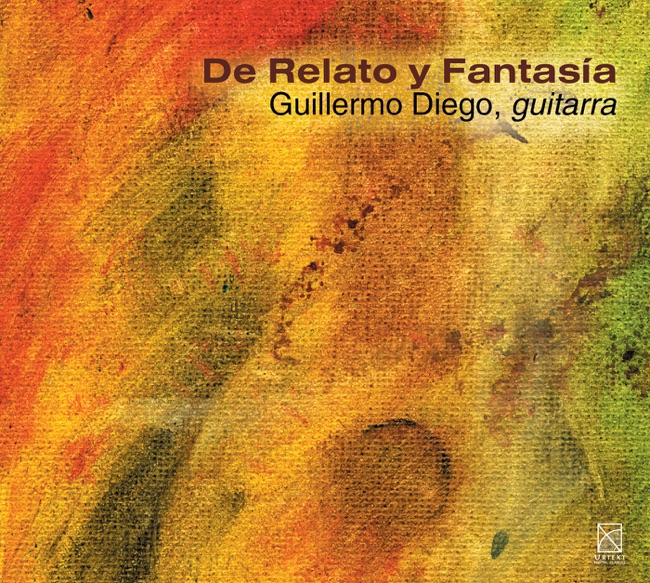
Artist Info
Role:ComposerGuillermo Diego is a renowned classical music composer who has made significant contributions to the world of music. Born on December 22, 1946, in Mexico City, Guillermo Diego was raised in a family of musicians. His father, Luis Diego, was a composer and conductor, while his mother, Maria Teresa Rodriguez, was a pianist. Growing up in such a musical environment, Guillermo Diego developed a deep love for music from an early age. Guillermo Diego began his musical education at the National Conservatory of Music in Mexico City, where he studied composition with Carlos Chavez, one of the most prominent Mexican composers of the 20th century. He also studied piano with Maria Teresa Rodriguez, his mother. After completing his studies at the National Conservatory of Music, Guillermo Diego went on to study at the Hochschule für Musik in Munich, Germany, where he studied composition with Karlheinz Stockhausen, one of the most influential composers of the 20th century. Guillermo Diego's early works were heavily influenced by the avant-garde music of the 1960s and 1970s. His compositions were characterized by their use of unconventional techniques and sounds, such as electronic music, aleatoric music, and serialism. Some of his early works include "Canto a la Tierra" (1968), "Tres Piezas para Piano" (1970), and "Cinco Piezas para Orquesta" (1972). In the 1980s, Guillermo Diego's music began to evolve, and he started to incorporate more traditional elements into his compositions. His works from this period were characterized by their use of tonality, melody, and harmony. Some of his notable works from this period include "Concierto para Piano y Orquesta" (1982), "Cuarteto de Cuerdas No. 1" (1984), and "Sinfonía No. 1" (1986). In the 1990s, Guillermo Diego's music continued to evolve, and he began to incorporate elements of Mexican folk music into his compositions. His works from this period were characterized by their use of traditional Mexican instruments, such as the marimba, and their incorporation of Mexican rhythms and melodies. Some of his notable works from this period include "Concierto para Marimba y Orquesta" (1992), "Cuarteto de Cuerdas No. 2" (1994), and "Sinfonía No. 2" (1996). Guillermo Diego's music has been performed by some of the world's leading orchestras and ensembles, including the Berlin Philharmonic, the London Symphony Orchestra, and the New York Philharmonic. He has also received numerous awards and honors for his contributions to the world of music. In 1998, he was awarded the National Prize for Arts and Sciences in the Fine Arts category by the Mexican government. In 2002, he was awarded the Order of the Aztec Eagle, the highest honor that can be bestowed upon a civilian in Mexico. Guillermo Diego's music has had a significant impact on the world of classical music. His innovative use of unconventional techniques and sounds has influenced generations of composers, while his incorporation of traditional Mexican elements has helped to promote Mexican culture on the world stage. Guillermo Diego's legacy as a composer and musician is one that will continue to inspire and influence future generations of musicians.More....
Recent Artist Music

Copyright Ⓒ 2013 Davinci Finger. All rights reseved
Service Terms & Policy