


Ignazio Albertini
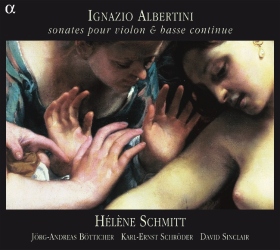
Released Album
Chamber
-
 September 24, 2021
 -
 August 20, 2021
 -
 July 10, 2015
 -
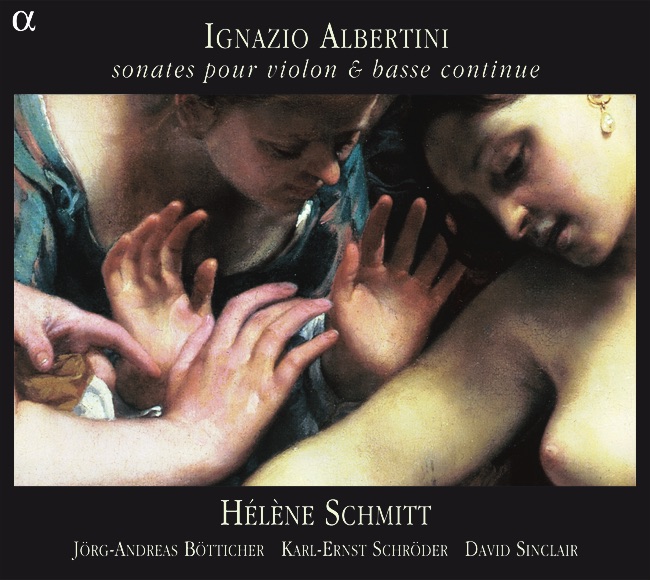 July 20, 2004
Artist Info
Role:ComposerCountry: ItalyBirth:ca. 1644 in Milan, ItalyDeath:September, 1685 in Vienna, AustriaIgnazio Albertini was a prominent Italian composer of the Baroque era, known for his contributions to the development of instrumental music. Born in Venice in 1644, Albertini was the son of a musician and grew up in a musical household. He received his early musical training from his father, who was a violinist, and later studied with some of the leading composers of his time. Albertini's musical career began in earnest in the 1660s, when he became a member of the orchestra at the Basilica di San Marco in Venice. He quickly established himself as a skilled violinist and composer, and his works began to gain recognition throughout Italy. In 1670, he was appointed as the maestro di cappella at the Basilica di San Giovanni e Paolo in Venice, a position he held for over a decade. During his time in Venice, Albertini composed a number of works for the church, including masses, motets, and other sacred music. He also wrote a significant amount of instrumental music, including sonatas, concertos, and sinfonias. His works were characterized by their virtuosic violin writing and their use of the ritornello form, a common structure in Baroque music. In 1682, Albertini left Venice and traveled to Vienna, where he was appointed as the court composer to Emperor Leopold I. He remained in Vienna for the rest of his life, and his works continued to be performed and admired throughout Europe. He composed a number of works for the imperial court, including operas, ballets, and instrumental music. One of Albertini's most famous works is his Sonata a violino solo col basso continuo, Op. 8, No. 6, which is often referred to as the "La Cetra" sonata. This work is notable for its use of the ritornello form and its virtuosic violin writing. It has been performed and recorded by numerous violinists over the years and remains a popular piece in the Baroque repertoire. Another notable work by Albertini is his Concerto a quattro in D major, Op. 2, No. 3. This work is a concerto grosso, a form of Baroque music that features a small group of soloists (the concertino) accompanied by a larger ensemble (the ripieno). The concerto is characterized by its lively rhythms and its use of counterpoint, a technique in which multiple melodies are played simultaneously. Albertini's music was highly regarded during his lifetime, and he was considered one of the leading composers of his time. His works were performed throughout Europe and influenced many other composers of the Baroque era. Despite his success, however, Albertini's music fell out of favor in the centuries following his death, and it was not until the 20th century that his works began to be rediscovered and appreciated once again. Today, Albertini is recognized as an important figure in the development of instrumental music during the Baroque era. His works are admired for their virtuosic violin writing, their use of the ritornello form, and their lively rhythms. While he may not be as well-known as some of his contemporaries, such as Bach or Handel, his contributions to the world of classical music are significant and continue to be appreciated by musicians and audiences alike.More....
Recent Artist Music
1
8:6
3

Sonata for violin & continuo No. 1 in D minor
Sonata I in d-minor (Sonatinae XII. violino solo)
8:30
4
Sonata for violin & continuo No. 1 in D minor
Violin Sonata No. 1 in D minor (12 Sonate, 1692)
7:35
5
5:59
Copyright Ⓒ 2013 Davinci Finger. All rights reseved
Service Terms & Policy