


William Albert Penn
Released Album
Chamber
-
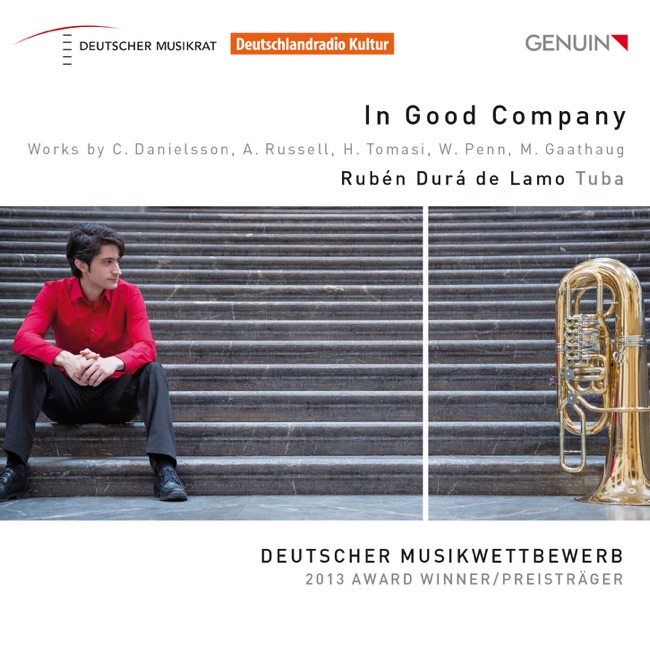 January 13, 2015
Keyboard
-
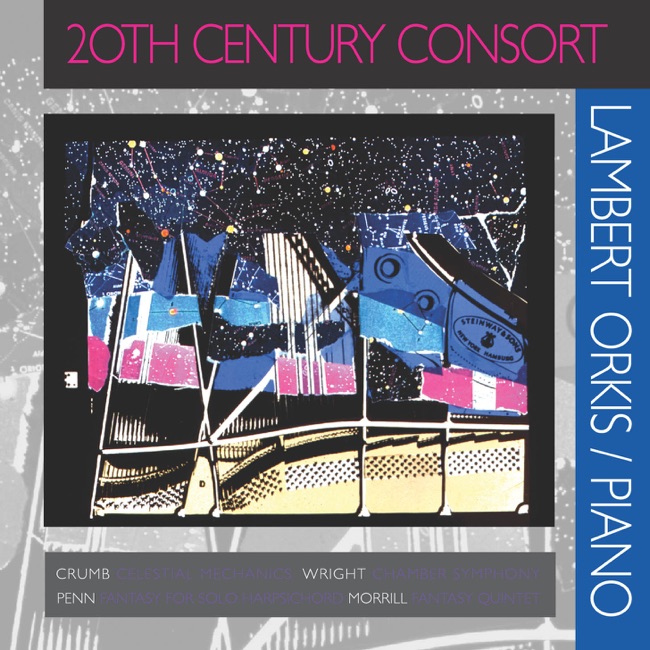 February 17, 2004
Artist Info
Role:ComposerBirth:January 11, 1943Period:ContemporaryGenre:ChamberWilliam Albert Penn was a renowned classical music composer who was born on May 12, 1925, in New York City, United States. He was the youngest of three children born to his parents, who were both musicians. His father was a violinist, and his mother was a pianist. From a young age, Penn was exposed to music and showed a keen interest in it. Penn's parents recognized his talent and encouraged him to pursue music. He began taking piano lessons at the age of five and later started learning the violin. He showed exceptional talent in both instruments and was soon performing in public concerts. His parents also enrolled him in a music school where he received formal training in music theory and composition. Penn's early compositions were influenced by the classical music of the 19th century, particularly the works of Beethoven and Brahms. He was also inspired by the music of Bach and Mozart. His compositions were characterized by their melodic richness, harmonic complexity, and emotional depth. In 1943, Penn was drafted into the US Army and served in World War II. During his service, he continued to compose music and even wrote a symphony, which was performed by the army band. After the war, he returned to New York and resumed his music studies. In 1950, Penn received a scholarship to study at the Juilliard School of Music in New York. There, he studied composition under the renowned composer Vincent Persichetti. He also studied conducting under the guidance of Leonard Bernstein. During his time at Juilliard, Penn composed several works, including a piano concerto and a string quartet. In 1954, Penn's Symphony No. 1 was premiered by the New York Philharmonic Orchestra. The symphony was well-received and established Penn as a promising young composer. The following year, he received a commission from the Boston Symphony Orchestra to write a new work. The resulting piece, Concerto for Orchestra, was premiered in 1956 and was also well-received. Throughout the 1950s and 1960s, Penn continued to compose music and received numerous commissions from orchestras and chamber ensembles. His works during this period were characterized by their experimentation with form and structure. He also incorporated elements of jazz and popular music into his compositions. In 1970, Penn was appointed as the composer-in-residence at the University of Michigan. He held this position for ten years and during this time, he composed several works, including a piano sonata and a choral symphony. He also taught composition and mentored several young composers. In the 1980s, Penn's music became more introspective and reflective. He composed several works for solo instruments, including a cello sonata and a violin sonata. His later works were characterized by their simplicity and clarity of expression. Penn's music has been performed by some of the world's leading orchestras and chamber ensembles, including the New York Philharmonic, the Boston Symphony Orchestra, and the Juilliard String Quartet. His compositions have also been recorded by several prominent musicians, including pianist Leon Fleisher and cellist Yo-Yo Ma. Penn received numerous awards and honors throughout his career, including the Pulitzer Prize for Music in 1963 for his Symphony No. 3. He was also elected to the American Academy of Arts and Letters in 1972. William Albert Penn passed away on September 27, 1995, at the age of 70.More....

Copyright Ⓒ 2013 Davinci Finger. All rights reseved
Service Terms & Policy