


Luís Alvares Pinto
Released Album
Choral
-
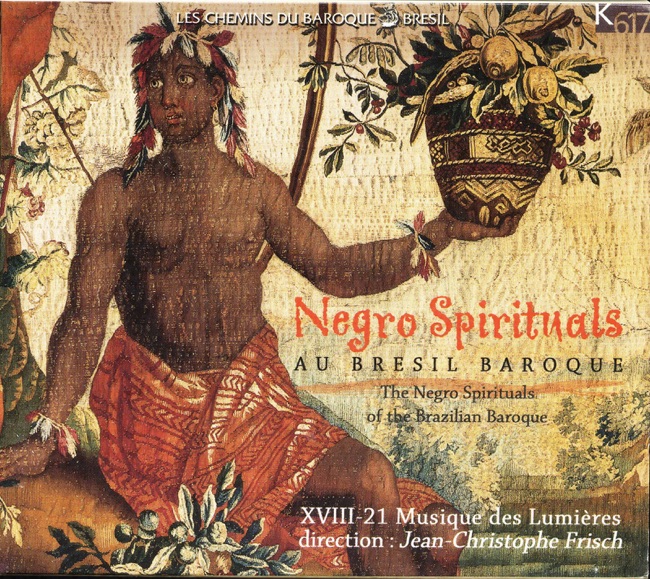 June 11, 2002
 -
 December 12, 1995
Artist Info
Role:ComposerBirth:1719Death:1789Period:ClassicalGenre:ChoralLuís Alvares Pinto was a prominent classical music composer who lived during the 18th century in Portugal. He was born on October 18, 1719, in Lisbon, Portugal, to a family of musicians. His father, João Alvares Pinto, was a renowned composer and organist, and his mother, Maria da Conceição, was a singer. Luís was the youngest of their six children, and he showed an early interest in music. Luís received his first music lessons from his father, who recognized his son's talent and encouraged him to pursue a career in music. At the age of 12, Luís was admitted to the Royal Chapel of Lisbon as a choirboy, where he received further training in music theory, composition, and performance. He quickly distinguished himself as a gifted musician, and by the age of 16, he was appointed as a deputy organist at the Royal Chapel. In 1740, Luís traveled to Rome, Italy, to study music under the tutelage of the renowned composer and music theorist, Francesco Durante. He spent four years in Rome, where he immersed himself in the study of counterpoint, harmony, and composition. During this time, he also had the opportunity to meet and collaborate with other prominent musicians, including Johann Joachim Quantz and Domenico Scarlatti. Upon his return to Portugal in 1744, Luís resumed his position as deputy organist at the Royal Chapel. He quickly gained a reputation as a skilled composer and performer, and his works were frequently performed at the Royal Chapel and other venues throughout Lisbon. In 1750, he was appointed as the principal organist at the Royal Chapel, a position he held until his death. Luís Alvares Pinto's compositions were highly regarded during his lifetime and continue to be celebrated today. He was a prolific composer, and his works include numerous sacred and secular vocal pieces, as well as instrumental music. His compositions are characterized by their elegant melodies, sophisticated harmonies, and intricate counterpoint. One of Luís's most famous works is his "Missa a 8 vozes," a mass for eight voices that was composed in 1753. The mass is notable for its intricate polyphony and rich harmonies, and it has been described as one of the finest examples of Portuguese Baroque music. Another notable work is his "Te Deum," a hymn of praise that was composed in 1758. The piece is scored for choir, soloists, and orchestra, and it features a grand and majestic sound that is typical of Baroque music. In addition to his sacred music, Luís also composed a number of secular works, including operas, sonatas, and chamber music. His opera "La Pazienza di Socrate," which was composed in 1754, was particularly well-received and was performed throughout Portugal and Italy. Luís Alvares Pinto's contributions to the world of classical music were significant, and his works continue to be celebrated today. He died on November 10, 1789, in Lisbon, Portugal, at the age of 70. His legacy lives on through his music, which remains an important part of the Portuguese classical music tradition.More....
Recent Artist Music
Copyright Ⓒ 2013 Davinci Finger. All rights reseved
Service Terms & Policy