


William Henry Havergal
Released Album
Choral
-
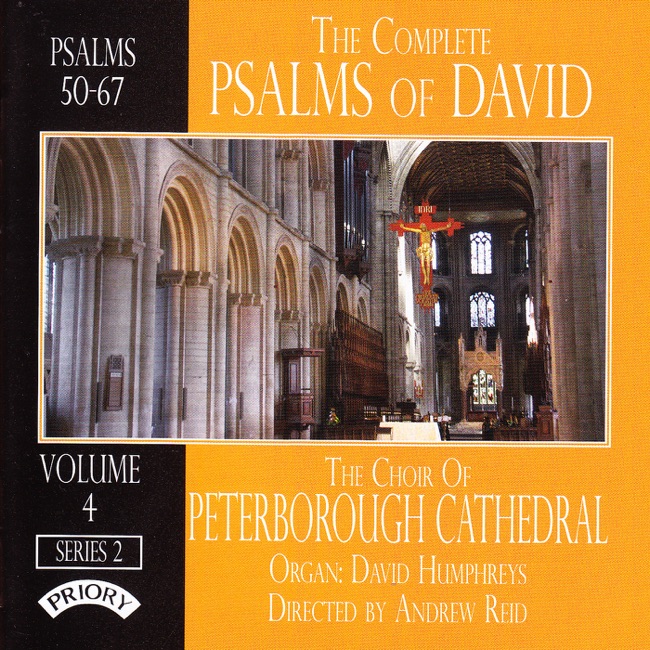
-
 August 1, 1990
Artist Info
Role:ComposerBirth:January 18, 1793Death:April 19, 1870Genre:ChoralKeyboardWilliam Henry Havergal was a British composer, organist, and music teacher who lived from 1793 to 1870. He was born in the town of Bromsgrove, Worcestershire, England, on January 18, 1793, to parents William Havergal and Jane Andrews. His father was a clergyman and a musician, and his mother was a poet and hymn writer. Havergal grew up in a musical family, and his parents encouraged his interest in music from an early age. Havergal received his early musical education from his father, who taught him to play the organ and the piano. He also received instruction in music theory and composition from his father. Havergal showed great talent as a musician, and by the age of 14, he was already playing the organ in his father's church. In 1810, Havergal went to Oxford University, where he studied music and theology. While at Oxford, he became a member of the University's music society, and he also began to compose music. Havergal's early compositions were mainly choral works, and he wrote several anthems and hymns during this time. After completing his studies at Oxford, Havergal returned to his hometown of Bromsgrove, where he became the organist and choirmaster at St. John's Church. He held this position for over 30 years, and during this time, he composed many of his most famous works. Havergal was known for his skill as an organist, and he was also a respected music teacher. Many of his students went on to become successful musicians in their own right. Havergal's music was influenced by the classical composers of his time, such as Mozart and Beethoven. He was also influenced by the music of the English church, and many of his compositions were written for use in church services. Havergal's music was known for its beauty and simplicity, and he was praised for his ability to write music that was both accessible and profound. One of Havergal's most famous works is his hymn tune "Old Hundredth," which is still widely used in churches today. The tune is named after the 100th Psalm, which it was originally written to accompany. Havergal's other famous works include his anthem "O Lord, Our Governor," and his hymn "Lord, Speak to Me." Havergal was also a prolific writer, and he wrote several books on music theory and composition. His most famous book, "Old Church Psalmody," was a collection of hymns and anthems that he had written over the years. The book was widely used in churches throughout England, and it helped to establish Havergal's reputation as a leading composer of church music. Havergal was a devout Christian, and his faith was an important part of his life and his music. He believed that music was a powerful tool for worship and for expressing one's faith, and he wrote many of his compositions with this in mind. Havergal's music was often described as "uplifting" and "inspiring," and it was widely used in churches throughout England and beyond. Havergal died on August 19, 1870, at the age of 77. He was buried in the churchyard at St. John's Church in Bromsgrove, where he had served as organist and choirmaster for over 30 years. Havergal's legacy as a composer and music teacher lives on today, and his music continues to be performed and enjoyed by people all over the world.More....
Recent Artist Music
Copyright Ⓒ 2013 Davinci Finger. All rights reseved
Service Terms & Policy