


Wolfgang Wijdeveld
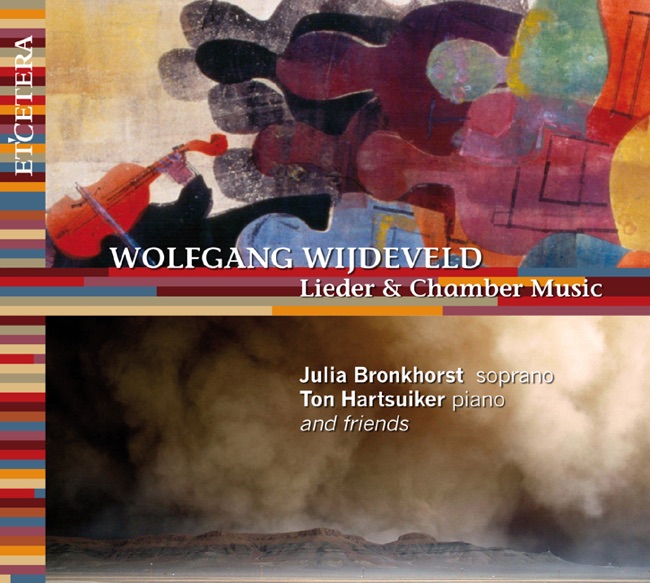
Artist Info
Role:Composer PerformerBirth:1910Death:1985Genre:VocalWolfgang Wijdeveld was a Dutch composer born on January 12, 1925, in Amsterdam. He was the son of a well-known architect, Wijdeveld H.Th., and grew up in a family that valued the arts. From a young age, Wijdeveld showed a keen interest in music and began playing the piano at the age of six. He was also exposed to a wide range of musical styles, including classical, jazz, and popular music. Wijdeveld's musical education began at the Amsterdam Conservatory, where he studied piano and composition. He later continued his studies in Paris with the renowned composer Nadia Boulanger. During this time, he was also influenced by the works of Stravinsky, Bartok, and Debussy. Wijdeveld's early compositions were heavily influenced by the neoclassical style, which was popular in the mid-20th century. His first major work, the Piano Concerto No. 1, was composed in 1950 and premiered in Amsterdam the following year. The concerto was well-received and established Wijdeveld as a promising young composer. Throughout the 1950s and 1960s, Wijdeveld continued to compose works in a variety of genres, including chamber music, orchestral works, and vocal music. His compositions were characterized by their clarity of form, rhythmic vitality, and use of traditional tonal harmony. One of Wijdeveld's most significant works from this period was the Symphony No. 1, which was composed in 1956 and premiered in Amsterdam the following year. The symphony is a large-scale work in four movements and showcases Wijdeveld's skill in orchestration and his ability to create a cohesive musical structure. In the 1970s, Wijdeveld's style began to shift towards a more experimental and avant-garde approach. He began incorporating elements of serialism and atonality into his compositions, which resulted in works that were more complex and challenging for audiences. One of Wijdeveld's most notable works from this period was the String Quartet No. 2, which was composed in 1972. The quartet is a highly dissonant work that explores the possibilities of atonal harmony and unconventional playing techniques. Despite his experimentation with new musical styles, Wijdeveld never completely abandoned his earlier neoclassical style. His later works often combined elements of both traditional tonality and avant-garde techniques, resulting in a unique and distinctive musical voice. Wijdeveld's final major work was the Symphony No. 3, which was composed in 1990. The symphony is a large-scale work in three movements and showcases Wijdeveld's mature style, which combines elements of neoclassicism, serialism, and atonality. Throughout his career, Wijdeveld was recognized as one of the leading composers of his generation in the Netherlands. He received numerous awards and honors, including the Order of the Netherlands Lion and the Johan Wagenaar Prize. Wijdeveld passed away on December 22, 2001, at the age of 76. His legacy as a composer continues to be celebrated in the Netherlands and beyond, and his works are still performed and recorded by musicians around the world.More....
Copyright Ⓒ 2013 Davinci Finger. All rights reseved
Service Terms & Policy