


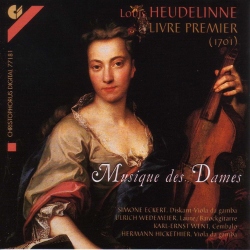
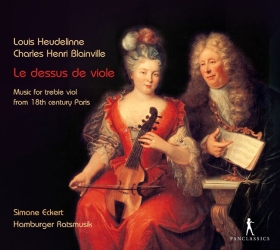
Louis Heudelinne
Artist Info
Role:ComposerLouis Heudelinne was a French composer who lived from 1781 to 1850. He was born in the town of Saint-Quentin in northern France, and showed an early aptitude for music. Heudelinne's parents recognized his talent and encouraged him to pursue a career in music. Heudelinne began his musical education at a young age, studying piano and composition with local teachers. He showed great promise as a composer, and by the age of 16 had already written several works for piano and chamber ensembles. In 1798, Heudelinne moved to Paris to further his musical studies. He enrolled at the Paris Conservatory, where he studied composition with François-Joseph Gossec and piano with Louis Adam. Heudelinne quickly distinguished himself as a talented composer, and his works were performed at the Conservatory's annual concerts. Heudelinne's early works were influenced by the classical style of Mozart and Haydn, but he soon began to develop his own unique voice. His music was characterized by its lyricism, elegance, and clarity of form. Heudelinne was particularly skilled at writing for the piano, and his piano works were highly regarded by his contemporaries. In 1803, Heudelinne won the Prix de Rome, a prestigious award that allowed him to study music in Italy for three years. He spent his time in Italy studying the works of the great Italian composers, including Rossini, Donizetti, and Bellini. Heudelinne's time in Italy had a profound influence on his music, and he began to incorporate Italianate melodies and harmonies into his compositions. Upon his return to Paris in 1806, Heudelinne quickly established himself as one of the leading composers of his generation. His works were performed at the most prestigious concert halls in Paris, and he was highly regarded by his fellow composers and critics. Heudelinne's most famous works include his Piano Concerto in A minor, his String Quartet in G major, and his Symphony in C major. These works are characterized by their melodic beauty, elegant harmonies, and clear formal structures. Heudelinne was also a prolific composer of chamber music, and his works for small ensembles are highly regarded by musicians and audiences alike. His String Quartet in G major is particularly notable for its use of Italianate melodies and harmonies, which give the work a sunny, optimistic character. In addition to his work as a composer, Heudelinne was also a respected music educator. He taught composition and piano at the Paris Conservatory, and his students included some of the most important composers of the 19th century, including Hector Berlioz and Charles Gounod. Heudelinne's music fell out of favor in the late 19th century, as the Romantic style of composers like Wagner and Brahms came to dominate the musical landscape. However, in recent years there has been a renewed interest in Heudelinne's music, and his works are once again being performed and recorded. Louis Heudelinne was a gifted composer who made significant contributions to the classical music tradition. His music is characterized by its lyricism, elegance, and clarity of form, and his works for piano and chamber ensembles are particularly notable. Heudelinne's legacy as a composer and educator continues to be felt today, and his music remains an important part of the classical music canon.More....
Copyright Ⓒ 2013 Davinci Finger. All rights reseved
Service Terms & Policy