


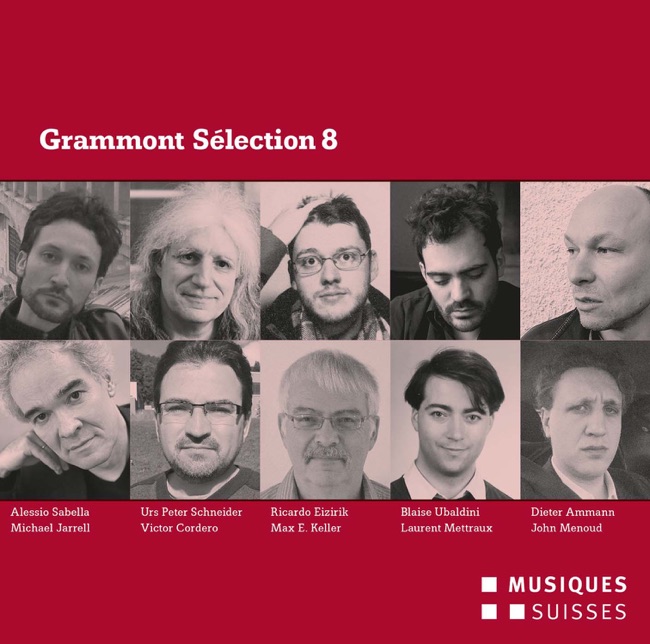
Ricardo Eizirik
Released Album
Chamber
-
 March 27, 2020
 -
 January 29, 2016
Artist Info
Role:ComposerRicardo Eizirik was a Brazilian classical music composer born on August 22, 1951, in Rio de Janeiro. He was the son of a Jewish family that had emigrated from Poland to Brazil. Eizirik's father was a doctor, and his mother was a pianist. From an early age, Eizirik showed a keen interest in music, and his mother began teaching him piano when he was just four years old. Eizirik's musical education continued throughout his childhood, and he began composing his own music when he was a teenager. He studied composition with Brazilian composer Marlos Nobre and later with French composer Olivier Messiaen. Eizirik also studied piano with Brazilian pianist Arnaldo Estrella and French pianist Yvonne Loriod, who was Messiaen's wife. Eizirik's early compositions were influenced by Brazilian music, particularly the rhythms and melodies of samba and bossa nova. However, as he continued to study and compose, his style became more eclectic, incorporating elements of jazz, rock, and avant-garde music. One of Eizirik's early works, "Sinfonia dos Orixás" (Symphony of the Orixás), was premiered in 1978 by the Brazilian Symphony Orchestra. The piece was inspired by the Afro-Brazilian religion of Candomblé and featured a large orchestra, choir, and soloists. The work was well-received and helped establish Eizirik as a rising star in the Brazilian classical music scene. In the 1980s, Eizirik began to gain international recognition for his compositions. He won several awards, including the UNESCO International Rostrum of Composers prize in 1983 for his work "Cantares." The piece, which was written for soprano and orchestra, was inspired by the poetry of Brazilian writer Carlos Drummond de Andrade. Eizirik's music continued to evolve throughout the 1980s and 1990s. He began to incorporate electronic music into his compositions, and his works became more experimental and avant-garde. One of his most notable works from this period is "Música para o Fim do Mundo" (Music for the End of the World), which was premiered in 1992. The piece was written for a large ensemble of musicians and featured a variety of unconventional instruments, including a typewriter, a vacuum cleaner, and a bicycle. Despite his experimental tendencies, Eizirik remained committed to the traditions of classical music. He often drew inspiration from the works of other composers, including Bach, Beethoven, and Stravinsky. He also continued to incorporate elements of Brazilian music into his compositions, creating a unique blend of classical and popular styles. Eizirik's later works include "Concerto para Violino e Orquestra" (Concerto for Violin and Orchestra), which was premiered in 2001, and "Sinfonia dos Brinquedos" (Symphony of Toys), which was premiered in 2005. The latter work was written for a children's orchestra and featured a variety of toy instruments, including a toy piano, a toy trumpet, and a toy drum. Throughout his career, Eizirik remained committed to promoting classical music in Brazil. He founded the Brazilian Association of Contemporary Music and served as its president for several years. He also taught composition at the Federal University of Rio de Janeiro and mentored many young composers. Tragically, Eizirik's life was cut short when he died of cancer on December 22, 2006, at the age of 55. However, his legacy lives on through his music, which continues to be performed and celebrated by musicians and audiences around the world.More....
Recent Artist Music


Copyright Ⓒ 2013 Davinci Finger. All rights reseved
Service Terms & Policy