


Adam Gumpelzhaimer
Artist Info
Role:ComposerCountry: GermanyBirth:1559 in Trostberg, GermanyDeath:November 3, 1625 in Augsburg, GermanyGenre:ChoralAdam Gumpelzhaimer was a German composer and music theorist who lived during the Renaissance period. He was born on July 30, 1559, in Trostberg, Bavaria, to a family of musicians. His father, Andreas Gumpelzhaimer, was a composer and music teacher, and his mother, Barbara, was a singer. Adam was the youngest of their six children. Adam showed an early interest in music and began his musical education under his father's guidance. He learned to play several instruments, including the lute, organ, and violin. He also studied music theory and composition, and by the age of 14, he had composed his first motet. In 1575, Adam enrolled at the University of Ingolstadt, where he studied philosophy and theology. He continued his musical education during this time, studying with the renowned composer Orlando di Lasso. Adam was a talented student, and he quickly gained a reputation as a skilled composer and musician. After completing his studies, Adam returned to Trostberg, where he worked as a music teacher and composer. He also served as the organist at the local church. In 1581, he married Maria Schmid, and the couple had six children. Adam's musical career continued to flourish, and he became known for his sacred music compositions. He wrote numerous motets, masses, and hymns, many of which were performed in churches throughout Bavaria. His music was highly regarded for its beauty and complexity, and he was considered one of the leading composers of his time. In addition to his work as a composer, Adam was also a respected music theorist. He wrote several treatises on music theory, including "Musicae Compendium" and "Thesaurus Musicus." These works were widely read and influenced the development of music theory in Europe. Adam's most famous work is his collection of 374 chorale settings, "Ein New Gesangbuchlein," which was published in 1599. This collection included settings of hymns by Martin Luther and other Protestant composers. The collection was widely used in Lutheran churches throughout Germany and helped to establish Adam's reputation as a leading composer of sacred music. Adam continued to compose and teach music throughout his life. He died on September 3, 1625, in Trostberg, at the age of 66. His legacy as a composer and music theorist continues to be celebrated today, and his music remains an important part of the classical music canon.More....
Recent Artist Music
3
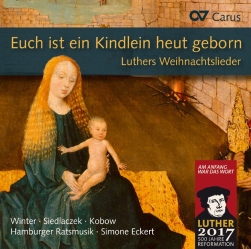
From heaven high here I come
Sei mir willkommen, edler Gast / Ach, Herr, du Schöpfer aller Ding / Und wär die Welt vielmal so weit
1:40
4
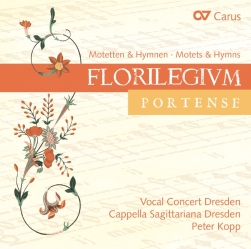
Ecce quam bonum and quam jucundum (Florilegii Musici Portensis, No. 23)
Ecce quam bonum et quam jucundum, à 8 (Nr. 23)
3:2
Copyright Ⓒ 2013 Davinci Finger. All rights reseved
Service Terms & Policy