


Claudia Sessa

Artist Info
Role:ComposerBirth:1570Death:1617Genre:ChoralVocalClaudia Sessa was a prominent Italian composer of the late Renaissance period. She was born in Milan in 1570, into a family of musicians. Her father, Costanzo Sessa, was a well-known music publisher, and her brother, Alessandro, was a composer and music printer. Claudia grew up in a musical environment and received a thorough education in music theory and composition. Claudia Sessa's early works were published by her father's music publishing company. Her first known composition, a motet entitled "O quam suavis est," was published in 1593. This was followed by several other motets and madrigals, which were well-received by the public and established her reputation as a composer. In 1599, Claudia Sessa entered the convent of Santa Maria Annunciata in Milan, where she became a nun. Despite her religious vows, she continued to compose music and her works were performed in the convent and in other churches in Milan. Her compositions were highly regarded by her contemporaries, including the famous composer Giovanni Battista Guarini, who praised her music in his writings. Claudia Sessa's music is characterized by its expressive melodies, rich harmonies, and intricate counterpoint. Her works include motets, madrigals, and sacred songs, as well as instrumental music. Her compositions often feature complex polyphonic textures and elaborate ornamentation, demonstrating her mastery of the Renaissance style. One of Claudia Sessa's most famous works is her setting of the "Magnificat," a hymn of praise to the Virgin Mary. This composition, which was published in 1613, is notable for its use of chromaticism and its expressive harmonies. The "Magnificat" was widely performed in churches throughout Italy and was praised for its beauty and emotional power. Another notable work by Claudia Sessa is her setting of the "Lamentations of Jeremiah," a series of poems that describe the destruction of Jerusalem. This composition, which was published in 1613, is a masterpiece of Renaissance polyphony, featuring intricate vocal lines and rich harmonies. The "Lamentations" were widely performed in churches throughout Italy and were praised for their beauty and emotional depth. In addition to her vocal works, Claudia Sessa also composed instrumental music. Her "Canzonette a tre voci" for violin, cello, and harpsichord, published in 1613, is a charming collection of short pieces that demonstrate her skill as an instrumental composer. These works feature lively dance rhythms and intricate counterpoint, and are a testament to Claudia Sessa's versatility as a composer. Despite her success as a composer, Claudia Sessa's music fell into obscurity after her death in 1613. It was not until the 20th century that her works were rediscovered and brought back into the repertoire. Today, Claudia Sessa is recognized as one of the most important female composers of the Renaissance period, and her music continues to be performed and recorded by musicians around the world. In conclusion, Claudia Sessa was a talented and accomplished composer of the late Renaissance period. Her music is characterized by its expressive melodies, rich harmonies, and intricate counterpoint, and her works demonstrate her mastery of the Renaissance style. Despite the challenges she faced as a female composer in a male-dominated field, Claudia Sessa's music has stood the test of time and continues to be celebrated today.More....
Recent Artist Music
1
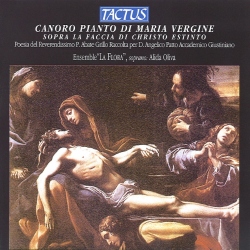
1:52

Copyright Ⓒ 2013 Davinci Finger. All rights reseved
Service Terms & Policy