


Rafael Catalá
Released Album
Vocal
-
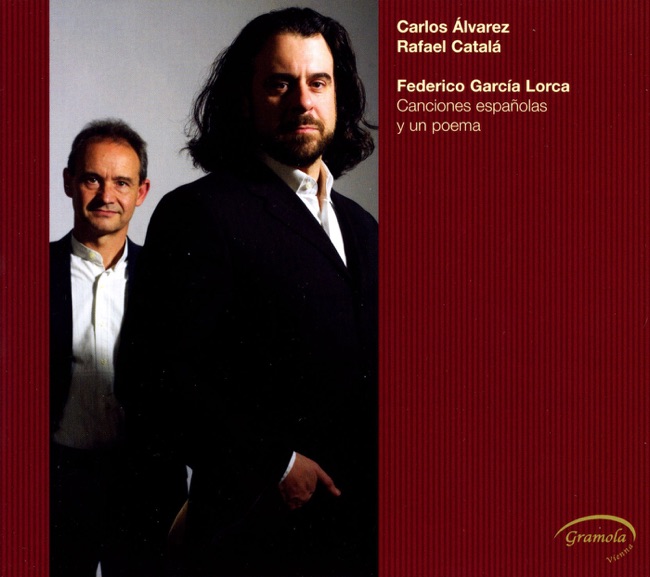 March, 2008
Chamber
-
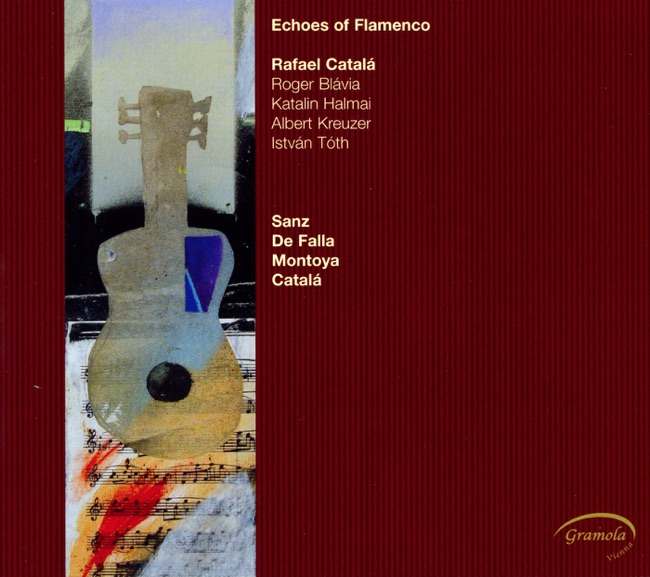 March, 2008
Artist Info
Role:ComposerBirth:1960Rafael Catalá was a Spanish composer born on January 24, 1900, in Valencia, Spain. He was the son of a music teacher and grew up in a musical family. His father, Vicente Catalá, was a well-known composer and conductor in Valencia, and his mother, Carmen, was a pianist. Rafael showed an early interest in music and began studying piano and composition at a young age. Catalá's musical education began at the Valencia Conservatory, where he studied piano with Joaquín Rodrigo and composition with Manuel Palau. He later continued his studies in Paris with Nadia Boulanger, one of the most influential music teachers of the 20th century. Boulanger's teaching had a profound impact on Catalá's musical style, and he became known for his use of polytonality and complex harmonies. Catalá's early works were heavily influenced by Spanish folk music and the music of his father. His first major composition, the Suite Valenciana, was premiered in 1923 and received critical acclaim. The suite is a collection of five pieces for piano that showcase Catalá's virtuosity as a pianist and his skill as a composer. In the 1930s, Catalá began to experiment with new musical forms and techniques. He was particularly interested in the music of the Second Viennese School, which included composers such as Arnold Schoenberg, Alban Berg, and Anton Webern. Catalá's interest in this music led him to explore atonality and serialism, which he incorporated into his own compositions. One of Catalá's most significant works from this period is his String Quartet No. 1, which was premiered in 1935. The quartet is a complex and challenging work that showcases Catalá's mastery of atonality and serialism. It is considered one of the most important works of Spanish chamber music from the 20th century. During the Spanish Civil War, Catalá was forced to flee Spain and spent several years living in France and South America. He continued to compose during this time, and his music began to reflect the political and social upheaval of the era. His Symphony No. 1, which was premiered in 1940, is a powerful and emotional work that reflects the turmoil of the war. After the war, Catalá returned to Spain and continued to compose. He became known for his operas, which were often based on Spanish literature and history. His most famous opera, El Cid, premiered in 1951 and was a critical and commercial success. The opera tells the story of the legendary Spanish hero Rodrigo Díaz de Vivar, who fought against the Moors in the 11th century. Catalá's later works continued to explore new musical forms and techniques. He was particularly interested in electronic music and began experimenting with synthesizers and other electronic instruments. His Symphony No. 4, which was premiered in 1965, is a groundbreaking work that incorporates electronic sounds into a traditional orchestral setting. Catalá's music has been performed by some of the world's leading orchestras and ensembles, including the Berlin Philharmonic, the New York Philharmonic, and the London Symphony Orchestra. He received numerous awards and honors throughout his career, including the National Music Prize of Spain in 1958. Rafael Catalá died on December 23, 1985, in Valencia, Spain. He is remembered as one of the most important Spanish composers of the 20th century, whose music continues to be performed and studied today.More....
Recent Artist Music
Copyright Ⓒ 2013 Davinci Finger. All rights reseved
Service Terms & Policy